In-House Insights

CTx Strategic Partnerships: Building High-Impact Enterprise Alliances for Sustainable Business Growth
Cell therapy innovators face mounting pressure to scale efficiently while managing costs and regulatory complexity. This article examines how strategic partnerships in cell therapy biotech drive sustainable growth, exploring collaboration models, commercialization pathways, and practical frameworks for building enterprise alliances that accelerate development and deliver lasting competitive advantage.
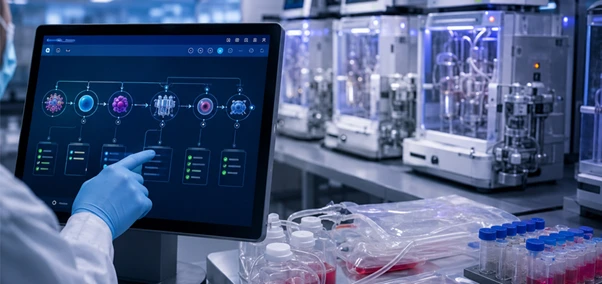
CAR-T Cell Manufacturing Automation Software: End-to-End Workflow Integration with CTS Cellmation Software
CAR-T manufacturing demands precision across leukapheresis, selection, transduction, expansion, and formulation. This article examines how CAR-T cell manufacturing automation software connects modular instruments into a GMP-compliant, end-to-end workflow—reducing manual touchpoints, minimizing variability, and enabling real-time process control. It also highlights how Gibco CTS Cellmation Software delivers this digital orchestration at scale.

Raw Material Selection in Cell Therapy: Building a Foundation for Quality and Regulatory Success
Cell therapy success depends heavily on raw material quality. This article examines GMP raw material selection, sourcing GMP-grade materials, and raw material risk management strategies that support regulatory-compliant raw materials, helping developers build consistent, safe, and scalable cell therapy raw materials pipelines from early development through commercial manufacturing.

Enhancing Cell Therapy Workflows with CTS Dynabeads™ Magnetic Beads: Enabling Scalable, Digital, and GMP-Ready Manufacturing
As cell therapies advance toward commercial scale, manufacturers require robust, standardized, and digitally connected production workflows. This article explores how CTS Dynabeads™ Magnetic Beads support consistent T-cell activation while enabling scalable CAR T manufacturing. It also examines the role of automation, manufacturing execution software, GMP compliance, and digital bioprocess management in improving efficiency and quality.

Rapid Delivery of Toxicological Study Material: Accelerating IND Timelines
In today's competitive biopharmaceutical landscape, the race to Investigational New Drug (IND) submission is no longer determined solely by discovery breakthroughs. Rapid delivery of toxicological study material has become a strategic differentiator, enabling faster decision-making, streamlined regulatory readiness, and accelerated preclinical development without compromising scientific quality or compliance.

Simplify Your Buffer Preparation: Strategies to Improve Efficiency, Reduce Costs, and Scale Production
Buffer preparation is a fundamental yet resource-intensive process in biopharmaceutical manufacturing. As biologics, cell and gene therapies, vaccines, and biosimilars continue to drive industry growth, manufacturers are under increasing pressure to improve operational efficiency while maintaining stringent quality standards. Organizations are evaluating both in-house and outsourced approaches to buffer manufacturing to optimize costs, reduce operational complexity, and support production scalability.

Critical Considerations for Buffer Preparation in Biomanufacturing: Scale-Up, Compliance, and Outsourcing Strategies
Buffer preparation is a foundational element of biomanufacturing that directly impacts product quality, process consistency, and regulatory compliance. As biologics, cell and gene therapies, and mRNA-based products continue to reshape the pharmaceutical landscape, manufacturers face increasing pressure to scale buffer operations while maintaining GMP standards and operational efficiency. This article explores the critical aspects of buffer preparation, including scale-up challenges, regulatory requirements, outsourcing strategies, and emerging technologies that support modern biomanufacturing.

Transforming Drug Development: How Advanced qPCR Solutions Accelerate Biopharma Innovation
Advanced qPCR technologies are transforming modern biopharmaceutical development by enabling faster, more accurate molecular testing across research, manufacturing, and quality assurance. From biologics and gene therapies to GMP-compliant quality control, these solutions accelerate development timelines, strengthen regulatory compliance, improve manufacturing consistency, and support data-driven innovation in an increasingly complex pharmaceutical landscape.

Precision Formulation Strategies for Pediatric Oncology Therapies: Why Specialized CDMOs Are Becoming Strategic Development Partners
Developing oncology therapies for children is among the most demanding challenges in pharmaceutical development. Unlike adult formulations, pediatric cancer medicines require age-appropriate dosing, acceptable taste, flexible delivery systems, and manufacturing processes capable of supporting small patient populations while meeting stringent regulatory expectations. As targeted therapies, biologics, and personalized medicines continue to reshape pediatric oncology, formulation complexity has become a critical determinant of clinical and commercial success. This article explores how precision formulation strategies, supported by specialized formulation CDMOs, enable pharmaceutical companies to accelerate pediatric oncology drug development, improve patient adherence, reduce development risks, and create scalable pathways from early development through commercialization.
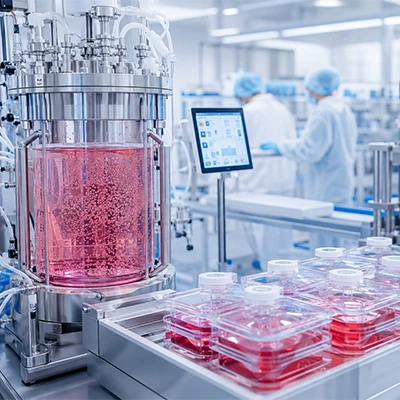
Cell Therapy Manufacturing at Scale: Strategies for Faster Development and Commercial Readiness
Scaling cell therapy manufacturing requires more than scientific innovation—it demands robust processes, automation, regulatory compliance, and commercial readiness. This article explores strategies for accelerating development through optimized process design, GMP manufacturing, CDMO partnerships, and scalable production technologies, helping biopharmaceutical companies efficiently transition from clinical development to successful commercial manufacturing.