How to Mitigate Operational Risks in the Pharma Industry?
Kate Williamson, Editorial Team, Pharma Focus Europe
This article also considers the possible solutions and recommendations for organizations which planning to minimize the operational risks as for the general field and in the context of pharmaceuticals industry, as the crucial issues for such organizations’ attention are the quality management, compliance, supply chain and technologies. It identifies training of employees and risk evaluations as factors that support protect the integrity of products and the smooth running of the business in light of the industry challenges.
Introduction:
The operation of the pharmaceutical industry has significant risks, with the most probable being operational risks. These risks include; supply chain interruption, regulatory non- compliance, product defects, technological disruption. The development of strategies to avoid compromise in operations remains paramount not only in protecting the customers from harm or receiving substandard products but also in remaining compliant with very high regulatory measures put in place by different authorities across the world. Here’s how you can ward off such risks efficiently.
1. Implement Robust Quality Control Systems
This is a sensitive aspect in the sector because all drugs that are taken by patients must be safe for human health. Several measures should be in place within the firm to ensure that product quality is maintained right from the input stage to the final packing. Daily, weekly, monthly inspections and process validation and quality control on sighting can easily point out problems that are likely to occur. Manufacturing best practices help organizations adhere to the regulatory framework and avoid heavy loses through recalls.
2. Ensure Regulatory Compliance
The pharma industry functions with regulation norms governed by legislative bodies such as FDA (Food and Drug Administration) and EMA (European Medicines Agency). Non-compliance to these regulations can attract severe penalties or fines or put the business on a shut down on product recall. To reduce this risk some of the tips include - companies should also ensure they are aware of the current regulation in place and ensure that all production, development, promoting and even selling of the product adhere to the regulation. That is why it can also be worth to have regular audits and training sessions for staff to address this point as well.
3. Strengthen Supply Chain Management
In the pharma industry, raw material and product supplying and distributing events can get interrupted highly and their mitigations. The other factor that companies need to establish is supply chain management that seeks to avoid serious dependence on a particular supplier.
When implementing technologies, one can use supply chain monitoring software that can pinpoint and show possible risks in the supply chain, for instance, delay in supply, quality, or a hold up in regulatory compliance. It has also become important for organizations to have contingency management strategies for dealing with disruption risks on their operations.
4. Adopt Technological Solutions
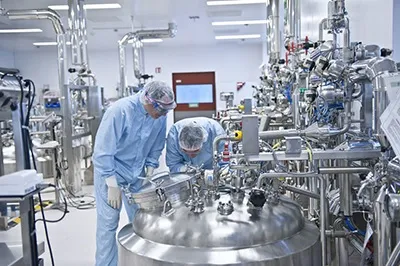
The act of automation with various AI like artificial intelligence, blockchain and others can strictly minimize operational risks in the pharma industry. Automation can minimize the influences of human factors whereas AI can easily forecast equipment breakdown or quality problems. Blockchain can also increase transparency and security in the supply chain since all the blockchain actions indicate who did what to the product.
5. Invest in Employee Training
Qualified staff must be employed to minimize organizational risks that might be occasioned by inadequate human resource skills. Therefore training on safety measures, equipment usage, awareness of legal requirements, and Government set standards should not only be provided to fresh employees, but also training that should be frequently conducted to ensure that all employees know what they are supposed to do to avoid and report any incident. Also, training in new technology or method in an organization guarantees that the staff will manage the changes that may take place in operation without affecting the quality and safety of services to be offered.
6. Conduct Risk Assessments
Risk assessment is one of the significant strategies that implement risk mitigation, whereby such risks are said to have been identified proactively before they occur. Risk analysis is the study of all factors in the organization starting with the supply chain and developing ways of handling any risk inherent in equipment or any other sector. As with risk management, a structured risk management process has the advantage of identifying the most important risks and would make certain that effective back up and contingency plans or insurance coverage is available.
7. Foster Strong Vendor Relationships
A good source is in a position to ensure that all its demands to the industry are reliable in the provision of pharma industry. This ability makes it possible to work closely with suppliers to guarantee shipment of quality raw materials. Another factor would be the ongoing monitoring of vendors, and having clear-line communication, which aid in preventing such discrepancies from arising frequently as a result of weak communication.
8. Maintain Data Integrity
Source data is highly reliable within the pharma business, and even minor distortions of records can potentially have disastrous effects.
A proper data management system must be in place, in order to provide updated and correct data on manufacturing, quality, and compliance. The errors can however be prevented by using data management software and—adhering to strict protocols for data entry and review.
9. Ensure Facility and Equipment Maintenance
Another type of operational risks is that which may be caused by inadequately maintained structures or failures in equipment. Sustaining and checking up manufacturing units and machinery often would assist to spot likely problems that might cause stoppage of production or machine failure. Predictive maintenance technologies also help in avoiding equipment failure through timely checking on earliest signs of equipment wear.
Conclusion
Minimizing operation risks is something that was always in operation in the pharmaceutical sector and needs to always be in operation due to the planning, measures taken and supervision put into practice. To reduce total risk exposure, organizations can ensure the right standard of quality and compliance, with supply chain and operational procedures, and use technology effectively within businesses’ environment. Other notable factors accompanying it would include the question of the forms of training that organizations provide to their employees as well as the employees’ assessment of risks as part of risk management. In this way, the pharma industry can maintain its focus on the production of safe and effective products to the consumers while grappling with the problems on operational risk at the same time.
.webp)
Kate, Editorial Team at Pharma Focus Europe, leverages her extensive background in pharmaceutical communication to craft insightful and accessible content. With a passion for translating complex pharmaceutical concepts, Kate contributes to the team's mission of delivering up-to-date and impactful information to the global Pharmaceutical community.