

How Mass Spectrometers Are Transforming the Study of Metabolomics
Kate Williamson, Editorial Team, Pharma Focus Europe
Mass spectrometry (MS) is being rapidly applied to metabolomics because both the sensitivity and accuracy of analysis of metabolites can easily be achieved using this technique. It refines knowledge of the metabolic pathways, helps in diagnosing diseases, and contributes to the approach of individualized treatment. As the field of MS develops new and more subtle methods of sampling and comprehensive disease and patient profiling, this technology will greatly reshape healthcare and disease research.
Introduction:
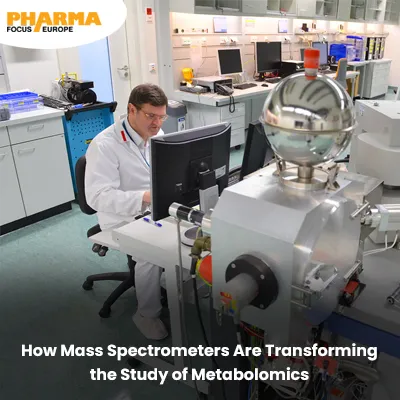
The mechanism of metabolomics can be described as a relatively young science, which is rather popular in modern science, and investigates metabolites, which are the small molecules that take part in the metabolic processes inside the living organism. This discipline therefore has great potential as a tool in proactively unraveling a diverse range of biological occurrences, disease processes or even treatments. At the core of the advancements in metabolomics is the method known as mass spectrometry (MS); an analytical tool that enables the identification, estimation, and characterization of metabolites in bulk. This article seeks to explain how mass spectrometers are revolutionizing metabolomics with regards to its research in mass spectrometers, utilization in clinical, and in the overall outlook of the personalized medicine.
What Is Mass Spectrometry?
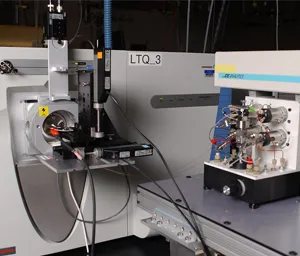
Mass spectrometry is the analytical method employed for identifying the mass to charge ratio of ions. It consists of three primary components: ionization, mass analysis as well as detection. During the ionization step, the sample is turned into particles that carry a charge, which is mostly an ion. This can be done by either by electron impact ionization or electrospray ionization depending on a sample type.
After getting ionized, the charged ions are injected into a mass analyzer where they are separated according to ratios of the mass to charge. Quadrupole, time-of-flight (TOF) and orbitrap are the most frequently used mass analyzers, each coming with peculiar characteristic like resolution speed and sensitivity. Finally, the ions are detected and a mass spectrum is obtained from the analysis of the interatomic interactions. This spectrum can give the analyst very important information on what the sample is made up of and in what proportion the various metabolites are present.
The Importance of Metabolomics
Metabolic profiling is the most powerful and effective method to elucidate mechanisms of metabolic regulation and metabolic pathways in the organism. Metabolomics enables new information about cellular functions, disease states, and results of treatment through administration of drugs or alteration in environmental conditions to be gathered from the full analysis of all the metabolites that are present within a cell, tissue or organism at any given time. Metabolites can be used as potential biomarkers of both physiological and pathological processes, as measures of different diseases.
For example, alteration of their concentrations may provide indications of diseases including diabetes, cancers or cardiovascular diseases. Recognizing these metabolic changes can help to improve the diagnostic process, monitor the condition, and look for ideal treatment options.
Enhancing Sensitivity and Resolution
By far, one of the greatest strides made in mass spectrometry is the enhancement of sensitivity and resolution. Many currently produced mass spectrometers are capable of detecting metabolites at levels of nanomolar or even picomolar range. This capability is extremely important when dealing with samples such as blood or tissues, where metabolites often can be present in very different concentrations.
The high resolution that is characteristic of mass spectrometers of the present day enables practitioners to differentiate between molecules with similar structures, an important prerequisite for identification as well as quantification. This level of detail is most vividly illustrated in metabolomics, where even the subtle variation of the molecular structure of the observed metabolites impacts their function.
Non-invasive Sampling Techniques
The other advantage of mass spectrometry in metabolomics lies in the fact that metabolites sampling can be achieved without invasions. Conventional techniques used to collect biological samples including biopsy can be painful and uncomfortable to the patient therefore; cannot be used on patients. Application of mass spectral data has advanced to noninvasive sampling methods that embrace breath test, urine sampling up to salivary analysis.
These methods are non-invasive and not only increase patients comfort but also enable more frequent sampling and thus give more dynamic view on metabolic shifts.
For instance, breath analysis points to volatile organic compounds (VOCs) as biomarkers of many ailments; urine and saliva samples give an idea of metabolic activities without invasive procedures.
Comprehensive Metabolite Profiling
The metabolite identification technology of mass spectrometers helps researchers to get a molecular picture of an organism at a certain time point. This capability is highly useful for characterizing early metabolic alterations related to diseases, therapeutic diets or toxicant exposures.
Comprehensive metabolite profiling in research trials can identity new biomarkers that could be otherwise remain unnoticed. For example, in oncology the authors detected specific cancer-related metabolite profiles and investigated potential biomarkers for cancer diagnosis. Since the metabolite profile of healthy and diseased people will be different, the study of the metabolite profile of disease specific can help the researchers understand the mechanisms by which a disease operates and where the drugs can be targeted.
Personalized Medicine
The use of mass spectrometry in metabolomics is leading to the development of the concept of “shared care” medicine, or personal treatment regimen based on the patient’s characteristics. Through determination of patient’s metabolite values, clinicians are able to comprehend how the patient metabolites drugs, processes treatments or even how pathways function.
There are several benefits attaching to its implementation; peculiarly, it is individualistic. For example, two patients may have divergent metabolic rates meaning that they may perceive a specific drug in a different manner. Due to this, even specialized treatments appropriate to the metabolic profiling of a given patient can be adopted in addition to reducing the possible side effects. In addition, metabolomics can also be used to improve understanding of the possible toxicities over particular treatments to better assess individual patient risks.
Applications in Disease Research
Metabolomics by way of mass spectrometry is of relevance in many disciplines of disease study. Here are a few notable examples:
- Cancer Metabolomics: The key advantage of routinely applying metabolomics for cancer biomarker discovery has become widely acknowledged among researchers among others. Using data on tumor tissue and microenvironments, scientists have the opportunity to learn about the metabolism of cancer, thus practicing early diagnostics and evaluating treatment outcomes. For instance, increased concentration of some metabolites including lactate or oncometabolites can be an evidence of a tumour’s activity and inform therapy.
- Diabetes Research: Metabolomics has also played a major role in diabetes research. Through analyzing the blood and urine samples of diabetic patients, the investigators are able to ascertain the relationship between metabolic involvement in insulin resistant, glucose and other complications of diabetes. Such knowledge may help identifying new therapeutic targets and preventive measures.
- Cardiovascular Health: Metabolomics could provide helpful information on cardiovascular health and functional lipid profiles, anti-inflammatory and antioxidant biomarkers, and their variations. Walsh and colleagues identified that knowing biomarkers associated with metabolic disorders of cardiovascular diseases can be helpful when evaluating the risk and applying targeted therapies.
- Neurodegenerative Diseases: Metabolomics has the potential in Alzheimer and Parkinson’s disease research of identifying new metabolic changes associated with disease progression. Since early biomarkers and metabolic pathways for these complex diseases remain uncertain, the identification of such metabolites in cerebro-spinal fluid and brain tissue is critical.
Challenges in Metabolomics Research
In spite of the central role played by mass spectrometry in the metabolomics revolution, there are several issues to be addressed. However, the biological samples pose a major challenge due to their difficult nature. Metabolite profiles in biological matrices like blood or tissue are extensive and elution and separation of these matrices are difficult. To reduce the impact of interference by other components, researchers have to use complex sample preparation methods to increase the detection limit.
A second issue hereby understood is data analysis. It may also challenge users by processing huge data generated by mass spectrometers. High level computation and database mining methods are required to analyze large and integrated metabolomics data set.
Scientists need to create effective methods as well as specific programs to find metabolites, measure their concentrations and understand a connection between their presence and certain biological processes.
Inter-laboratory comparability of method is also important in metabolomics studies in facilitating the possibility of gaining reproducibility. It is a problem that the sample is collected, prepared and analyzed in a different way in different studies Thus, results distinguished narrowly. An attempt is being made to formulate standard procedures and protocols that will allow for the development of standard operating procedures in the area of metabolomics.
Future Directions
The prospect of metabolomics is bright because of the revolutionary improvements in the methods of mass spectrometry and other analytical tools. New technologies that are anticipated to boost the metabolomics activities are high-resolution mass spectrometry coupled with microfluidics. These innovations will provide an opportunity for researchers to work more samples at a given period thus quick achievements and service delivery.
Also, combined with the other omics technologies including genomics and proteomics, metabolomics offers the promise to develop a higher level system understanding. This allows for the identification of many interactions within different layers of biological data and describes the overall structure of health and diseases.
Moreover, the growing focus on a concept known as personalized medicine will create more demand for metabolomics in the clinical front. Due to changing aim of health care for a more personalized approach, metabolomics will significantly contribute into a more personalized, according to patients’ metabolic profiles, treatment and, therefore, outcomes.
Conclusion
Therefore, mass spectrometers are revolutionizing the metabolomic experiments and offer researchers remarkable instruments to investigate the complex mechanism of metabolites. Remarkable improvements in sensitivity, sample collection and processing, and a broad range of profiling opportunities, mass spectrometry continues its transformation of biological systems analysis and the understanding of the nature of diseases. Consequently, the role that metabolomics can play in disease genesis and in pharmaceutical and clinical diagnosis research is colossal and breathtaking.
With such a rapid development of the field, mass spectrometry will surely occupy a central position in the future of mass spectrometry metabolomics, as it inspires important discoveries that may form the basis of future progress in the sphere of healthcare. Metabolomics is just on its way as an independent discipline in life sciences due to recent improvements in mass spectrometry and it holds the potential to define future equipment’s in medical sciences.
.webp)
Kate, Editorial Team at Pharma Focus Europe, leverages her extensive background in pharmaceutical communication to craft insightful and accessible content. With a passion for translating complex pharmaceutical concepts, Kate contributes to the team's mission of delivering up-to-date and impactful information to the global Pharmaceutical community.