Emerging Technologies in Automation Machinery for the Pharmaceutical Industry
Kate Williamson, Editorial Team, Pharma Focus Europe
Some of the emerging that pharma production have identified to be interfacial with include Robotics, Artificial Intelligence, Internet of Thing and 3D printing. They improve the accuracy, speed and safety and more to do so while being compliant to the correct regulatory standards. As solutions to Industry problems that facilitate personalized medicine, predictive maintenance, and process enhancements, they contribute positively toward the manufacturing of cost efficient, high quality drugs.
Introduction:
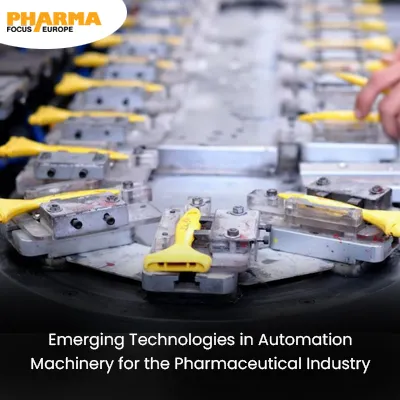
Pharmaceutical industry has long been a fore-runner on the use of technology where it has proved vital in increasing efficiency, quality and safety. Automation machinery has become more important over the years, due to its ability to efficiently handle manufacturing, packaging and distribution challenges. Advanced technology is improving automation machinery as an integration tool in the pharmaceutical industry. This article looks at the different developments influencing the industry and the extent of transformation.
1. The Role of Automation in Pharmaceuticals
If defined in a simple manner, then, automation in the management of the pharma industry can be described as the implementation of technologies within companies which makes different tasks with minimal interference from human personnel. Such activities include production, inspection, and testing, and even boxing, storing and delivering the finished goods. Automation is a proven technique that incorporates computer control in production processes to achieve more precision, little to no error rate, and immensely faster work rate. Also it reduces the employment of man in handling of certain dangerous chemicals to which he is vulnerable, making the workplace safe.
Thanks to modern trends in automation technology like robotics, artificial intelligence, and IoT, the advantages of this shift are being further extended. It lets monitor processes in real-time, schedule preventive maintenance, and optimize manufacturing; it responds to the growing need for industries to produce personalized medicines and meet regulatory requirements.
2. Robotics in Pharmaceutical Manufacturing
Every firm today is in search of a way to bring in robots to the firm like the pharma factory in a bid to shave off some costs and obtain many results within the shortest time possible.
- Tablet and Capsule Production: The result is that robots reduce variations and variations mainly in dosage and quality in the production line.
- Sterile Handling: Robots move within the clean rooms hence minimizing on infection factors. They are perfect for aseptic zones needed in production of vaccines and other biologics.
- Packaging and Labeling: Labour intensive procedures such as delicate packaging can be undertaken by robots in a way that satisfies the legal requirements on labeling.
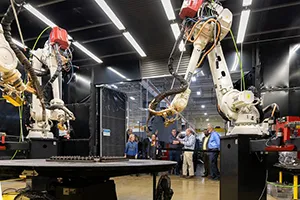
7New generations of robots to the industrial environment have integrated sensors and real-time learning, so they can update from current methods. For example, the industrial collaborative robots otherwise known as cobots are designed to work with people because they are controlled by people.
3. Artificial Intelligence (AI) in Automation Machinery
AI does this by analyzing data then making suggestions to improve on the automated processes. In pharmaceutical manufacturing, AI is used for:
- Predictive Maintenance: AI oversees equipment and identifies signs of wear and tear and likely failure, which reduces shut-down time.
- Process Optimization: It realigns factors as they occur to improve the quality on the products that are produced and also minimize on wastes that may be produced.
- Quality Assurance: Technology endorsed systems identify potential problems or deviations that may arise during the process of production thereby improving quality.
For instance, machine vision as a subset of AI makes it easier to inspect tablets or ampoules by detecting minor defects that would be difficult if the inspection was done by human eye.
4. Internet of Things (IoT) for Connected Machinery
IoT can be termed as the connecting of objects that happen as the devices in question exchange data at real time. In pharmaceutical automation, IoT offers the following benefits:
- Real-Time Monitoring: Production parameters such as temperature, pressure and humidity within the production process are among the things monitored by the IoT sensors.
- Traceability: Another important aspect is that IoT systems provide end-to- end visibility, so their use can help improve tracking of the basic materials, as well as the final manufactured products.
- Energy Efficiency: They also ensure that there is end to-end visibility of the IoT systems to improve the tracking of raw materials and finished products.
Integration of IOT also assist in the compliance since records of the production environment and process are tightly captured and can easily be shared with the regulators.
5. 3D Printing in Pharmaceutical Manufacturing
Among manufacturing technologies the developing technology of additive manufacturing technology or also known as 3D printing technology in manufacturing pharmaceutical products has been relatively flexible. Key applications include:
- Personalized Medicine: It also makes it easy to prepare doses as per the patient’s Individual requirements or a cocktail of drugs.
- Rapid Prototyping: It affords manufacturers the opportunity to effectively formulate and subsequently evaluate new drug products.
- Complex Drug Delivery Systems: One application of 3D print, for instance, is in controlled-release tablets which are drug delivery structures.
This technology optimizes resource utilization and shortens the new product development cycle, particularly for pharmaceutical formulations.
6. Machine Learning and Big Data in Drug Development
The pharmaceutical business produces large quantities of data during drug creation and manufacturing. This data is analyzed using different Machine learning (ML) algorithms to discover patterns as well as improve procedures. Some applications include:
- Drug Discovery: ML is able to predict the different drug candidates based on the biological information.
- Process Automation: It adapts processes for output that fits well the manufacturing requirements.
- Regulatory Compliance: Bioinformatic tools help rid the process of using complex forms, which are often used for regulatory paperwork.
When combined with automation machinery, pharmaceutical firms are able to deliver drugs within shorter time than whenever they work independently while maintaining good quality of their products.
7. Blockchain for Secure Supply Chains
Blockchain enhances security of pharmaceuticals since it makes the supply chain of drugs transparent. When integrated with automation machinery, it offers benefits such as:
- Counterfeit Detection: Through blockchain, every movement made by the drug right from the manufacturers’ end is documented to avoid counterfeits.
- Regulatory Compliance: It affords the records of manufacturing and distribution that cannot be altered easily.
- Inventory Management: With blockchain, people are able to track and manage inventory to ensure that there is no product backlog or unused product.
This technology puts trust among the stakeholders right from the marketers or producers to the ultimate users.
8. Digital Twins for Simulating Processes
A digital twin may be generally defined as a replica of a physical system in digital setting. In the context of the pharmaceutical industry, manufacturing procedures and their potential impacts are articulated in the digital environment. Benefits include:
- Process Optimization: Manufacturers can plan and try out different situations on the table, but they do not affect the real production.
- Training: Digital twins are also adept at raising the comfort level for training employees in virtual learning.
- Cost Reduction: They minimize the use of costly methods of experimentation and by trial and error.
Thus, having the digital twin of automation machinery, several situations can be prevented and companies will be sure that the processes are more accurate and less imperfect.
9. Autonomous Mobile Robots (AMRs) for Material Handling
Implementation research has shown that compared to conveying technologies, AMRs are more revolutionary to material handling in the pharma manufacturing industries. AMRs avoid the static navigation system of conventional automated guided vehicles (AGVs) and rely on sensors and artificial intelligence to move. Applications include:
- Transporting Raw Materials: AMRs are used to transport the raw materials form storage locations to production regions.
- Finished Goods Movement: They are further responsible for delivering products when they are ready to the packaging and dispatch sections without delay.
- Inventory Replenishment: AMRs are self-sufficient and independently restock inventories to describe the operations.
This technology reduces contact with operators, making it safe and increases efficiency in the plant.
10. Challenges and the Road Ahead
Despite its advantages, integrating emerging technologies into automation machinery comes with challenges:
- High Initial Costs: Modern tools and instruments involve high costs of acquisition and installation.
- Skill Gap: Such systems should be operated and maintained by employees, who, therefore, require training.
- Regulatory Hurdles: This is attributed to the fact that meeting the regulatory demands can hinder the uptake process.
However, the advantages that are to be derived from utilization of effectiveness model outweigh these challenges. Therefore, through applying of these technologies, pharmaceutical companies will be able to improve their product quality, deliver the products promptly and ultimately enhance the patients’ outcomes.
Conclusion:
The automation machinery technologies which are still under construction are changing the face of pharma industry.
Technologies like Robotics, Artificial intelligence, Internet of Things, and 3D Printing are radicalizing the manufacturing industry by featuring higher velocity, safety, and capability. New advancements in such technologies will be beneficial in regards to the growing customers’ demands and the improved legislation and regulation. Manufacturing of pharmaceuticals in the future will have to incorporate these innovations with the view of achieving the intended quality production of pharmaceutical products, low costs and sustainability.
In this case, participation in such modern tools may help the pharmaceutical enterprises not only to address present requirements but also to develop for the future which is defined by innovation.
.webp)
Kate, Editorial Team at Pharma Focus Europe, leverages her extensive background in pharmaceutical communication to craft insightful and accessible content. With a passion for translating complex pharmaceutical concepts, Kate contributes to the team's mission of delivering up-to-date and impactful information to the global Pharmaceutical community.