Digital Health and Wearables: Integration with Pharmaceuticals for Improved Patient Outcomes
Harry Callum, Editorial Team, Pharma Focus Europe
Integrating a form of digital health and wearable technology is becoming increasingly beneficial in healthcare delivery since it provides real time monitoring, treatment, and results. Interlinked with medicines, wearables keep people with chronic diseases in check, remind them to take their drugs, and contribute to clinical trial information. Despite challenges like data security, this synergy offers promising advancements in personalized healthcare.
Introduction to Digital Health and Wearables
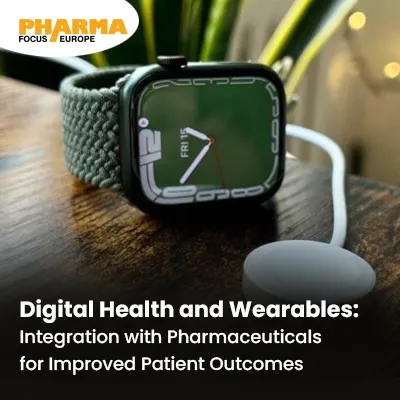
Digital health is the application of telecommunication technologies that allow people to control and maintain their health through their smartphone, applications, sensors, and the cloud. Mobile devices are – while not the only ones – an important factor in this digital health environment; wearable fitness, smart watches, and health monitoring devices occupy this niche. These wearables can track things as simple as heart rate, activity or sleep and can go as far as blood oxygen level or glucose levels where the person has diabetes.
Integrated with pharma, wearables hold vast potential to deliver tangible benefits with regards to patient outcomes; wearables add a realtime layer to the therapies and treatment processes, and also inject patient engagement between patients and health care practitioners into the process.
How Wearables are integrated with Pharmaceuticals
It has become traditional that pharmaceutical companies are offering their cooperation with digital health technologies and wearables to improve the outcomes for patients. Wearable technology has a way of closing the loop between medications and real impact to health since the will monitor continuously. Here’s how this integration works:
- Personalized Treatment Plans: This is because the health needs and fitness needs of different patients vary due to age, genetic predisposition, and the choice they make in their daily lives. The kind of designs that can be worn can assist in checking a patient’s body to how it is responding to a treatment regimen in real time. This enable the doctor to either change the dosage or change the type of drug or change the pattern of living in order to make it effective.
- Remote Monitoring: Wearable electrical units allow practicing physicians to observe and manage patients not restricted to clinical environments. For instance, a patient with a history of heart disease can put on a heart monitor that records his or her heart rate and rhythm at all times. Any deviations that may be observed are reported to the doctor to minimize on adverse effects.
- Improving Medication Adherence: The broad issue that affects the healthcare facilities in all the countries of the world is lack of compliance to treatment prescribes by the doctor. While some of the wearables can prompt patients on the time to take their drugs or how well they are adhering to their treatment schedules. It can be used with doctors or other carers to ensure that the patients do not go off-track.
- Clinical Trials: Wearables first as pharmaceutical manufacturers, collect data from patients in clinical trials. This data is much more realistic to give insight for performance of a drug to increase efficiency and to give quick solutions on tests on safety and efficacy of the drug.
Benefits of Digital Health and Wearables in Pharmaceuticals
- Better Health Outcomes: Because wearables interface with pharmaceuticals, patients can receive personalized treatment based on patient health information. This decreases the risks that are associated with medication and increases the probability of positive results of treatment, and therefore; better health of the patient.
- Proactive Health Management: Wearable devices focus on putting control back in the patients’ hands. Through monitoring they keep checking one’s body weight, blood pressure, heart rate and other measures that give early signals of possible health complications in order to correct the same.
- Data-Driven Decisions: Information from wearables flows continuously, and this means that healthcare providers and manufactures of drugs can make better decisions. Such data can help to design new drugs, enhance the predictability of adverse effects, and enhance the therapeutic regimens.
- Enhanced Patient Engagement: Wearables elicit patients’ attention through helping them gain an enhanced understanding of health. Engagement of the patients leads to the adherence to the recommended treatment plan and the consequent adoption of more appropriate lifestyle.
Real-World Examples of Integration
- Diabetes Management: Smart bands that constantly measure blood glucose level have been a huge improvement for diabetic patients. These devices are connected with smartphones and they notify users if they’re over or under the desired blood sugar level. They also can also share information with insulin pumps so that the right amount of insulin can be administered depending on the readings obtained.
- Heart Disease Monitoring: Pulse Monitor Watches can detect heart rhythm. These devices can monitor real time activity of the patients with heart complications and such and look for signs of an irregular heartbeat or any other worrying sign that may cause stroke or heart attacks.
- Mental Health and Sleep Disorders: There are wearables that can track the sleep of a person and the level of stress to aid a physician to work on a case, including the psychological case or any sleeping disorder. They can be combined with antidepressants or antianxiety medication to teach the patient how one’s life style influences wellbeing.
Challenges and Future of Wearables in Healthcare
The concepts based on digital health and wearables in combination with pharma have a positive outlook, yet, there are still some issues to solve. There is the issue of security — health information belongs to patients and it must be secure at all times. Furthermore, some patients might not feel at ease with technology or may not be able financially to buy it making health inequalities worse.
Staring ahead, therefore futuristic digital health and the wearable devices are something to look forward to. Over time, more advanced wears will be released and the insights that patients have regarding their health will equally be richer. The pharmaceutical firms’ working in tandem with the parties offering digital heath technology is set to expand even further owing to an aim of providing enhanced and customized treatments to the patient’s across the world.
Conclusion
This digital convergence of health and drugs with wearable technology in particular is revolutionizing patient treatment. From the specific approaches to treatment to telecare, all these technologies offer patient-specific health information that culminates in better patient health. It is still a rapidly growing field and undoubtedly has all the potential for fundamental and positive change in the area of health care delivery and patient outcomes.

Harry Callum, Editorial Team at Pharma Focus America, leverages her extensive background in pharmaceutical communication to craft insightful and accessible content. With a passion for translating complex pharmaceutical concepts, Harry contributes to the team's mission of delivering up-to-date and impactful information to the global Pharmaceutical community.