Clinical Trial Innovations: The Future of Decentralized Trials
Kate Williamson, Editorial Team, Pharma Focus Europe

Many articles consider clinical trials as a major component of medical research since they make it possible to collect the required data for which one needs to release new medicines. Historically, clinical trials are conducted in specific institutions such as hospitals or centers for medical investigation, however such a model of drug trials can be very restrictive and protractive. Decentralized clinical trials or DCTs, have only become popular in the past few years and are considered a revolutionary development. These trials involve utilizing of technology in doing research with the help of virtual instruments so that patients can engage themselves from their comfort of their homes. This is even more so because the use of DCTs changes the traditional approach to clinical trial management and gives an idea of what the future will bring.
What Are Decentralized Clinical Trials?
A decentralized clinical trial is not that much different from a traditional clinical trial but eliminates the need for the participant to visit the site for each visit. However, they depend on-technology-supported inquiries like telemedicine, mobile application, wearable device and online data collection. This makes the attending of appointments easier for the patients as well as the convenience of sample collection for the researchers. In a decentralized model, participants may only require to attend a nearby clinic provider or transmit the data from their gadgets to the researcher only limiting transportation and related issues.
Benefits of Decentralized Trials
As such, decentralised trials present a number of benefits. First, they make patients avail more services. Those living far from research centers or facilities, the immobile, and those with a very tight-work-schedule can now have trials that otherwise they may not be able to access. It also means that the process of recruitment becomes more efficient and expansive, which means the sample population can be more diverse, thereby increasing the likelihood that the findings actually generalize to different populations.
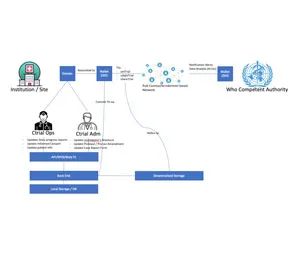
Besides, decentralized trials also lead to a faster process of research being conducted by the doctors. Real-time data collection through the use of digital tools enables the researchers to compile results in much shorter time and tweak the research to produce the best results.
This may have the effect of shortening the development time of new therapy types that could be good news for patients in need of advanced treatment options.
Technology Driving the Change
The decentralised trials’ effectiveness is dependent upon technology solutions implementation. Pervasive devices as fitness trackers or smartwatches give the possibility to the researchers to record the patients’ vital signs, motion activity, and sleep quality without interrupting the monitoring process. Some of the activities that can be done through the use of mobile apps are data collection, appointment making and even a constant reminder to patients on when they should take their medicine. Telemedicine means the use of healthcare providers over the phone and through other means without the need for an appointment. All the technologies mentioned above help in making clinical trial easy for the participants and researchers by making it a well-connected process.
Regulatory and Ethical Considerations
Despite the advantages that come with decentralized trials, the approach comes with several challenges especially in the areas of regulatory and ethical problems. Consent to the level of personal data privacy and protection is granted since the patient’s information is shared over the internet. The researchers have to meet legal requirements on data protection as per rules and regulation set by the country or by the organizations like GDPR in Europe or HIPAA in America. Also, there is a need for regulatory bodies to set the guidelines for decentralised trials and the steps that have to be taken to standardise them like any other trials.
The last aspect has to do with the informed consent. The participants involved in decentralized trials may not physically meet the researchers and so there is need to ensure that the participants have adequate information concerning the risks and benefits associated with the study. Hence, making sure that patients understand what they are agreeing to do is very important especially with regard to ethical issues in clinical research.
Overcoming Challenges
However, the decentralized trials have the following challenges. The first is technology access where they have highlighted some of the concerns that are fundamental to the success of most learning management systems such as: Students’ use of the provided devices as well as internet connection may be limited by a lack of access especially in rural or low-income areas. To overcome this, certain research proposes that participants should be given the correct gadget, for instance, smart phones or tablets in a bid to equal the trial.

The third difficulty is the identification of accurate data. It was also found that even though wearable devices and apps generate a lot of data, it is necessary to make sure that this data is accurate and that the participants utilise the technology appropriately. Because errors can be costly, researchers have to be very specific when offering instructions and availing their assistance to the participants during trial.
The Future of Decentralized Clinical Trials
There is also the need to point out that, due to development of new technologies, the trend of decentralized trials will also continue in the future. The utilization of technology-mediated approaches to attend to the healthcare needs of the public has been boosted by the COVID-19 pandemic, and this trend will be observed in clinical research. It is possible that in the future proper systems consisting of the traditional and the decentralised one will be incorporated into the process in the format corresponding to the requirements of certain research and participants.
Another advantage that decentralization of trials has is that it bring clinical research to the general population and is more efficient. When more people can contribute, from different areas of the country and varying socioeconomic status, the results will be more generalizable to the actual population, which in turn will benefit the study of diseases and lead to improved health of the population.
Conclusion
Clinical trials have shifted to decentralization, and this change is really changing the medical research practices. These trials are more accessible, rapid and diverse, as it involves the use of digital technology and remote tools in conducting the trials. However, problems like access to the technological tools and protection of data can be an impediment as far as the success of this approach is concerned. Future outcomes of decentralized trials suggest a horizon of conducting and expanding clinical research by effectively increasing access to it and its patient-centered approach.
.webp)
Kate, Editorial Team at Pharma Focus Europe, leverages her extensive background in pharmaceutical communication to craft insightful and accessible content. With a passion for translating complex pharmaceutical concepts, Kate contributes to the team's mission of delivering up-to-date and impactful information to the global Pharmaceutical community.