Quality management systems (QMS) are the backbone of pharmaceutical manufacturing, ensuring safe products from lab to launch. But in a world driven by AI and data sciences some pharma companies are still chasing paper trails and disconnected quality systems. While the industry is still in the process of digital transition, the quality function stands at a crossroads, risk and complexity becoming a bottleneck to innovation. Today, the question is not whether to go digital, but how to do it strategically without compromising traceability, compliance, or trust.
Legacy Systems are Holding Pharma Back
Legacy systems still rely on paper-heavy processes, fragmented systems, siloed tools, and outdated/manual workflows. In today’s competitive pharmaceutical landscape, it is adversely affecting the entire quality value chain of the organization - from deviation handling to updating training records, leading to batch release delays and eventually compliance risks.
Due to inconsistent data and lack of integrated systems there is limited visibility across functions, causing unnecessary rework. Moreover, QA professionals spend long hours repeating laborious tasks such as checking logs, preparing for audits, and seeking signatures for change control documents, etc. rather than focusing on continuous improvement and risk mitigation activities.

When systems do not talk to each other, neither do the teams. As a result, quality becomes reactive.
This overdependency on manual or siloed processes is not only time-consuming and resource-intensive but invites compliance risks too. Several errors pile up - incorrect entries, missed sample analysis, delayed document updates, - to an extent that companies find themselves spending more time preparing for audits than simply being audit-ready.
A Digital Reboot to Pharma QMS Is Needed
Let’s be honest—quality is safety.
When quality slows down, everything else does too. Sticking with manual systems makes it hard to identify patterns, predict issues, and act fast in case of any quality mishap. Without visibility, quality becomes reactive rather than proactive. This is why a digital tool is no longer optional.
Here, the solution is not just digitizing what is already there but rethinking the quality mindset from an enterprise viewpoint. The role of quality in today’s modern, data-driven pharma world is not just a compliance gatekeeper, but a strategic driver of trust, agility, and performance.
What Modern Quality Looks Like
Modern quality systems are real, practical tools that can make quality faster, smarter, and more connected to other systems. They don’t need to be the next big thing in tech; they just need to be made right for you. They focus on connecting the dots for a better, future-ready enterprise by changing the digital mindset and not just the systems.
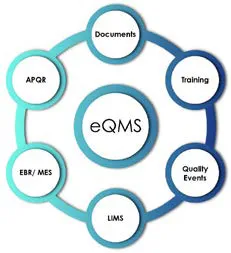
Smarter electronic quality management systems (eQMS): Are we talking about a synergized ecosystem where every function is interconnected with automated workflows? Yes! When quality systems experience a digital uplift and when you integrate that with manufacturing (MES) or laboratory (LIMS) systems, there is end-to-end visibility. CAPAs, audits, deviations, and training—all well-managed, streamlined, and real-time. With this, quality teams will have no silos, no data chases, and only clean, traceable workflows!
Predictive insights. Advanced analytical tools and AI-powered systems can spot trends, OOS results, find problems, or any complaints before they turn into big problems. So, with digitalized QMS, quality becomes a predictive mechanism, not a reactive system, normalizing stress-free audits.
Digital documentation makes the picture perfect. Digital document management speed up reviews, approvals, and audits. Alongside this, the entire lifecycle of a document can be seamlessly managed in one place.
Streamlined learning management. Skilling up your workforce simultaneously when a change control occurs happens seamlessly with a digital, robust learning management system that identifies the change, generates automated training plans, and documents them properly.
Real-time visibility. There is nothing better than visualizing the performance of quality function, right from CAPA to audit readiness in real-time. QA leaders can make faster decisions with a live command center view of what is working and what is not.
Ask yourself – Do your quality systems talk to each other or operate in silos?
When quality works alongside manufacturing, labs, and IT, everyone benefits.
Real World Challenges to Implementing Digital Quality
Change is not easy. Many quality leaders modernizing worry about risks in legacy systems and building trust. It's about breaking barriers, shifting mindsets, and driving innovation.
The biggest ‘NO’ comes from the organizational culture - we have been doing it this way, and it works. Why the change? A culture that values hierarchy, tradition, and averts risk may be less receptive to innovation, making it a major roadblock. Resistance to change can be heard in some other often-stated reasons –
- Replacing legacy systems may require investment of time and resources, which needs strategic backing too.
- Multiple systems and databases for different functions hinder collaboration and knowledge/data sharing.
- There could be validation risks, quality blind spots, duplication of data, and lack of clear return on investment (ROI).
When you are the champion of change, the challenge is to pitch quality wisely, not just as a compliance tool. Quality leaders must advocate true transformation is quality results, in preventing reworks, accelerating releases, reduced cycle times, and better audit outcomes.
Getting Started – Tips for Success
If the barriers are real, so are the opportunities. Quality leaders must learn to leverage significant business value with digital disruption. This is possible by identifying quick wins, starting small, and doing it right the first time.
Start Small: Pick one process to digitize, like change control or training. Quick wins build momentum.
Validate Wisely: Use smart risk-based validation approaches like CSA or pre-validated systems to speed up deployment while staying compliant.
Form a Cross-Team Group: Include QA, IT, operations, and HR to break down silos of transformation management.
Use Business Language: Focus on results—fewer errors, faster batch release, lower audit costs.
Move Fast: Don’t wait for the perfect moment. Every delay increases risk and missed opportunity.
Embrace Digital QMS for Smarter Pharma
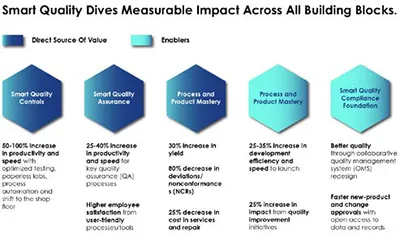
Digital transformation of quality management systems is a critical enabler for pharma’s competitive advantage in the 21st century. Companies who want to win in the digital economy are leading the way by investing largely in digital transformation. This aligns with the broader industry trend, estimated to reach almost $4trillion in 2027, according to IDC. This shift suggests that industry is moving toward more effective QMS practices that align with the QMS 2.0 principles.
Pharmaceutical companies and quality professionals must recognize the non-negotiable digital imperative in quality functions, not only to maintain high standards, but also to meet the evolving regulatory requirements and sustainability practices. This eventually leads to delivering safe, effective, and quality healthcare solutions for the future at affordable costs.
References:
1. https://www.mckinsey.com/industries/life-sciences/our-insights/smart-quality-reimagining-the-way-quality-works
2. https://my.idc.com/getdoc.jsp?containerId=prUS52305724