
Oral solid dosage is necessary to ensure that medicines are safe, efficient and consistent to ensure maintaining high standards in production. Regulatory requirements and best practices in the industry play an important role in achieving these standards. In the introduction of automation, data-driven monitoring and procedural verification continues to improve efficiency, ensuring compliance with guidelines for regulations.
Regulatory Compliance and Good Manufacturing Practices:
In Regulatory compliance is a cornerstone of drug construction, ensuring that oral solid dosage (OSD) products meet installed safety and quality standards. Officials such as FDA, EMA and MHRA have implemented strict rules that control raw materials from purchases to each stage of the production process. To follow these guidelines it is important in the patient's safety and maintain product efficiency.
Good Manufacturing Practices (GMP) provides a structured framework that guarantees production stability. In these guidelines cover various features are convenience maintenance, personnel cleanliness and proper use of equipment. These manufacturers should use strict guidelines to prevent and cross contamination and deviations from the prescribed formulations. This is necessary to maintain a controlled production environment, with adequate ventilation, temperature control and moisture control, to ensure product stability.
A well-defined documentation system is fundamental to compliance with regulations. Detailed registrations of source of raw materials, equipment calibration of equipment, batch production and quality control assessment should be maintained. This documentation acts as a reference for revising regulatory officers, which ensures openness and traceability in production. Repeated internal audit helps identify potential risks and allow manufacturers to take corrective and preventive measures before increasing problems.
Employee training and qualifying development is equally important for maintaining compliance. The personnel involved in OSD production will have to undergo continuous training to keep up to date with the developed rules and industry. By giving the proper training will reduce human error and ensure that production workers understand the important character of their roles to maintain the quality of the product.
The manufacturers must apply corrective and preventive actions (CAPA) to address deficiencies. This risk-based approaches help to identify problems that can significantly affect the quality of the product and patient safety. Conduct surprise inspections to assess compliance, making it mandatory for manufacturers to continuously follow best practices instead of taking a reactive approach.
By this ensures compliance with regulatory compliance not only protects public health, but also improves the credibility and reputation of drug producers. Companies that continuously complete GMP standards receive competitive benefits, including simple market access and better consumer trust. As the rules develop, manufacturers should be active by using new techniques and functions that support compliance and quality assurance.
Process Validation and Quality Control
Process validation is an important element of quality assurance in OSD production. This involves a series of evaluations designed to confirm that production processes are constantly producing medicines that meet predetermined quality standards. The confirmation process is usually divided into three steps:
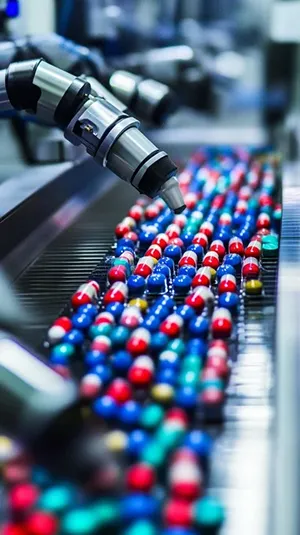
- Process Design: The Development of production processes based on scientific principles and prior knowledge entails.
- Process Qualification: It ensures that all equipment and processes work within installed parameters.
- Continuous Process Verification: Over time, the procedure requires continuous monitoring to maintain stability.
Quality Control mechanism is used at each production stage to identify differences before affecting the final product. High-Performance Liquid Chromatography (HPLC) and Near-Infrared Spectroscopy (NIRS) are widely used to evaluate the chemical composition and uniformity of OSD products. Other major quality control measures include:

- Content uniformity testing are equally distributed to ensure active pharmaceutical ingredients (API).
- Dissolution testing to confirm the frequency of solving tests as the drug releases in the body.
- Hardness and friability testing to determine the durability of tablets during handling and transport.
Raw Material Quality and Supply Chain Integrity
The quality of raw materials directly affects the efficiency and safety of OSD products. These ensuring the purity and stability of API and excipients is an important component of quality assurance. Suppliers should undergo strict qualifying procedures, and raw materials should be tested on the receipt to complete the necessary specifications.
The integrity of the supply chain is another important factor in maintaining the quality of the product. False or subordinate materials poses a significant risk to the patient's health and compliance with regulations. In the Blockchain technology is expected to increase transparency and traceability in drug supply chains, which can reduce the risk of pollution or fraud.
Automation and Digital Technology
Automation changes OSD production by reducing human errors, improving efficiency and increasing the stability of the product. The automatic system streamlines various processes, including tablet compression, coating and packaging. Robotics, computerized systems and Manufacturing Execution Systems (MES) help manufacturers to adapt the workflows and ensure compliance with regulatory requirements.
This digitization also plays an important role in quality assurance. Advanced data enables analysis and surveillance of manufacturers in real time to immediately detect and correct nonconformities. By integrating smart production solutions, companies can improve product quality, reduce waste and increase total production efficiency.
Process Analytical Technology and Real-Time Monitoring
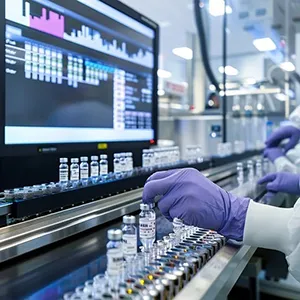
It is a regulatory framework aimed at improving the quality of drug production through continuous monitoring and control. Makers of PAT equipment allow manufacturers to analyze important quality properties in real time, reduce batch defects and improve efficiency.
The most important Pat tools used in OSD production include:
- Spectroscopy techniques for chemical analysis of real-time (e.g., NIRS, Raman spectroscopy).
- Particle size analysis to ensure uniformity in powder formulations.
- Real-time moisture content measurement material to prevent stability problems.
By implementing patents, manufacturers can transfer more active, data-driven approaches than traditional batch tests that increase product quality and reduce production costs.
AI-Driven Quality Control
Artificial intelligence (AI) OSD brings a revolution in quality assurance in production. The AI-driven quality control system analyses large amounts of data to identify the pattern, predict potential deviations and to adapt production processes.
Machine learning algorithm improves the shows in the size, color or weight of the tablet and improves the detection of the errors. AI also supports future maintenance by identifying potential tool errors before reducing shutdowns and improving general production efficiency.
With these AI-driven solutions, pharmaceutical manufacturers can increase the decision, improve the reliability of the process and maintain high-quality production standards.
Risk Management and Pollution Control
Risk management is an important component of quality assurance in OSD production. These Hazard Analysis and Critical Control Points (HACCP) help functional manufacturers identify potential risks and take preventative measures to reduce pollution.
Common sources of pollution include:
- Cross satisfaction between different medicines.
- Microbial pollution due to poor hygiene practice.
- Pollution of pollution from production equipment.
To reduce these risks, manufacturers use strict cleaning and hygiene protocols, using a closed system and trainer production environment uses trained personnel in the best practice for pollution control. Advanced filtration systems and environmental monitoring further reduced the risk of pollution.
Future Trends in Quality Assurance
Together with new techniques and function, the pharmaceutical industry continues, with increasing quality assurance. Some new trends include:
- Continuous production: Traditional batch treatment improves real-time production, efficiency and improvement of product stability.
- Blockchain for traceability: The supply chain that improves transparency and reduces the risk of false medications.
- Advanced analytics and digital twins: to imitate the production environment to adapt procedures and reduce quality problems.
These innovations are determined to further improve the quality and safety of the OSD production, which ensures compliance with developing government requirements.
Conclusion
Quality assurance is at the heart of oral solid dosage production, and ensures that medicines meet safety, effect and regulatory standards. Using best practices such as GMP, process verification and real-time monitoring helps maintain high-quality production. Automation continues to improve the advance, AI and PAT, making production more efficient and obedient. When the industry progresses, squeezing new techniques will be necessary to maintain the product's integrity and protect patient health.