The Changing World of Pharma
It should come as no surprise to anyone reading this journal that the Pharma industry is facing a particularly challenging time. Both the cost and length of time taken to get successful new molecular entity (NME) to market have been increasing. Current estimates are that the cost to bring a NME to market is somewhere in the range of $1-3 billion, depending on the therapeutic area, with oncology drugs carrying the highest cost. Of these costs, it is estimated that around 40-50% are preclinical costs. It is not all bad news though, recent articles have suggested that these costs have started to plateaux. A recent McKinsey report calculated that reducing the R&D cycle time for drug discovery by 9-12 months could result in a $400 million saving (Feb 10, 2023 Ggrawal, Bader, Guthner and Wurzer). Reducing the cycle time to get drugs to market benefits Pharma, payers and patients.
In parallel to the cost drivers, pharma is looking to rebalance portfolios away from dependence on small molecule therapeutics. Pressure from the Inflation Reduction Act, which incentivises biologics rather than small molecule therapeutics, is driving a change to historical approaches in drug discovery. With the US market representing around 40-45% of the estimated $1.5 trillion global pharma market, any changes to US pricing policy have a significant impact on Pharma strategy. Interest in antibody drug conjugates (ADCs) is partly driven by the desire to move away from traditional small molecules as well as the potential value of using the antibody for targeting delivery of the therapeutic payload. According to a recent review there are more than 370 new ADC’s in the clinic and 13 FDA approvals.
New therapeutic modalities such as nucleic acids, molecular glues, peptides and cell therapies are helping pharma to diversify their R&D investments. Shifting the focus away from small molecule drug discovery forces change within early drug discovery units. Sample handling and sample management is different for small molecules compared with antibodies or peptide molecules. The experimental design and prosecution of a DNA encoded library (DEL) screen is different from a traditional small molecule screen. Interestingly, HTS groups are transitioning to use their automation to support CRISPR knockout and genome wide screening programs that identify novel targets in addition to using the automation for traditional library screening.
New therapeutic modalities require different approaches to molecular synthesis, experimental design, formulation and in vivo testing. All aspects of the preclinical process require modification to support the transition away from small molecule drug discovery.
The pace of drug discovery must change. First to market not only benefits pharma but also patients. Advances in omics have enabled pharma to realise the significance of personalised medicine. Patient stratification may improve clinical trial success by ensuring that the right patients are selected, but patient stratification also means a smaller treatment population and that additional medicines are required. This increases the burden on pharma and are key drivers pushing pharma towards an “innovation” culture.
While pharma are innovating in the biology and therapeutic dimensions of drug discovery, who is innovating and developing the new tools required to support pharma on this journey?
How Do New Technologies Come to Market?
It starts with a good idea, or does it? I have seen lots of really clever innovative ideas and in some cases technologies which have been developed but with no clear problem to solve. Often this cool science fails to deliver an impactful commercial product. Understanding the problem before designing a solution is key to improving the chances of success. Pharma has a role to play here in that it needs to be able to articulate the problems and challenges that it faces to the wider science community so that innovators can contribute to developing solutions.
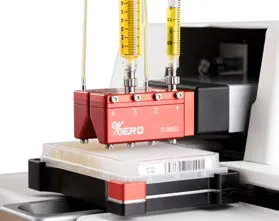
One recent example of a successful new technology landing in pharma with impact would be the development of a digital dispensing system with 5 or 8 individually controllable channels. The development journey started when the Beckman BioRaptr instrument became end of life. Pharma faced the issue with having to replace the old end of life dispensers but there was little on the market that could fill the gap. Novartis, recognising the issue, approached a local leading manufacturer of high-quality valves with the intent of modifying existing dispensers with new valves. A “collaboration” between the bench scientist of Novartis and the engineering team at the valve company started, but the engineers quickly realised the opportunity for a new dispenser.
This “collaboration” enabled the innovators at the engineering company to recognise the market potential for a new liquid dispensing technology. It also provided access to the key scientific community who would ultimately have to use any new device.
The design team were quick to build a first prototype device and deliver this into the hands of the bench scientists at Novartis to test. At the end of the test period the scientists did not want to return the device, clear voice of the customer that the development team were on the right track. Having all the design, engineering and software skills in house enabled the engineers to rapidly iterate through designs, proximity to a major pharma also enabled rapid feedback from a potential key customer. The journey to a beta test unit would take only 1.5 years.
Ultimately, 2 beta test units were purchased and delivered to Novartis with the promise that these could be upgraded as the product developed. Importantly, Novartis agreed to publish data generated using the new dispenser to add to the marketing package being prepared by the instrument manufacturer. While it is important to have good marketing, you should never underestimate the power of word of mouth. Leveraging conferences such as those run by the Society for Laboratory Automation and Screening (SLAS) and MIP Tec to spread the word about the new dispenser and grow interest ahead of the product launch.From the Pharma’s perspective this felt like a collaboration, in reality, the risk was carried by the Engineering Company. The Pharma provided the problem statement and demonstrated the market potential for a new liquid handler but no financial commitment. Given the pressing requirement for a solution and the annual profits of the pharma industry it may be surprising how passive the industry is in funding new technology solutions. In this example, the innovator had the financial stability to be able to take on the risk. It also had the inhouse capability to carryout all the design and manufacturing to bring the dispenser to market, maximizing the years of engineering experience despite never having built a product of this type for the pharma market previously.
An Academic Start Up’s Perspective
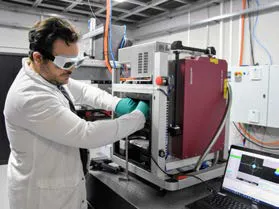
Perhaps the more common path for technology development starts with academic innovation. I recently came across a startup that is working to develop instrumentation to measure aggregates within solutions. This is a problem for pharma companies who often need to understand solubility profiles for therapeutic molecules and understanding the solubility of API’s is vital for later stages of the drug discovery process. Traditional nephelometry and dynamic light scattering technologies do not have low enough limits of detection to be very useful. Other analytical techniques lack the throughput necessary to support pharma applications. Orly Tarun and Nathan Dupertuis, driven by a passion to make a positive impact with their science, co-founded ORYL Photonics and the company is building a new plate reader to measure aggregation in solution. Their system is based on the work that the founders (Orly and Nathan) carried out at the École Polytechnique Fédérale de Lausanne (EPFL) and uses second harmonic scattering (SHS) to measure aggregates as they form.
The founders were approached by an academic screening facility (Biomolecular Screening Facility ‐ EPFL) who outlined their business need and the problem that aggregates can cause. Once aware of the problem, the founders set about applying their knowledge of photonics to a solution. Working “collaboratively” with local academic facilities who were able to provide detailed practical use cases and reagents to test, the founders were able to test and validate their theories showing the potential value of SHS for this application. This was the first “inflection point”, understand the potential customers need.
Building the first prototype instrument to generate proof of concept data enabled the first sets of data to be generated for the academic partner. Speaking to a wider community of potential users allowed the team to really crystalize the real-world application opportunities. With a prototype and user feedback it was possible to define both detailed user requirement specifications and performance characteristics for the reader. This was critically important for the next phase of development, handing over to trained engineers who could apply the design for manufacturing principles and ensure scale up production of commercial grade instruments. Good project management is also necessary, this requires finding experienced development partners to work alongside the startup. At this stage, the presence of a strong innovative ecosystem, where development costs can be financed with public grants, allows the startup to financially survive the expensive development phase. Handing the development work to the right partners and getting the necessary funds was the next “inflection point”.
Funding for the development of the instrument came from a range of sources, many were EU grants (FASS: Fast and Accurate Solubility for Sustainability) or local Swiss Government grants. However, an Angel investor with previous founder experience was very helpful during the startup phase. They were able to provide not only funding but also experience. Once the prototype instrument was operational it was possible to generate some revenue by providing a CRO service for clients interested in solubility measurements. ORYL’s goal as a startup was to be able to generate revenues up to 1 million Euro, this would establish the market viability of the technology and then it should all be about scaling to maximize the market penetration.
Conclusion
Both of these examples share some commonality. Firstly, there was a clear problem to solve. Secondly, the availability of collaboration partners with a pharma background who “lived” the problem was key. While the collaborators contribution was “in kind” rather than financial, it was invaluable to the innovators. It helped establish the critical performance characteristics of the devices and helped clarify the market potential of a solution.
Despite the large profits generated by big pharma companies, investments are generally focused in areas which can increase profits rather than on development of new tools. The vendor community within life sciences also appears to be risk averse, they focus on improving their current offerings rather than new technology development. As a result, academics and innovators in the technology space have to rely on Venture Capital (VC) funding for financial support. Without a supportive innovation culture and community nurturing startups it is increasingly difficult to get ideas out of the lab and into the market.
Acknowledgements
Thanks to Karin Gyger and her team for telling me the development story of the new digital dispenser and to Orly Tarun and Nathan Dupertuis for providing details of their start up journey.
1. Simoens S, Huys I. R&D Costs of New Medicines: A Landscape Analysis. Front Med (Lausanne). 2021;8:760762.
2. Schlander M, Hernandez-Villafuerte K, Cheng CY, Mestre-Ferrandiz J, Baumann M. How Much Does It Cost to Research and Develop a New Drug? A Systematic Review and Assessment. Pharmacoeconomics. 2021;39(11):1243-69.
3. Laermann-Nguyen U, Backfisch M. Innovation crisis in the pharmaceutical industry? A survey. SN Business & Economics. 2021;1(12).
4. Ringel MS, Scannell JW, Baedeker M, Schulze U. Breaking Eroom's Law. Nat Rev Drug Discov. 2020;19(12):833-4.
5. Colombo R, Tarantino P, Rich JR, LoRusso PM, de Vries EGE. The Journey of Antibody-Drug Conjugates: Lessons Learned from 40 Years of Development. Cancer Discov. 2024;14(11):2089-108.
6. Liu K, Li M, Li Y, Li Y, Chen Z, Tang Y, et al. A review of the clinical efficacy of FDA-approved antibody‒drug conjugates in human cancers. Mol Cancer. 2024;23(1):62.
7. Chhabra M. Biological therapeutic modalities. Translational Biotechnology2021. p. 137-64.