
Biopharmaceutical Complexity and the Role of Chromatography
The period from 2014 to 2018 registered more than 150 new biopharmaceuticals, monoclonal antibodies constituting the greatest part. These are structurally complex molecules that must be evaluated on 20-30 critical quality attributes (CQAs). These are PTMs, product heterogeneity, product impurities and host cell contaminants. Charge variants and glycoforms cause structural diversity and thus complicate analysis.
Critical quality attributes (CQAs) that are to be evaluated in detail by regulatory agencies include aggregation, glycosylation, charge heterogeneity, and the presence of host cell proteins. All these features may affect safety, stability and efficacy. In order to fulfill those expectations, developers use superior analytical technologies that can distinguish, recognise, and measure numerous variants.
This has traditionally involved a liquid chromatography. Although one-dimensional liquid chromatography (1D-LC) is a common type of chromatography, its low selectivity and resolution can lead to overlapping peaks that can oppose critical data. The two-dimensional liquid chromatography (2D-LC) is an effective method as it involves two separation mechanisms that allow high resolution and ability to detect minute product differences.
Principles and Classification of 2D-LC Systems
When using a 2D-LC system, two pumps, two separation columns, switching valves, and detectors are typical. In comparison to 1D-LC, which isolates the molecules according to only one property, 2D-LC uses two independent techniques to give complementary information.
2D-LC can either be online or offline depending on the workflow:
• Online systems move material between columns without any handling errors.
• Fractions are collected and re-injected in offline systems, which are flexible at the expense of extended analysis times.
The major modes include:
• Heart-cutting: isolates specific fractions for detailed re-analysis.
• Comprehensive (1D 2D): all the sample is introduced into the second column to be completely separated.
• Multiple heart-cutting (mLC-LC): examines in-depth several fractions of choice.
Through appropriate column combinations, which include some of size-exclusion coupled with ion-exchange or hydrophilic interaction coupled with reversed phase, scientists are able to gain in-depth understanding on protein variants.
Applications in Biopharmaceutical Research
Characterisation of Monoclonal Antibodies
Monoclonal antibodies take up a huge share of the recently approved therapies. Their structural heterogeneity can only be analysed in detail throughout the product lifecycle with 2D-LC to distinguish between the size variants, fragments, aggregates, and variant charge that could influence function or stability.
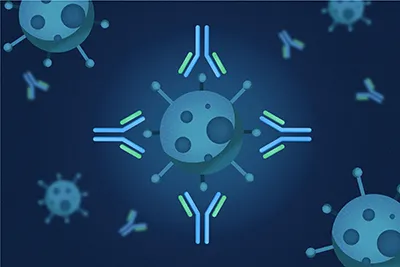
An example effect is size-exclusion chromatography (SEC) with weak cation exchange (WCX) in the first and second dimensions, respectively, to provide concomitant protection of size as well as charge variation.
Combined with the mass spectrometry, they give more information on the molecular structure and alterations.
Post-Translational Modifications
Oxidation, deamidation and glycosylation are key PTMs in protein stability and biological activity that can be more effectively mapped using 2D-LC as opposed to 1D-LC.
• Oxidised variants can be detected by ion-exchange in combination with reversed-phase.
• Hydrophilic interaction chromatography together with reversed-phase offers more specific glycan profiles.
This level of precision supports more reliable product characterisation and regulatory submissions.
Antibody–Drug Conjugates
This ADCs are prepared by conjugation of antibodies with cytotoxic drugs to enhance targeted therapies. Nonetheless, the heterogeneity of drug-to-antibody ratio and conjugation sites creates analytical challenges.
2D-LC is very useful in isolating various conjugated forms, and detecting unconjugated drugs or antibodies that would affect safety.
Detection of Impurities
Residual DNA and host cell proteins (HCPs) are safety issues, 2D-LC with MS increases the detection limits and impurities can be detected and quantified at low levels. Peptides are segregated by advanced workflows that utilise more than one pH gradient to enhance coverage during database searches.
Cell and Gene Therapy Products
Viral vectors-based therapies are also favored with 2D-LC because of their emerging nature. It enables the separation of full and empty capsids in adeno-associated virus (AAV) preparations, in addition to yielding data on viral proteins and PTMs. This guarantees more uniformity in new treatment platforms.
Current Challenges in 2D-LC
Although it is potent, 2D-LC has its limitations:
• Complexity of the instrument: More components raise the maintenance and training needs.
• Incompatibility of solvents: Incompatible mobile phases may be necessary in different separation modes.
• Data processing: Processing of big, multidimensional data requires sophisticated tools.
• Expenses: This can be very costly to purchase and use in small labs.
Automation, intelligent software and strategies of solvent modulation are being developed to overcome these barriers. Its use is also being expanded by improvements in system robustness and workflow standardisation.
Comparison Between 1D-LC and 2D-LC
Although 1D-LC is a solid and commonly-used tool, its limitations inherit in its application limit its use in sophisticated biopharmaceutical characterisation. Several critical forms co-elute within 1D-LC systems and thus are difficult to detect and quantitate. As an example, proteins of different sizes or oxidised proteins can co-purify with the primary peak, lowering detection sensitivity.
2D-LC works to overcome these drawbacks by using two separation principles sequentially, which dramatically increases the peak capacity. In complex samples, the data quality difference between the two methods is large. The possibility to solve fine structural details, identify low-abundance impurities, and study heterogeneous drug products can be advantageous to researchers. The trade-off is increased time to develop the method, more intensive data processing and increased system costs.
Regulatory Importance of Advanced Chromatography
The US Food and Drug Administration (FDA) and European Medicines Agency (EMA) regulatory authorities are demanding more and more in-depth analysis of CQAs in biopharmaceutical submissions. The key to achieving these expectations is chromatography where 2D-LC can be a stronger method to demonstrate consistency, comparability and stability.
In the case of biosimilar development, similarity to a reference product has to be demonstrated by profiling glycosylation patterns, charge variants, and impurities, and 2D-LC offers the resolution required to make such comparisons, de-risking regulatory review. The approach also helps to facilitate the quality by design (QbD) frameworks, which allows conducting a stronger process validation.
Automation and Data Handling
Automation is one of the most bright fields of development of 2D-LC. High-end systems are more often automated in their method optimisation, solvent modulation, and online sample handling. This helps lessen the effort of analysts, and enhance reproducibility.
Meanwhile, 2D-LC produces multidimensional datasets, which are large and cannot be effectively processed with the assistance of conventional chromatographic software. This has promoted the use of sophisticated algorithms, cloud data, and artificial intelligence (AI) applications. The machine learning models, such as, can identify the subtle trends, across several runs, which enhance the predictive ability of bioprocess in monitoring.
Industrial Case Studies and Practical Applications
A number of practical case-studies demonstrate the usefulness of 2D-LC in practical biopharmaceutical development:
• Monoclonal antibodies: SEC × WCX systems have also been utilised to detect aggregation and charge heterogeneity simultaneously, which saves time on aggregate analysis when compared to sequential techniques.
• ADC analysis: Hydrophobic interaction/reversed-phase techniques enable the fast profiling of DAR distribution, which is key to the testing of batch release.
• Host cell protein detection: Trace levels of hundreds of residual HCPs have been identified by comprehensive 2D-LC-MS workflows and this enhances safety assurance.
These illustrations show that 2D-LC is not a pure theoretical development but a working tool already in use in the industry.
Sustainability Considerations
Contemporary pharmaceutical laboratories are being pressurised to become greener. Traditional LC techniques use large amounts of organic solvents, a feature that adds to waste and expenses. 2D-LC, however, has been seen as a relatively resource-intensive approach, but is progressing towards miniaturised and microfluidic platforms.

Future Directions in Research
In the future, the possibility of integrating 2D-LC with other innovative technologies will increase its functionality:
• Mass spectrometry coupling: It is a common system already, but even improved sensitivity and speed will be offered in the future.
• Capillary electrophoresis (CE) combinations: Hybrid CE-LC systems could be developed in particular applications e.g. glycan analysis.
• In-line monitoring: Non-stop bioprocessing may require real-time data of 2D-LC, which would be inputted into automated control systems.
• AI-based method development: Separation strategies that are developed based on property of samples are being explored.
The following directions imply that 2D-LC will still evolve to be more than a specialised research instrument, and become a mainstream analysis platform used in drug development, manufacturing, and regulatory compliance.
Conclusion
Liquid chromatography Two-dimensional liquid chromatography has evolved beyond a niche methodology in laboratories into a general tool with broad biopharmaceutical research applications. It allows more complex therapies to be developed by allowing higher resolution, increased selectivity, and more molecular insights. It has both a monoclonal antibody analysis, ADC profiling, impurity detection, and emerging modalities, including viral vectors.
The future of 2D-LC lies in greater automation, integration with advanced data science, and expansion into real-time monitoring. Its accessibility will be expanded with further optimisation of systems and approaches despite the challenges in cost and complexity. To both researchers and industry, 2D-LC represents a direction to an improved, efficient, and sustainable biopharmaceutical analysis.