When conducting a drug test, chromatography separates and examines the components in a sample. It is used to detect drugs, the chemicals they form as waste products, and even lingering impurities with consistent and error-free detection. Mixing GC and HPLC with mass spectrometry makes for a more accurate method. Forensic labs, clinical testing, and anti-doping tests commonly use these methods.
Its high level of precision and exactness make chromatography important for detecting drugs, complying with regulations, and safeguarding the public. Updated technology provides new and improved tools for detecting drugs.

Principle of Chromatography
It works by separating materials because some of their components move in one way, while others move in another. A stationary phase and a mobile phase are both present. An introduction of a mixture causes the phases to interact distinctly with each component, allowing the phases to move differently from each other. This is what causes individual parts of the mixture to separate.
While the stationary phase doesn’t move, the mobile phase flows by, bringing the mixture of substances with it. Sticky components in the mixture move quickly, while less sticky ones move slowly along the stationary phase. Because compounds move differently through the column, chemicals with similar or opposite properties can be set apart.
How Chromatography is Used in Drug Testing:
Gas Chromatography (GC):
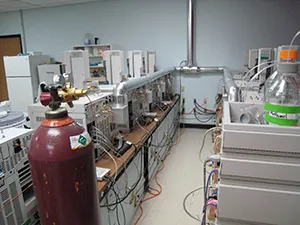
It is used to separates and examine compounds that are easily evaporated. A method, it uses a liquid or polymer coated onto a solid support in a column. The reason GC dominates forensic drug screening, environmental analysis, and quality monitoring is mainly because it is so highly sensitive and quick
Liquid Chromatography (LC):
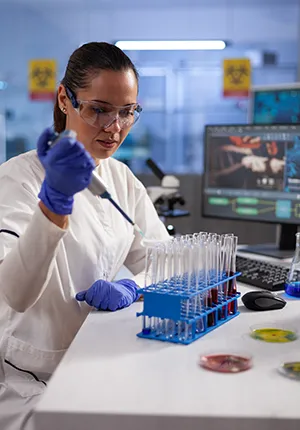
A solution or mobile phase is passed through a column with a packaged solid phase during Liquid Chromatography. Compared to IPLC, HPLC is an advanced method that gives clearer results and does the analysis faster. Non-volatile and thermally sensitive materials such as pharmaceuticals and biological samples can be best detected using LC.
Thin Layer Chromatography (TLC):
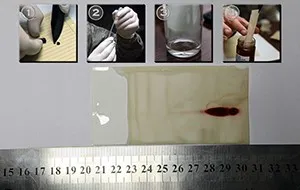
A flat plate covered in silica gel is used in Thin Layer Chromatography to spot a sample onto it. As the mobile phase moves up the plate, it separates various components since their movement is different.
Detection and Identification of Drugs
Various tools are used in labs to check and confirm that drugs are present in samples such as blood, urine, saliva, or hair. It is now important in forensics, tests done at jobs, diagnostic centers, and events against doping.
In most cases, an initial screening is carried out to look for drug use. Because of this, immunoassays are often used since they do not take much time and are reasonably affordable.
Methods such as Gas Chromatography, Mass Spectrometry and Liquid Chromatography, Tandem Mass Spectrometry are needed for such tests. They apply various methods to break compounds down and discover their structure based on their tiny composition and mass. They have the ability to spot materials that are very hard to find in small quantities.
When a drug is correctly identified, reliable information can be used by both the law and medicine. A drug testing method is chosen based on factors such as the drug type, the sample to analyze, how sensitive the test should be, and how soon the results are needed. As habits related to drugs shift, new methods are developed to spot drugs more quickly and accurately for various substances.
Applications in Various Testing Scenarios
CSS helps produce reliable and accurate results that are used in different fields like medicine, law, and safety.
1. Forensic Toxicology:
Many criminal investigators rely on chromatography to locate and name drugs and poisons found in various samples. This tool is used to learn how a person died, detect drugs present, and provide evidence for court proceedings.
2. Workplace Drug Testing:
With the support of GC-MS or LC-MS, companies are able to monitor if their employees are consuming drugs. They are applied to test applicants and personnel to prevent any issues relating to using drugs, supporting their personal and professional lives.
3. Clinical and Hospital Settings:
Using chromatography, health workers ensure medicines are used as expected, identify cases of drug overuse, and monitor patients’ medicine usage. It prevents the misuse of medication and helps avoid any bad effects.
4. Rehabilitation and Legal Compliance:
All probation, parole, and rehabilitation programs in the US usually include drug tests. Results from chromatography tests are accurate and may influence the decisions of judges regarding medications.
Barriers and Obstacles Faced When Testing Drugs with Chromatography
Though chromatography is a valued method used for testing drugs, it isn’t without difficulties. One big challenge is that machines like GC-MS and LC-MS are both expensive and difficult to operate and maintain, making it important to have highly skilled people and a well-controlled working area. Sometimes, having this data makes it difficult for certain labs or groups to use these tests in field applications.
There are drugs that leave the system quickly, which makes it harder to find them when using a test shortly after use. Besides, since many NPS do not have reference standards, it is necessary to regularly update methods used to detect them.
Also, companies must be attentive to the laws and principles governing privacy and the need for written consent before communicating with contacts. Despite the above challenges, the field is making constant efforts to make drug tests more sensitive, less expensive, and easier to carry out.
Better methods for testing drugs using Chromatography
New improvements in chromatography have led to more accurate, quicker, and sensitive methods of drug testing. Sophisticated methods of Ultra-High-Performance Liquid Chromatography (UHPLC) and LC-MS/MS now help detect even the tiniest amounts of drugs in various kinds of biological mixtures. Miniaturized and automated devices are helping to make testing both quicker and less expensive, especially in situations where many samples are handled. Thanks to improved ways to prepare samples and new software for analyzing data, accuracy and reliability have improved. They are especially useful in catching new drugs and confirming compliance when testing for drugs in forensic, healthcare, or employment samples.
Conclusion:
Chromatography, drug testing is done much more accurately, sensitively, and reliably compared to previous methods. Even though there are still challenges caused by high costs and complicated procedures, improvements in technology are helping to deal with them. With new drug patterns appearing, chromatography continues to play a vital and updated role in protecting justice, health, and safety.