
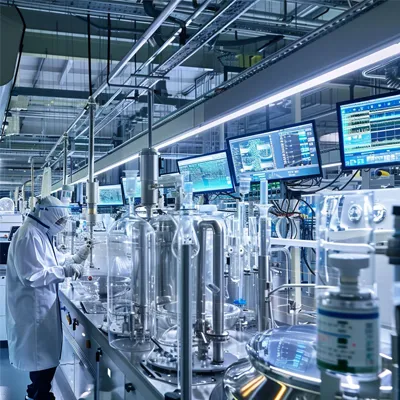
Cell therapy is ahead of modern medicine, which shows the capacity of the treatment of many diseases, including cancer, genetic disorders and autoimmune conditions. These treatments include the use of living cells such as treatment agents, which make the production process more complex than traditional drugs. One of the important stages of the development of cell -based treatments is to ensure that the end product is both safe and efficient. Chromatography plays an important role in this phase by helping to separate the desired cells and remove impurities.
With increasing demand for cell therapy, more efficient, scalable and accurate purification techniques are more pressure. In response, researchers and industry magazines work to improve chromatographic methods to meet the unique challenges generated by live cell products. This article examines current innovations in chromatography that forms the development of cell therapy.
The Role of Chromatography in Cell Therapy Development:
The Chromatography is widely used in the pharmaceutical industry to separate and clean the connections. When it comes to cell therapy, the main goal is to separate the specific cell population, remove contaminants and ensure stability and safety in the end product.
However, traditional chromatographic methods are often reduced when used for whole cells. Cells are large, delicate and sensitive to environmental conditions. Standard processes designed for small molecules or proteins do not always work effectively with living cells. Therefore, new approaches have been developed that take into account the unique requirements for cell therapy products.
Cell-Affinity Chromatography Techniques:
Cell affinity chromatography has proven to be a promising method of isolating specific cell types. This technique uses special ligands that bind surface markers on cells and allow selective catch.
A recent innovation involves the use of multimerised with low-affinity Fab fragments, which is stable on a chromatographic column. These parts can tie specific markers on T cells or other medical cells. After capturing the target cells, they are released under controlled conditions without damaging them.
To ensure purity, additional columns with absorbent materials are often used to remove residual Fab fragments or biotin that may be present after the initial separation phase. This method improves stability in cell selection and supports a closed, sterile process suitable for clinical applications.
Table 1: Comparison of Traditional vs. Cell-Affinity Chromatography
| Feature | Traditional Chromatography | Cell-Affinity Chromatography |
| Target Type | Proteins or small molecules | Whole cells |
| Ligand Type | Generic | Specific to cell surface markers |
| Purity Level | Moderate | High |
| Cell Viability | Not applicable | Preserved |
| Application in Cell Therapy | Limited | Highly suitable |
Closed-System and Automated Chromatography Platforms:
Another large innovation area is the development of automatic and closed system chromatography platforms. In traditional processes, manual handling and open systems increase the risk of pollution and variability. Closed systems provide a sterile environment that reduces the possibility of microbial pollution and improves the copying of profits.
These systems are often equipped with pre-programmed protocols that manage the entire cleaning cycle, including washing, height and cleaning stages. By limiting manual intervention requirements, they reduce labor costs and operating errors.
In cell therapy, it is important to maintain the integrity of the product during the process. Automation and design with close system support continuous treatment status, easy verification and better scalability for commercial production.
Thermo responsive Polymers for Gentle Cell Purification:
Thermo responsive polymers (TRPs) is a new material used in chromatography to make the purification processes be mild. These polymers change their binding properties depending on the temperature, which means that targeted molecules or cells can only be bound and released by adjusting temperatures.
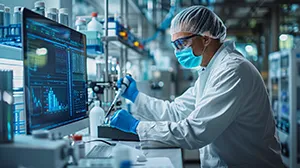
For example, some TRPs are performed with ligands that recognize specific cells. At low temperatures, cells bind the column and at high temperatures they are released without the need for rigid chemicals. This is especially useful when working with living cells that are sensitive to changes in pH or chemical risk.
The use of TRP in cell therapy supports the goal of maintaining cell functionality and viability after cleaning, which is necessary for successful therapeutic results.
Mixed-Mode Chromatography for Complex Sample Separation:
Mixed-mode chromatography uses materials that combine two or more types of interactions such as ion exchange and hydrophobic interactions at the same stable stage. This double action enables the separation of complex mixtures with high resolution.
In cell therapy production, this can be particularly beneficial when cleansing components such as viral vectors, exosomes or engineering cells. MMC columns can distinguish particles based on charging and combination of hydrophobicity, which provides more flexible and effective approaches than single modus systems.
MMC lets manufacturers reduce the number of cleaning steps in the process, which reduces the risk of product loss and pollution.
Monolith Columns for Viral Vector Purification:
Viral vectors, such as the adeno-associated viruses (AAVs), are usually used in genre-reflected cell therapy. These large biological structures require special cleaning methods.
The Monolith column is a relatively recent advance designed to handle large biomolecule. Unlike traditional pearls, monoliths consist of a constant porous structure that allows convection current. This design improves the flow rate and reduces pressure formation, causing sharp and more efficient separation.
These columns have been used successfully to distinguish between complete and empty viral capsids that are an important quality property in gene therapy products. They also support scalability, making them suitable for both clinical and commercial production stages.
Table 2: Advantages of Monolith Columns in Viral Vector Purification
| Parameter | Traditional Columns | Monolith Columns |
| Flow Rate | Moderate | High |
| Pressure Tolerance | Lower | Higher |
| Particle Size Handling | Limited | Suitable for large particles |
| Scalability | Limited | Excellent |
| Application in Gene Therapy | Moderate | Highly effective |
Analytical Uses of Chromatography in Cell Therapy:
Chromatography is used not only for purification, but also for analytical purposes in cell therapy development. For example, capillary electrophoresis is used to analyse DNA modifications generated from gene editing tools such as CRISPR/Cas9. CE provides high-resolution separation and can detect small differences in nucleic acid sequences.
Other forms of chromatography, such as ion exchange and reverse phase, are used to monitor product-related impurities, remaining host cell proteins and other important quality properties. This analysis is necessary to ensure that the final medical safety and efficiency meet the standards.
The use of advanced chromatography in analyses supports regulatory compliance and improves the understanding of the process, leading to better control and high product quality.
Sustainability in Chromatographic Processes:
Sliding against permanent production practices has reached chromatographic operations. Manufacturers are working to reduce the amount of solvents used, switch to green areas and increase the efficiency of the processes.
Disposable columns, low-energy systems and continuous chromatography are among the methods that are detected. These approaches not only reduce the environmental impact, but also reduce operating costs and simplify cleaning and verification.
When cell therapy moves to large-scale commercial production from clinical production of small batch, sustainable chromatography methods will quickly become important.
Future Directions and Emerging Trends:
Furthermore, innovations are expected in material science, automation and data-driven process control to increase the role of chromatography in cell-based medical role. Scientists develop advanced ligands, surface-edited resins and responsible polymers that improve selectivity, reduce processing time and support scalable delicate cell cleaning.
The integration of machine learning and real-time analysis appears as a promising approach to adapting to chromatographic workflows. By analyzing a larger dataset from the development course, AI can fix algorithm parameters, predict deviations and can ensure frequent performance by reducing the number of experimental cycles.
In addition, the emergence of individual and decentralized medicines requires flexible, modular purification system. Chromatographic platforms that can be quickly configured for specific cell types or patient-specific requirements will be necessary in clinical environments and localized production functions.
This ongoing change also explains how to move the chromatographic unit away from a fixed infrastructure towards the disposable, closed loop system that supports rapid turnaround operations and meets strict requirements for regulations and sterility.
Table 3: Innovation Areas and Their Impact on Cell Therapy
| Innovation Area | Impact on Cell Therapy |
| Membrane Chromatography | Faster processing, reduced buffer use, and disposable design |
| Automated Systems | Improved reproducibility and reduced contamination risk |
| Data Analytics | Process optimization and predictive maintenance |
| New Ligands | Enhanced cell targeting and binding efficiency |
| Modular Platforms | Flexibility for personalized therapies |
Conclusion:
The area of cell therapy is moving rapidly, and chromatography is still an essential tool to ensure purity, safety and effect of these complex biological products. Innovation in affinity-based cleansing, automation of closed system, thermo responsive materials, strategies with mixed mode and monolith column technology helps to remove unique challenges related to cleansing living cells and viral vectors.
Analytical applications and durable practice also play an increasing role in ensuring that cell therapy is not only effective, but also meets regulatory and environmental expectations. Due to the mature of the industry, continuous investments in chromatographic technology would be important to distribute the next generation of patients around the world.