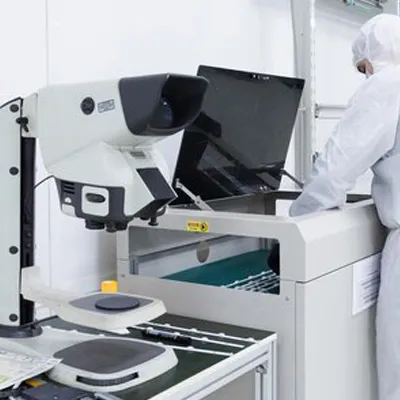
Pharmaceutical analysis plays an important role in developing medicines that are both safe and effective involves examining active pharmaceutical ingredients whether on its own or mixed with examples, and includes aspects such as synthesis, how medications through the body, how they reach their goals and how to control the pollution. Since medicines are to meet hard regulatory standards and pass each stage of clinical testing before they reach the market, the pharmaceutical industry is the most regulated worldwide.
This article looks closely at the role of UHRMS in drug analysis. It compares FTICR and Orbitrap technologies, and explains how they are used, highlighting the benefits and ability of future development.
2. Principles and Comparison of Orbitrap and FTICR Analyzers
2.1 Orbitrap Technology
These ions are injected tangentially into this field, where they are trapped and begin oscillating along the central (z) axis. The frequency of these oscillations depends only on the mass-to-charge (m/z) ratio of the ion.
2.2 FTICR Technology
FTICR mass spectrometry uses a magnetic field to trap ions within a cell containing excitation and detection electrodes. When ions are excited by a radiofrequency pulse, they move in a circular path (cyclotron motion).
2.3 Comparison of Orbitrap and FTICR
Though both Orbitrap and FTICR analyzers apply Fourier transform methods, their designs and operational characteristics differ. The following table provides a comparison:
| Feature | Orbitrap | FTICR |
| Resolution | High to ultra-high | Ultra-high to extreme |
| Magnetic Field | Not required | Required (superconducting magnet) |
| Size and Cost | Moderate | Large footprint and higher operational cost |
| LC Compatibility | Compatible | Limited due to longer scan times |
| Operation | Standardized workflows possible | Requires more technical expertise |
2.4 Ion Activation Methods
Both analyzer types support various ion fragmentation techniques to obtain structural information.
2.5 Sample Preparation Considerations
These accurate mass spectrometry depends on effective sample preparation, especially when analyzing pharmaceutical formulations containing excipients, salts, and other matrix components.
In LC-MS workflows, typically associated with Orbitrap analyzers, sample preparation can be simplified since chromatographic separation removes many interferences. High mass resolution further reduces the need for extensive purification.
3. UHRMS in the Discovery and Structural Characterization of the Drug
The discovery of the drug includes the identification and development of new agents for various diseases and medical conditions.

The process usually involves several stages, such as identifying biological goals, screening for lead compounds and carrying out with the preclinical and clinical trials.
The following sections look at recent studies where high-resolution mass spectrometry has been used to detect the substance and support structural studies of various active substances.
3.1 Small Molecule Drugs
They are chemical compounds with relatively low molecular loads, usually below 1200 daltons. Because of their small size, they can easily enter cells and tie specific dimensions such as protein or enzymes, triggering a desired medical effect. These medicines are widely used in the treatment of a series of medical conditions.
It has played an important role in identifying and profiling small molecules in complex natural mixtures.
3.2 Proteins and Antibodies
In recent years, the development of protein-based pharmaceutical substances has become a main focus in the biopharma region. These treatments provide high specificity and effect to treat serious conditions.
The biological activity and safety of protein medicines depends not only on the amino acid sequence (primary structure), but also how they bend and gather in high order structures. Advanced techniques such as mass spectrometry (MS) are required to analyze such complexity.
3.3. Nucleic Acids and Oligonucleotides
Nucleic acids have become very important in drug research and development.
In this accurate properties of nucleic acid are important, not only to understand their composition and function, but also to ensure their safety, effect and stability in medical applications.
4. Ultra-High-Resolution Mass Spectrometry in Drug Formulation Studies
In drug products, active pharmaceutical ingredient are combined with excipients added to the general function, stability and formulation stability and formulation.
This include a variety of chemical types, such as small molecules, non-ionic surfactants, polymers, nanoparticles, and inorganic materials.

During production or storage, APIs and excipients low or interact and cause impurities. Some of these impurities may be inactive, while other patients may pose a risk of safety, especially reactive compounds such as peroxides, which can also be harmful in tracks. To understand how impurities can be formed, forced decline is usually studied. These include the storage of high visibility or simulation of extreme conditions, and highlights drugs in stress such as heat, moisture, and light or different pH levels.
5. Ultra-High-Resolution Mass Imaging (MSI) in Pharmaceutical Research
The Drugs are distributed, metabolized and accumulated in the human body, and are still a major challenge in R&D medication, metabolized and accumulated in the human body. Medicines should reach their targeted place with an efficient concentration, but may be higher than a level that can cause toxicity. Mass spectrometry imaging (MSI) provides a powerful way to imagine how molecules are distributed to tissue classes, both two-dimensional and recently offer three-dimensional mapping without the need for labeling.
Quantitative MSI with FTICR
As MSI becomes more common, there is increasing interest in quantitative MSI (qMSI), which aims to answer where and how much of a drug is present in tissue. This is useful in studies of toxicity, pharmacokinetics, and drug delivery. However, quantifying results is difficult due to sample complexity and matrix effects that interfere with ionization.
6. Ultra-High Resolution for Untargeted Proteomics and Metabolomics
In this medical research often depends on understanding how the body reacts to diseases or drug treatment at the molecular level. This reaction includes various biological components, including genes, RNA, protein and small molecules, called metabolites. The study of these elements is classified under the term "omics" science. While genomics and transcriptomics are often analyzed using sequencing technologies, proteomics and metabolomics are performed mainly using mass spectrometry.
Studying protein and metabolites can be complex. Proteins can undergo changes after they are made, adding their variability, while metabolites show chemical structures, poles and a wide range of charges. These differences make the analysis particularly challenging. Mass spectrometry, especially useful for both ultra-high-resolution systems, dimensions (specific compound) and untargeted (extensive observation) analysis. Untargeted studies produce large datasets and often require advanced statistical units to identify the functions related to the disease.
Analytical Development:
Comparing results with different Omics studies is not easy. Variation can be offered in several stages, such as sample collection, storage or analysis. An effort has been made to improve reproducibility. For example, workflows have been proposed to study blood-based proteins for workflows using Orbitrap MS and data-independent acquisition. In the DIA, all ions are fragmented, and software is used to match them with well-known proteins. Fast analysis requires high-resolution settings, while medium settings can be used for deep, slow analysis.
7. Ultra-High Resolution for Environmental Analysis
Increasing global use of medicines has increased drug pollution in the environment with ineffective removal of several drugs in traditional wastewater treatment systems. In addition, human metabolism and environmental changes produce pharmaceutical substances (such as oxidation, photolysis, and biotransformation) products that can be medically active and potentially toxic to the environment.
8. Conclusion
Use of UHRMS for drug analysis and highlights the benefits of high-resolution. Tools such as FTICR and Orbitrap provide unique functions that enable molecular properties to complex samples and often provide faster analysis compared to other methods, such as direct introduction FTICR vs. LC-HRMS.
Their sensitivity and extensive dynamic area, especially in FTICR, are suitable for track analysis, such as detecting impurities in formulations and conducting environmental analysis.
The UHRMS ability to use different activation methods including IRMPD, ECD and ETD, combined with high mass accuracy, increases structural analysis. It is especially valuable for the study of drug discovery, identification of drug metabolite and change products.
These functions make UHRMS particularly useful to analysis the complex matrices, such as fractures in environmental studies in organic matter or pharmaceutical distribution studies.
Future progress in instruments, such as better data collection rates, compatibility with mono and multidimensional chromatography techniques and more intuitive data analysis software, is still necessary. In addition, there is a need to increase the use of UHRMS in addition to research for regular pharmaceutical industry.
This will require strong, universal methods of development and drug analysis of standardized protocols. Encouraging cooperation between researchers and professionals in the industry will improve the efficient use of these advanced techniques to improve human health.