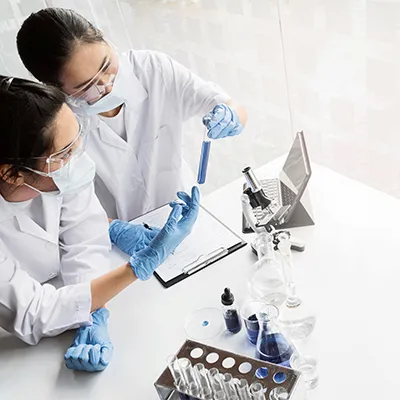
Any new drug or treatment for people is not allowed to be used until it has passed through preclinical development. At this point, scientific findings can be used in health care. Before someone can test a new therapeutic agent on people, it is mainly assessed for safety, biological effects, and how well it works in animals. It is preclinical studies that determine if an interesting molecule will be used in clinical trials or rejected because of safety or how well it works.
What the Purpose of Preclinical Development?
Preclinical development aims to find enough proof that a drug is suitable for testing on people at the very start. Even though there will always be some risk, this step looks for ways to test the compound and its actions in both living systems and in laboratory settings.
During preclinical studies, experts are able to find:
• The amount of poison in water
• How the drug moves around the body is called pharmacokinetics.
• The actions of the drug on the body
• Ample knowledge of proper dosage amounts
Main Parts of Preclinical Testing
Preclinical development consists of running experiments in both artificial conditions (test tubes and cell cultures) and with animals. All of these regulatory assessments provide a complete look at the drug candidate.
1. Studies carried out outside of Living Organisms
During in vitro testing, samples are put in glassware and studied outside of living organisms. With these studies, it is possible to obtain the initial information on a compound’s biological effects, its mode of working, and any signs of toxicity.
Many in vitro experiments are done by using:
• Testing cells in culture to check how toxic a substance is
• Investigations of how the drug connects to its targeted receptors
• Test to see how the chemical changes with the help of enzymes
• Running genotoxicity tests, for example the Ames test, to study possible DNA damage
Even though in vitro experiments are quicker and cheaper than animal tests, they cannot copy the whole complexity of real life. Therefore, testing on living animals is necessary too.
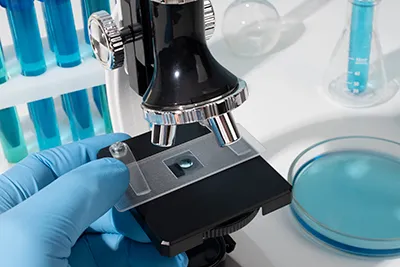
2. Researchers use in vivo methods in their experiments.
Animal testing is carried out to learn how human bodies respond to certain things. Agencies in charge of regulating substances often look at the effects of a compound on at least two species (including both rodents and non-rodents).
Tests are done with the aid of living organisms in vivo studies.
• An effect following an intake of a high-dose product
• Results of exposing animals to the substance on several weeks or months
Possibility that the chemical might cause cancer with long-term usage
Impacts on fertility and on the development of the fetus
Safety pharmacology involves looking at drugs and their effects on important body areas such as the cardiovascular and nervous systems.
The areas of pharmacokinetics and pharmacodynamics:
Pharmacokinetics (PK)
Pharmacokinetics covers the actions of the body in picking up, spreading, breaking down, and getting rid of a drug (which are all known as ADME). Thanks to these processes, researchers can correctly decide the right amount of medicine to give patients.
It is important to look at the following key parameters:
• How long it takes for the drug to start affecting the blood stream
Part of the drug is inactive after absorption and passes out of the blood.
The amount of time it takes for the drug to leave the body
The speed at which the drug is removed from the body.
Pharmacodynamics (PD)
It explores the changes in the body that happen because of the drug. Among other things, you have to gauge interactions with the target, the dose-effect connection, and possible unwanted changes in other parts of the body.
To sum up, PK and PD help show the activity of a drug, determine how much should be given, and predict certain side effects.
GLP is about carrying out laboratory work according to the Good Laboratory Practice (GLP) Standards
Making sure to use GLP in your research makes your preclinical studies dependable and easy to repeat. Such guidelines are enforced in every country by groups such as the FDA and EMA.
GLP covers: Standard procedures
• Ensuring documentation is well done
Qualifications of staff
• Checking how well the equipment is working
• Checking if the data has not been tampered with
For the data to be accepted by regulatory authorities, investigations must be done according to GLPs.
Legal Requirements for the FDA to Assess and an IND Submission
Once tests in animals have finished, the results are put together for submission as the Investigational New Drug (IND) application in the U.S. or the Clinical Trial Application (CTA) in Europe.
• Clinical protocols that were developed
Requirements for investigator qualifications
Agencies in charge of regulation go over the data to decide whether to allow human testing. Receiving approval for an IND means the risks are acceptable for conducting clinical trials when the benefits outweigh the risks.
New Advances and Choices in Preclinical Testing
Concerns about how animals are used in experiments, along with scientific problems, have prompted the search for other options.
Minute organ-like models known as organoids are built from stem cells.
Such technologies include organ-on-a-chip systems that simulate how organs perform functions
• Both computer modeling and artificial intelligence are used for predicting any issues that can happen from combining medications or chemicals.
Even though these techniques are not yet as good as animal studies, they open up better options for reducing the use of animals and making predictions more accurate.
Issues during the Preclinical phase
Although technology has advanced, clinical development still encounters many ongoing issues.
1. There is a high probability that results seen in animals do not predict how people will react. A substance found to be safe in animals could still bring serious reactions in humans.
2. It takes years and costs a lot to complete preclinical testing.
3. Since the rules are different in each area, multinational drug companies encounter added paperwork for each market.
The High Rate of People Quitting
It is sadly true that most drugs are not advanced past preclinical testing. Experts in the field say that just a fraction, in most cases under 10%, of compounds tested in preclinical tests end up on the market. These strategies have been built on the following reasons:
Problems with safety
Problems with how the drug is handled by the body
• Models that do not work well for the disease
• Toxic effects that are not expected
The price to society of so many failures is high, but it acts as a barrier to subjects experiencing dangerous, toxic materials.
Conclusion:
This stage in drug development is important, especially since it helps ensure the safety of humans. When compounds go through stringent tests in different clinical models, scientists can detect dangerous traits ahead of contact with people.
Important information gathered here influences how trials will take place from the beginning to the finish. As time goes on and new tech is introduced, preclinical testing will probably use less harmful methods, but there will still be a need for it as the key to drug safety.
To sum up, preclinical development completes the process that converts an idea into a therapy that could protect lives. It marks the beginning of the medicine’s journey, as here, scientists, safety, and ethics are brought together.