
The industry has had to cope with many difficulties such as strict deadlines, growing competition and rising expenses when making new drugs. Usually, it takes more than ten years and billions of dollars to introduce a new drug into the market. However, the emergence of artificial intelligence (AI) rewrites this story. AI technologies consistently allow each step of the drug development life cycle for clinical studies and approval of authorities from the first discovery, and provide unique opportunities to speed up the deadline, improve accuracy, reduce costs, and increase the results.
AI is not just a pairing tool; this represents a paradigm change how the industry reaches for innovation, decision-making processes, and patient-focused development. As biotechnological and pharmaceutical companies rapidly embrace AI, a trip to a molecule from bench to bedside becomes more intelligent, computer-driven, and effective.
This article examines how AI changes the drug development process, with goal identity, composite screening, clinical test design, regulatory strategy, and its impact on market access.

1. Drug-operated insights to find drug discovery
Goal recognition and verification
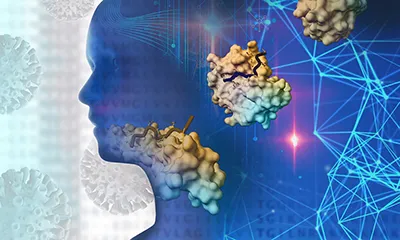
The first step in identifying drug development is often like searching for a needle in a historical. AI, especially machine learning (ML) and Deep Learning (DL), helps to create an understanding of giant biological datasets to identify promising medical goals. These technologies analyze genomics, proteomics, and transcriptomics data to highlight the disease system and potential intervention points.
AI platforms such as BenevolentAI, Insilico Medicine and Atom's Natural Language Processing (NLP) and Deep Neural Network are used to push through biomedical literature, clinical data and research database. This allows researchers to highlight the hidden connections between genes, diseases and molecular passages, which will take years to detect through traditional methods.
Compound screening and adaptation
When a goal is identified, the next step is to find molecules that can effectively change it. Traditionally, it was to screen thousands of compounds in wet laboratories, both time-consuming and expensive. The AI-based virtual screening models can now predict the binding affinity, poisoning, and bioavailability of compounds in minutes.
These models depend on the mass database with chemical structures and biological activities. By learning from previous experiments, AI may prefer molecules with the highest capacity, reducing the candidates for synthesis and testing significantly. The Generative AI model is also used to design new molecules with desired properties, which reduces the dependence on existing composite libraries.
2. Enhancing Preclinical and Clinical Development
Predictive Modeling in Preclinical Studies
AI contributes appreciably to preclinical improvement through modeling drug behavior in biological structures. Tools leveraging systems biology and AI can simulate how a drug might have interaction with diverse organic pathways, helping researchers predict potential aspects of results, optimize dosing, and refine delivery mechanisms before coming into animal models.
Moreover, AI enables in identification of suitable biomarkers and patient populations for further take a look at, increasing the likelihood of success in subsequent levels. It also enhances the predictability of toxicity research and pharmacokinetic modeling, helping researchers make move/no-go decisions in advance within the pipeline.
Intelligent Clinical Trial Design
Clinical trials are some of the most expensive and failure-prone stages of drug development. AI is remodeling this area with the aid of improving trial design, participant recruitment, tracking, and data analysis.
For instance, AI algorithms can analyze real-world data (RWD), electronic health records (EHRs), and genomics facts to pick out patients who meet eligibility standards. This focused technique not only hastens recruitment but also ensures that trials are more representative and clinically applicable.
AI also supports adaptive trial layout, allowing researchers to alter the look at parameters based on interim statistics without compromising the integrity of the trial. By predicting dropout risks, remedy efficacy, and negative events, AI-driven structures beautify trial performance and decrease patient burden.
3. Post-approval Real-World Evidence and ongoing monitoring
Because regulators rely on real-world evidence (RWE) to assess new drugs and their ongoing safety, AI helps by generating and studying these data. Using natural language processing, computers can study doctor records, request claims and social media to find drug usage trends and become aware of possible safety concerns.
AI in pharmacovigilance helps to identify Adverse Drug Reactions (ADRs) much more quickly than traditional systems, allowing businesses to correct issues and help protect patients promptly. In addition, AI adds value to both sign detection and the assessment of causality which are essential for ensuring rules are followed and that people believe in the industry.

4. Using AI and a strong regulatory strategy to manage documentation.
Using AI supports the efficient handling of the preparation of regulatory submissions. Automated systems help collect, arrange and review both clinical and preclinical statistics, so that dossiers given to authorities such as FDA, EMA or PMDA are clear and complete.
Regulators are increasingly ready to use AI-generated results as proof of the safety or effectiveness of new drugs, showing a move towards reliance on models in drug development. Even though regulations are still being developed, businesses are reaching out to stakeholders to collaborate on how to validate AI, assure information is transparent and arrange for easy audits.
5. Personalized Medicine and Patient Stratification
AI facilitates the transition from a one-size-fits-all technique to truly customized medicine. By analyzing patient-specific records consisting of genetic profiles, lifestyle, and environmental factors, AI facilitates in stratifying sufferers and identifying those maximum probable to advantage from a particular treatment.
In oncology, as an example, AI can predict how an affected person’s tumor may respond to a targeted remedy or immunotherapy, permitting clinicians to tailor treatment plans as a result. This precision now not handiest complements healing consequences but also reduces unnecessary publicity to useless capsules.

6. De-Risking Investment and Improving ROI
For pharmaceutical companies and investors, AI offers equipment to assess more accurately at each stage of development. Predictive analysis can inform Go/NO-Go decisions, adapt resource distribution and predict market capacity with greater accuracy.
By reducing failure frequencies and shortening the deadline, AI eventually helps to improve the return on investment (ROI). This is especially important for small biotechnology companies that work under a limited budget, as well as large pharmaceutical companies that manage a broad portfolio.
7. AI partnership and new R&D ecosystem
The effect of AI in drug development is increased through strategic collaboration. Many pharmaceutical companies are partnering to build an integrated R&D ecosystem with AI start-ups, educational institutions and technical giants.
Normally, these partnerships blend knowledge from biology and chemistry along with high-level computing capabilities. Some of these cases are the collaborations Pfizer has formed with IBM Watson, GSK with Exscientia and Roche with PathAI. This type of partnership speeds up innovation, promotes sharing knowledge across various fields and makes technology transfer possible.
In addition, clouds enable data sharing by preserving data processing and federated learning profit, and unlocking new opportunities for AI model development in institutions.
8. Ethical, legal and practical challenges
Despite its transformative ability, the AI adoption comes in drug development with many challenges. This includes:
• Data quality and bias: AI models are just as good as the data they are trained. Poor quality, biased or incomplete data can lead to misleading conclusions.
• Model clarity: Regulatory officers and doctors require transparency in decision-making processes, especially when AI affects treatment options or security evaluation.
• Validation & reproducibility: Demonstrating that the AI models are accurate, strong and normal in the population is important for approval of the authorities.
• Cyber security and data governance: With an increase in digitalisation, it becomes important to protect patient and ownership data.
• Workforce Transformation: There is an increasing demand from professionals who understand both life science and AI. It is necessary to increase the current workforce and promote interdisciplinary training.
To solve these problems, collaboration and best practice, standards, and guidelines need to be developed.
Conclusion:
AI is now a real influence on drug development rather than something that will arrive in the future. Because of AI, innovations in the pharmaceutical industry are now stronger, cheaper, and faster.Still, making the most of AI means doing more than using only algorithms. It requires cultures to change, rules to be updated, and clear ethical foundations to exist. An organization needs to address infrastructure, training for existing employees and partnerships to fulfil AI integration successfully.
In the upcoming decade, AI will shift from being used experimentally to becoming widely practiced, pushing medicine to become more reactive, predictive and suited to each individual. Because technology and biology are blending, AI may make drug development more intelligent, as well as reduce the time and cost.