

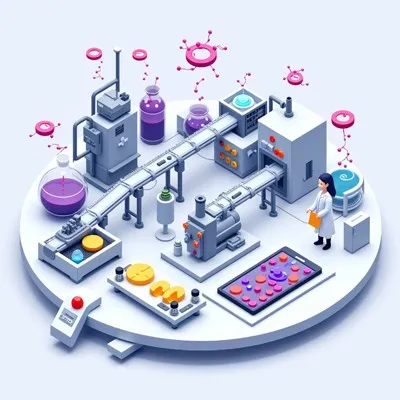
The pharmaceutical industry has changed considerably through the past decades because of the changes in technology and regulations along with the challenges of the increasing complexity of drug products. These developments are centered on drug manufacturing, which is the process of creating medicines at a commercial level. The article presents the latest tendencies, issues, and possibilities that affect drug manufacturing, paying special attention to practical approaches and innovations that keep determining the field.
The pharmaceutical production industry is in the middle of a radical change, characterized by the implementation of continuous and digital production, strong sustainability initiatives and an emerging movement toward personalized medicine. Organizations are modifying their systems of production to become more compliant with higher regulations while introducing new technologies that are efficient and increase product standards.
The arrival of personalized therapies, such as biologics and gene treatments, are forcing manufacturers to create more adaptable, flexible production line that may handle complex and diverse compounds. At the same time, the development of process automation and data analysis is allowing a more proactive (prospective) mode of quality control and operations optimization.
Such a dynamic environment means companies that invest in building skilled talent and supply chain modernization can meet the new challenges including cost pressures, regulations and adhere to a fast changing global environment with agility and still compete.
Evolving Landscape of Drug Manufacturing
Batch processes have been the traditional methodology of pharmaceutical manufacturing with drugs being made in batches after which they are transferred to individual production steps. The future is moving more and more toward continuous manufacturing where raw materials are poured into the process and end products emerge in a continual flow. Among the benefits of this shift are its effectiveness, high quality of the products, less wastage, and quick adaptability to the needs of the market.
The second force of movement is the use of digital and automation technology. The use of robotics, data analytics, machine learning (AI) and robotics are emerging into manufacturing lines. Those tools allow optimizing processes, being proactive and knowing when to conduct maintenance, and, hopefully, minimizing the risk of human error, as a result, there will be improved compliance with quality standards departments.
Quality and Regulatory Compliance
Quality and safety of the products are considered extremely important in pharmaceutical production. Regulatory bodies establish high standards of quality that must be achieved when producing drugs which include EMA, MHRA in UK and FDA in the US. It is necessary to adhere to Good Manufacturing Practice requirements.

Advanced process analytical technologies (PAT) have appeared in recent years. PAT allows the monitoring and control of manufacturing processes as it occurs on a real time basis. Using monitors and data analysis, one may get real-time feedback of crucial quality attributes, thus it is possible to regulate parameters in real time, and keep the quality constant.
The Rise of Personalized Medicine
Personalized medicine is revolutionizing the existing common mode of drugs production. Personalized medications have small-scale batches compared to the conventional methods which manufacture large-sized quantities of standardized medicines. This movement has been the cause of manufacturing plants that are highly flexible and able to rapidly change products and support different batch sizes.
Another answer is the modular manufacturing systems because the rearrangement of facilities can be quickly done in order to produce other kinds of medicines. This flexibility is a vital factor in meeting the increase in demand of biologics, cell therapies and gene therapies all of which can be very patient tailored and very sensitive to the manufacturing environment.
Sustainability and Green Manufacturing
Drug manufacturing has adopted environmental sustainability as the main issue. Increased pressure has been posed on the industry to curtail its environmental impact, minimize the energy usage and limit generation of hazardous waste. Green energy, green solvents, and effective water management system are also all examples of sustainable practices.
It is not only greening manufacturing process that protects the environment but may also be very economically rewarding. Efficiency, minimization in energy usage as well as enhanced management of office wastes leads to a considerable saving of costs. The growing number of firms are currently seeking certification like ISO 14001 which is an accreditation of good management with relation to the environment.
Supply Chain Resilience
The fallout of the COVID-19 pandemic has brought to the fore the weaknesses of global pharmaceutical supply chains.
This has motivated the manufacturers to re-evaluate the sourcing strategy, produce more domestically, and vibrant upstream order supply system.
Blockchain and sophisticated analytics form part of digital supply chain technologies, they provide better insights and traceability throughout the entire supply chain. Through prevention of possible bottlenecks and risk assessment, manufacturers are in the better position to deal with emergencies and create stable supply of life saving medicines.
Advanced Manufacturing Technologies
A few of the newer technologies have potential in drug production:
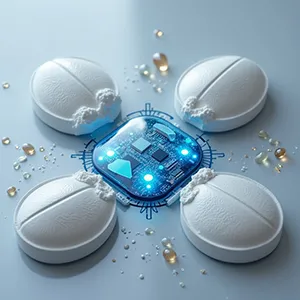
• Continuous Manufacturing: This manufacturing process will shorten the time of production, make it cheaper, and quick in making any adaptation to the market requirements.
• Process Automation and Robotics: Automation eliminates or reduces human intervention at the process, minimized error, and maximized throughput. The robots deal with such repetitive activities as building packages and checking them, which reduces contamination risks.
• 3D Printing: There is also additive manufacturing or 3D printing to manufacture the dosage forms in unique structures that are customized according to the needs of a patient. Although it is still young, it has the promise of customized and on-demand manufacture of drugs.
• Internet of Things (IoT): IoT sensors can chip and interchange data on manufacturing equipment so that predictive maintenance can be achieved and efficiency through the process can be enhanced.
Current Challenges in Drug Manufacturing
But all the same, manufacturers still encounter variety of problems:
• Cost Pressures: It is getting more expensive to develop and produce drugs, owing to the complexity of new drugs, increasingly stringent regulations, and demand of state of art plants.
• Regulatory variability: The variations in regulatory standards between countries can make international manufacturing and distribution commendable by necessitating duplication of testing and documentation.
• Talent Shortages: The high level of manufacturing processes calls upon talent in terms of engineer, IT and analytics. The challenge is always attracting and retaining this talent, as technologies change.
• Counterfeiting and Security: Spread of fake drugs compromises patient safety and business feasibility. Ensuring the integrity of the manufacturing process and supply chain is a frequent goal.
Opportunities for Growth and Improvement
The innovation would be the key to solving existing problems and new opportunities in the manufacture of drugs:
Improved Collaboration: Partnering between manufacturers, technology suppliers, and research institutions have increased so knowledge is shared and there will be an easier process of adopting new technologies.
Remote Monitoring and Smart Factories: The implementation of remote monitoring, virtual commissioning, and augmented reality technologies enable any technical skills to be shifted around at any area required, even when being distanced. Smart factories use sensor networks to perform real-time optimization of manufacturing.
Workforce Development Investment: There should be on-going investment into training and upskilling programmes to ensure employees are able to maintain and use advanced manufacturing processes.
Regulatory Harmonization: Regulatory harmonization currently underway in different jurisdiction is an opportunity to harmonize global operations and shorten the time-to-market of new drugs.
Conclusion:
This is the key to the future of pharmaceutical drug manufacturing that is based on uncompromising innovation and an approach that embraces quality, sustainable and patient-focused solutions. By moving towards digitalization, continuous manufacturing, and greenness, companies are more able to address both health challenges and needs of the market that are evolving.
The manufacturers which focus on such features as adaptability, resilience, and innovation will ensure that they will not only address the existing challenges but also make a significant contribution to the health outcomes in the world. Through collaboration up and down the supply chain and at the regulatory end of the spectrum, the pharmaceutical industry should be able to effectively deliver lifesaving drugs in the safest and most efficient manner to those who need them the most.