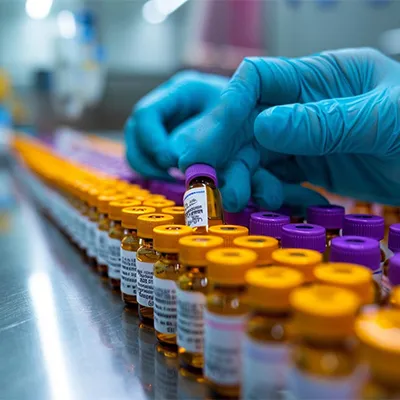
The manufacturing of pharmaceutical drugs in 2025 is at the threshold of innovation, responsibility towards the environment, and supply chain strength globally. The industry is quickly becoming dynamic as a result of implementing advanced technologies, new production methods, and sustainability ways that are meant to support the rising patient’s demands and the sophisticated regulatory requirements in the market. In this article, the main tendencies, technologies, and strategic imperatives surrounding the pharmaceutical manufacturing industry today and within the near future will be described in detail.
Transforming Production with Continuous and Smart Manufacturing
This is one of the most dramatic changes that will influence drug manufacturing in the year 2025 since the continuous manufacturing is becoming common. Continuous manufacturing is seen as a departure of batch processing into a one-piece flow state of the raw materials input process, chemical synthesis process, quality management and packaging. This method allows responding quicker to the changing demands, producing a more consistent product quality, and saving much energy, work, and materials.
Enforcement agencies including the MHRA and the FDA in the UK and the US, respectively, have been very active in championing the usage of continuous manufacturing due to the proven advantages in the field of increased efficiency and safety of the products. To facilitate this move, pharmaceutical companies are investing dearly on modernizing its production lines to have real time monitoring systems and automated controls.
Adding to continuous production are smart manufacturing controls and technologies that can be driven by artificial intelligence (AI), machine learning and digital twins. Digital twins enhanced computerized replica of all major production systems of drugs-enables producers to make a significant virtual manufacturing schedule prior to and predicting real production to satisfy real and planned requirements. These tools make it easier to perform a predictive maintenance and in the process minimize the amount of downtime in equipment and enhance quality assurance by informing of the likelihood of deviation being experienced. The accuracy of repeat actions and touch sensitive tasks is also enhanced by robotics and advanced automation which upraises the safety of products by compromising less on human error.
Personalized Medicine and Flexible Manufacturing
The increased salience and discovery of personalized medicine can pose a challenge, as well as an opportunity to the pharmaceutical manufacturing industry. This transformation away towards mass, standardized drug manufacturing to smaller batches of patient customized drugs, also requires lean manufacturing plants with the capacity to switch products quickly. This flexibility is being achieved by increasing the use of modular production units which can be rapidly reconfigured to suit a wide variety of drugs, including biologics, cell therapies, and gene therapies.
Manufacturers can use such flexible systems so that they can respond to the changing needs of personalized treatments with high regulated standards of quality and innovation in patient centered therapies.
Sustainability Takes Centre Stage
The question of environmentally friendly production and environment sustainability has now acquired a top priority in the pharmaceutical industry. The industry is integrating the theory of green chemistry into its formula reducing toxic materials, waste as a result of better atom economy and effectiveness of energy at every stage of production. Firms are trading in renewable energy sources, water saving gadgets, and other more benign solvents and this has led to remarkable carbon footprints.
Sustainability initiatives are also in line with increasing regulatory demands and social demands. Lots of manufactures also seek out the green standard like ISO 14001 and LEED to institutionalize their green intentions. Along with the environmental advantages, there are economic opportunities that include the reduction of costs to run the operations and the increase of the brand desirability, which attracts not only customers but talent as well.
Resilient and Agile Supply Chains
The combination of the COVID-19 pandemic and geopolitics tensions highlighted weaknesses in pharmaceutical supply networks triggering a transformation of supply chain design which has shifted away toward the instigation of resilience. By 2025, diversification of supply chains, localization of the most important production capacities, and employment of advanced digital instruments become the priorities of pharmaceutical companies.
Supply chain transparency, traceability and predictive risk management are increased by using technologies such as blockchain and AI-based analytics. The introduced innovations facilitate the active detection of bottlenecks and the ability to respond to disruptions in a short time and, as a result, constant availability of medicines of fundamental importance. Also, businesses make investments concerning strategic holding of raw materials and multi-sourcing agreements to reduce risks.
Addressing Industry Challenges
Nevertheless, pharmaceutical manufacturing is affected by significant pressures; these include rising costs due to complex chemical production processing complexity and regulatory compliance, as well as regulatory inconsistency across jurisdictions, and scarcity of trained workers in various functions including advanced manufacturing, data analytics, and quality assurance. Besides this, the fear of fake medicine requires tight process security and integrity of supply chain.
To deal with these challenges, there is need to constantly invest in developing the workforce, cross-sector collaboration, regulatory harmonization to ease up global operations and speed up innovation.
Emerging Technologies Shaping the Future
A number of new technologies will soon transform drug production:

• 3D Printing: It can be used to produce drug dosage forms on-demand in a customized manner to meet the needs of individual patients with higher levels of therapy precision and adherence.
• People-first Predictive Maintenance: Reduces production loss by predicting machine failures and performs maintenance on schedule.
• Robotics: Robot automation of precision tasks, sensitive to contamination operations facilitates consistency of product quality.
• Real-Time Quality Monitoring: Analyses data and utilizes real-time sensors to deliver constant monitoring of key quality characteristics during production.
• Digital Twins: Have dynamic simulation and optimization capability making it easier to make a better decision and short development cycles.
All these innovations enable the growth of smart, efficient and adaptive manufacturing environment whose complexity addresses the needs of contemporary healthcare.
Empowering the Workforce for a Digital and Flexible Future
With the evolution of pharmaceutical manufacturing towards the year 2025, the need to have highly skilled employees has increased. Artificial intelligence, robotics, and digital twin technologies also demand new employees with training in basic technologies, such as traditional pharmaceutical processes, as well as a facility to operate the challenging software, data analytics and automated systems. Training its current workforce through upskilling and polishing (reskilling) has also been an essential step of strategies of firms to leverage over the investment made in technology.
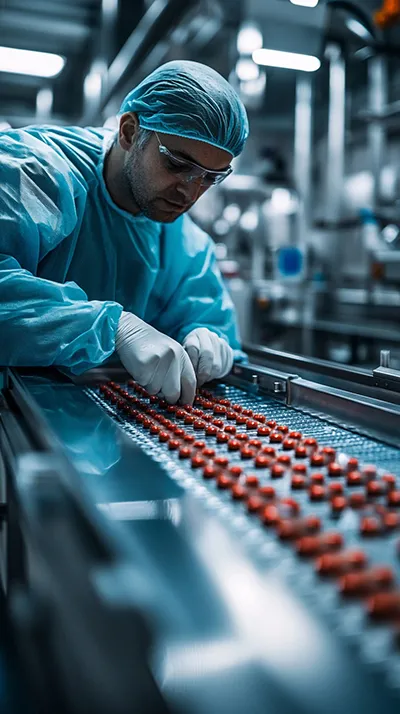
The development of work forces is fast becoming defined by the use of interactive training plans, the cooperation with universities and the honing of inter-professional practices. Such a strategy would ensure that the employees are familiar with the science of drug products as well as digital technology adopted in the manufacturing, creating an agile environment of quick adaptation to the changes in the technological realm. Also, the use of augmented reality (AR), and virtual reality (VR) in the training process allow training in an immersive environment making learning more efficient in terms of knowledge acquisition and the safety of the activity consuming less time and money on its realization.
Regulatory Harmonization: Simplifying Global Production
Managing regulatory environment in various countries is one of the challenges that pharmaceutical producers have continued to grapple with. By 2025, towards a more harmonized global regulatory systems, the drug production and distribution have been made even smoother.
The European Medicines Agency, the Medicines and Healthcare products Regulatory Agency, and the US Food and Drug Administration have increased the pace of collaboration to harmonize Good Manufacturing Practice, data integrity policies and submission formats on digital platforms. This compatibility decreases redundancies in testing, documentation and has the ability to lessen approval cycles as well as reducing cost of compliance amongst manufacturers that have an operation around the globe.
Moreover, regulatory recognition is being secured in relation to the adoption of real-time digital quality assurance and data probity tools underpinned by automated reporting and, as a result, more transparent and effective oversight. With regulatory frameworks developing to encompass new manufacturing technologies, there is increasing clarity and predictability of compliance with the regulatory regime as companies gain increased levels of investment confidence.
Collaborative Ecosystems: Driving Innovation and Agility
In 2025, the pharmaceutical manufacturing business is more and more a part of a collaborative ecosystem in which suppliers, technology providers, contract manufacturing organizations (CMOs), academia and regulators operate in a collective mission.
These alliances enable quick acceleration of new technologies and technologies adaptation, provide solutions to difficult technical issues conveys and enables sharing of resources to enhance sustainability and supply chain resiliency. As an example, the collaboration can facilitate access to highly sensitive and specialized modular manufacturing platforms or advanced analytical capabilities could be too expensive to build or too complicated that the individual manufacturers may prefer to develop.
Secondly, standard-setting alliances dedicated to supply-side interoperability configuration of data sharing are involved in the harmonious combination between digital systems throughout the chain. Such interconnectedness increases the level of transparency, speeds up change-ups, and provides proactive risk management to enable an increased level of the overall supply chain agility.
Conclusion
The production of pharmaceutical drugs of 2025 is something which is characterized by, on one side, innovative production, on the other side, sustainability threads, and on the third, resilient supply chain approaches. Massive shift towards continuous and smart manufacturing, as well as adaptation to the principles of personalized medicines and green chemistry puts the industry on a sustainable evolution path towards greater patient outcomes.
Penetrating new technologies, developing a pool of talented people, and establishing partnerships with others will also be a key element that manufacturers can hope to deal with the reality and take advantages of such a changing environment.