



Transporting goods and services, point A to point B is not the only aspect of pharmaceutical logistics. It is the careful handling of sensitive, high-value, and usually life-saving goods using numerous threads of international supply lines. Pharmaceutical trade also requires logistics because there has been an increase in the level of pharmaceutical demand, global extent of the production of the products, tight demands on the business, and a significant rise in temperature-sensitive nature of the storage and transportation specifications.
This has also put the logistics system under pressure because of the international activities that have been witnessed in the last few years, which include the pandemic, geopolitical tensions, and climatic changes. These instances have proven the weaknesses in the pharmaceutical supply chain and established the fact that one should be resilient, transparent, and flexible.
1. The Uniqueness of the Logistics of Pharmaceuticals
The pharmaceutical products, unlike other commodities, are sensitive, regulated, and the results of failure. Inefficiencies in this industry (or errors in the logistics involved) may cause:
• Loss of product efficacy
• Regulatory penalties
• Risk to patient health
• Loss of finances in case of product spoilage or recall
The products, which are the vaccines, biologics, blood products, and cancer medications, require definite conditions in the supply chain, whether a regular setting with a strict cold chain placed in many cases.
2. Temperature Control and Cold Chain Management
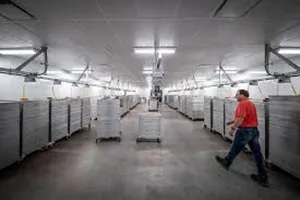
Management of the cold chain is perhaps the most significant feature of pharmaceutical logistics. Most medications need to be refrigerated between 20C and 8°C (or lower in the case of certain biologics and mRNA-based vaccines such as that against COVID-19).
The major issues are:
• Temperature Excursions: Even small temperature deviations may lead to lack of efficacy causing batches to be destroyed.
• Limitations on Infrastructure: The safety of drugs is threatened by the lack of equipment of proper quality in refrigeration and storage, especially in developing countries.
• Monitoring and Visibility: There remains be comprehensive application of real-time tracking of temperatures that result in black holes within the chain.
• Last-Mile Cold Chain: This has been a logistical challenge that requires temperatures to be maintained at constant temperatures during the final miles of distribution, especially in the Backwoods or areas in the countryside.
3. Globalized and sophisticated Supply channels
The Pharmaceutical manufacturing continues to become global. The process can be as simple as having the raw materials on one continent, processed in another, and distributed all over the world. This is a complicated system that presents several areas of possible interference:
• Geopolitical unrest: Tariffs, trade wars, or political upset might block goods from continuing their journey.
• Cross-border compliance: Different requirements related to labeling, customs compliance, and laws on imports/exports make international logistics a complex affair.
• Fragmented visibility: Coordinating different vendors, modes, and partners in different regions can fail to have of centralised control.
4. Quality assurance and Regulatory Compliance
Pharmaceutical logistics has to correspond to very strict regulations of agencies such as FDA (USA), EMA (EU), WHO and others.
Typical problems common to compliance:
• Good Distribution Practice (GDP): GDP compliance should be maintained with validated procedures, training of personnel and documented audit.
• Serialisation and track and trace of products: Policy makers define the implementation of serialisation (ex: FMD in Europe, DSCSA in the U.S) as a means to counter the fraud challenge.
• Documentation and reporting: All stages of the supply chain should be traceable, documented, and auditable.
Failure to adhere to the standards may also lead to regulatory penalties, product recall, and spoiling of reputation.

5. Demand Planning and Inventory Management
It is important to pay great attention to the inventory as both shortages and overstocking are dangerous and must be avoided.
Stockouts have the potential to postpone the treatment of patients and destroy credibility.
A larger amount of overstocks raises storage expenses and leads to the expiry of products.
Yet, on its own, projected demand is never easy to figure out because:
• Non-predictable demand: This is especially in times of pandemics or other outbreaks.
• Lead times to produce: Particularly of complex drugs or niche drugs.
• Short shelf life: Certain goods perish easily or have backward expiry dates, so it is difficult to stockpile.
Therefore, pharmaceutical firms should find an optimal balance between the supply and demand that, in many cases, requires AI and data analytics as predictive models.
6. Accessibility and Last-Mile Delivery
The final mile of pharmaceutical supply chain is the final leg and it is normally the longest part of the process in regards to its logistics and the most difficult.
• Rural, remote and underserved: Delivery can be innovative and drone or mobile clinic delivery may be an option.
• Urban congestion: Cities have traffic as well as narrow delivery times, which might result in outlaws.
• Security concerns: The temptation to steal or tamper with any pharmaceutical product is high, especially in the last-mile shipments that are of high-value products.
Ensuring innovative experiments at the local level are needed to solve the problem of the gap between warehouses and patients, hence the role of healthcare providers and logistics partners.
7. Risk Management/Resilience
Disruption to the pharmaceutical supply chain is very prone. Possible risks will be:
• Pandemics (e.g., COVID-19): Messing up supply and stopping transport.
• Natural Disasters: Houses and roads may be destroyed by an earthquake, floods, or forest fires, or there may be delays in delivery.
• Hacking: More and more hacking of pharmaceutical firms and transportation companies.
To build resilience, one should have a visualization of risks, alternative sourcing and modalities, cross-modal trade, and contingency arrangements.
8. Digitalization and the Inclusion of Technology
Technology, in that case, is a two-faced coin, it is a remedy and a dilemma at the same time. Digital transformation is seen in many of the pharmaceutical companies to improve logistics.
Some important technologies and their roles:
• IoT (Internet of Things): This is used to monitor the temperature, topography of humidity, location, and shock.
• Blockchain: Elevates the degree of traceability and transparency and forbids the issue of data integrity and replication.
• Artificial intelligence and machine learning: Automated demand forecasting, route optimisation, and stock.
• Cloud platforms: Enable the supply chain partners and regulators to interact seamlessly.
Nevertheless, these technologies would demand upfront investment, training, and change management of the organization that many companies are still trying to overcome.
9. Pressures on environmental sustainability
Pharmaceutical companies are increasingly being pressured to lower their carbon footprint, a problem in a sector that is driven by air transport, cooling, and disposable shipping materials.
Sustainability issues relating to logistics are:
• Cold chain systems with high absorption of energy.
The packaging with materials that cannot be recycled.
• Transport emissions, specifically air and road shipment emissions.
What needs to be taken into consideration by companies now will be the environmentally friendly option of using reusable thermal packaging, electric vehicles during delivery, and optimum routing in order to decrease environmental impact.
10. Skill Shortage and the Human Capital
Efficient pharmaceutical logistics requires the services of competent personnel in supply chain management, quality control, and regulatory affairs. Nonetheless, several businesses are encountering:
• Talent crunch: More so, in pharmaceutical specialized positions in logistics.
• Skill shortages: The shift towards digitization of logistics necessitates the urge to upskill.
• Employee retention problems: Particularly in deeply strained or resource-poor regions.
Optimal operational performance and effectiveness are not only vital investments in human capital, but they are also ultimately rewarded as part of pharmaceutical logistics.
Conclusion
The pharmaceutical sector is loaded with the logistics issues that are diverse and rapidly developing. Whether it is the temperature control and regulatory compliance or digital transformation and the last-mile delivery, all of these aspects require precision, flexibility, and strategic thinking.
Keeping up with the global demand for healthcare services, a stronger argument that explains the need to develop resilient, transparent, and sustainable pharmaceutical supply chains is emerging. The adoption of innovation, investment, and collaboration among different industries is the key ingredients that need to be embraced to shrug off the logistical impediments and ensure that life-saving and efficient therapies can be provided as safely as possible.