
Aseptic manufacturing is the key to sterile drug production, mostly in the fields of injectables, biologics, and ophthalmics. It is essential to maintain sterility in the production process since the contamination of medicines can lead to inefficacy and compromise the safety of the product. Conventionally, aseptic processes have depended heavily on dexterous human operators to perform and monitor crucial jobs in a very strict environmental setting. But at the same time, the greatest risk of microbial contamination is also presented by human involvement because of operator errors, fatigue or variations in performance.
To deal with such issues, the industry of pharmaceuticals is also experiencing a high-tech makeover. Automation and digital analytics via robotics, artificial intelligence (AI), process automation, real-time monitoring, and other technologies in the aseptic environment are changing how production is being carried out. However, it is not possible to keep the human know-how, intelligence, and decision-making out of technology entirely. Therefore, human capabilities and smart technologies should be incorporated into aseptic manufacturing in an effective way so that the optimum system of efficient, reliable, and compliant engineering is made.
1. History of Aseptic Production
Traditional Approaches
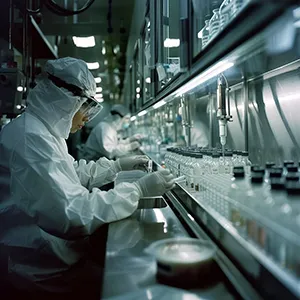
Aseptic processing has traditionally been performed using manual interventions under Grade A/B cleanroom conditions, and human vigilance and GMP training went hand-in-hand with aseptic processing. Operators usually performed such tasks as manual filling, component assembly, environmental monitoring, and line clearance. Although they worked, such processes lacked scalability and were complicated, time-consuming, and prone to risk.
Introduction of Automation
Isolators in the form of Restricted Access Barrier Systems (RABS) were introduced, and a major change came. Such technologies create distance between operators and high-risk areas, minimizing the contamination risks. In the long term, the further automation of the filling lines, robotic arms, and real-time particle and microbial monitoring systems also helped to improve the aseptic control.
2. The Role of People
Keeping Human Control
Human operators play an important role in controlling, making essential decisions, ensuring the action of the automated system, and addressing deviations despite the technological trends. An interpretation of subtle anomalies and knowledge of process behavior and history cannot be replaced by them.
Human-Machine Collaboration
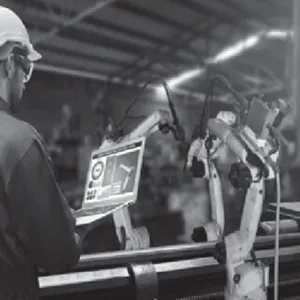
Manufacturing in modern times does not focus on replacement but collaboration. There are human-machine interactions (HMIs) and control systems, as well as analytics dashboards used by operators. Their responsibility has changed; now they are not the agents of action but the agents of interpretation and choice, and it requires cross-disciplinary knowledge both in the area of microbiology and in the area of digital systems.
Upskilling and training
As automation grows, training programs have transformed to incorporate digital literacy, handling of robots, interpretation of data, and making fixes. In the current trend, worker training is a step towards effective merging of people with technology.
3. Technology that is Fueling Integration
Automation and Robotics
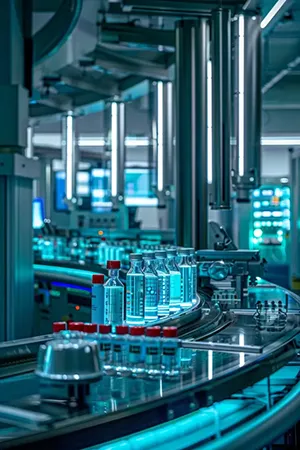
Tasks like filling of vials, stoppering, or loading of lyophilization, etc. are now performed by robots because vial filling, stoppering, and loading require performing repetitive, high-risk, or precision-based tasks. They have high accuracy which minimizes variability and increases sterility assurance.
Isolator Technology
Isolators offer a controlled condition that is sealed and, therefore, human interaction is near zero. Operators work with the systems wearing gloves or by the use of remote tools, and automatic operations of clean-in-place (CIP) and sterilize-in-place (SIP) cycles ensure sterility.
Machine Learning and AI
Artificial intelligence models forecast the possibility of contamination, identify the faults during a procedure, and ensure the most efficient environmental surveillance. Preemptive repair and self-regulative quality control are on an increase.
Digital Twin and Real-Time Analytics
Digital twins model aseptic environments and processes, which allow the validation that occurs in the virtual environment, real-time monitoring, and proactive risk management. These are the tools that are integrated with SCADA and MES thus enabling real-time availability of process data as well as making sound decisions based on it.
4. Quality and regulatory Matter
Observance of Regulatory Standards
In their turn, the authorities like the FDA and the EMA issued guidelines aimed at promoting the integration of modern technologies within the context of quality risk management (QRM) and quality-by-design (QbD). The 2022 update of EU GMP Annex 1 focuses on barrier technology and control of the contamination.
Validations and Qualifications
Any new technology that is introduced has to undergo performance verification, sterility verification, and consistency of the process. This consists of computer system validation (CSV), equipment qualification (IQ/OQ/PQ) and periodic review.
Electronic Records and Data Integrity
ALCOA+ principles must be followed when using electronic batch records (EBR), audit trails and real-time reporting systems. Data integrity during the automated systems is a requirement demanded by the regulations.
5. Problems of human-technological integration
Cultural Resistance
A lot of organizations run into organizational change resistance, especially when major staff members used to the ways things are carried out are not conversant with digital tools. Change management practices must be put in place to attain adoption.
Technological Complexity
A plan is required to connect different systems (PLC, SCADA, MES, and ERP); there must be normalization of the interface and cybersecurity. An integration can be poor to form an in-house data silo or bottleneck.
Price and returns on investment
The price to set up automation, AI-based systems, and training courses may be significant. ROI justification entails long-term perspectives, well-estimated KPIs and implementation strategies that are performed in stages.
6. Case Studies of Effective Integration
Completely automated Fill-Finish Line
One of the major biopharmaceutical companies adopted a successively completed isolator-based fill-up assumption. There was not much that a human being could do; it was relegated to loading of parts and monitoring. This led to a reduction in the number of contamination incidents by up to 90% and a 40% drop in the time spent accepting batches to be released.
Environmental Monitoring and AI
One of the world leaders in the production of vaccines implemented AI-driven processing of environmental monitoring data to discover the seasonal and shift-related trends of microbial conditions within the facility. This helped them to optimize scheduling of cleanrooms and to increase CAPA's effectiveness.
Process Optimization Digital Twin
A sterile injectable manufacturing site has modeled their aseptic operation in a digital twin, so they can simulate and do what-if analysis in real time. This system made it possible to optimize airflow patterns in cleanrooms and increase efficiency through human engineers.
7. Future Outlook
The Rise of Self-governing Facilities
The idea of lights-out manufacturing, where there is the minimal presence of humans, is on the horizon. Cleanrooms with autonomous environment management with AI and robotics may cover a lot of the work, with the human being a supervisor.
Human-in-the-Loop AI
In the future, more and more systems will utilize human-in-the-loop AI, in which human experience will correct the output of the AI where it is imperative, such as in batch disposition or deviation analysis.
Labor and Ethics
Organizations should also make sure they ethically implement automation, safeguarding jobs by reskilling and safeguarding related issues of job dignity. Critical thinking, human creativity, and empathy cannot be substituted.
Conclusion
Present-day aseptic manufacturing techniques are experiencing the impact of a radical change as a result of the incorporation of human know-how into developed technologies. This synergy increases sterility reduction and productivity, and this synergy guarantees strong adherence to dynamic regulatory demands and requirements. It seems that instead of replacing humans, the emphasis is made on the process of redefining their role in the ecosystem of the technologically developed world.
In order to achieve successful integration, companies need to invest in technological infrastructure and human resources. Training, change and strategic planning go as hand in hand with the hardware and software being implemented. The future of aseptic manufacturing will largely depend on not only the machines but also how the intelligent man and machine interact.