
In the pharmaceutical industry, where efficiency and adaptability are crucial, companies face unique challenges ranging from stringent regulations to complex manufacturing processes. To overcome these hurdles and deliver life-saving medications efficiently, many pharmaceutical firms are turning to lean supply chain management principles. Originating from the Toyota Production System, lean management focuses on eliminating waste, optimizing processes, and improving overall efficiency throughout the supply chain. While adoption has been slower in pharmaceuticals due to industry-specific characteristics and regulatory constraints, companies are increasingly embracing lean practices to streamline operations and ensure sustainable growth.
One significant advantage of lean supply chain management in pharmaceuticals is the reduction of lead times. By minimizing non-value-added activities and optimizing processes, companies can accelerate the delivery of medications from production to distribution, enhancing customer satisfaction and responsiveness to market demands. Shorter lead times also reduce the risk of drug shortages, ensuring consistent availability of essential medications to patients.
Additionally, lean principles promote inventory optimization, helping companies to manage stock levels efficiently while reducing holding costs and the risk of product expiration or obsolescence. This agile approach allows companies to adapt quickly to market changes and customer preferences.
Furthermore, lean supply chain management contributes to improved quality and compliance within the pharmaceutical sector. By standardizing processes, implementing rigorous quality control measures, and fostering a culture of continuous improvement, companies can maintain the integrity and safety of their products across the supply chain. This aspect is crucial in an industry where product quality and regulatory adherence are paramount.
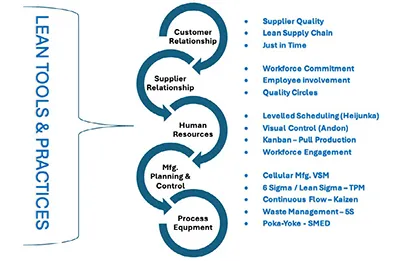
Lean supply chain management promotes collaboration and transparency among supply chain partners, facilitating optimization of processes and innovation. Through strong relationships with suppliers, manufacturers, distributors, and other stakeholders, companies can share information, pool resources, and solve problems jointly, enhancing operational efficiency and resilience against disruptions. This approach has significant potential to transform the pharmaceutical sector by improving efficiency, resilience, and customer satisfaction. However, successful implementation requires commitment, collaboration, and a culture of continuous improvement. With increasing competition and evolving market dynamics, firms are prioritizing efficient supply chain management to accelerate innovation, enhance customer value, optimize resource utilization, reduce costs, and boost profitability.
Supply chains have become more complex, involving forward and backward flows of materials, information, and funds among multiple operating units. In the generic pharmaceutical industry, supply chains typically include manufacturing raw materials, pharmaceutical manufacturing, distribution centers, retail pharmacies/hospitals, and patients. Economic shifts have prompted restructuring of supply chains in response to the sector's unique challenges, including strict regulations and the critical nature of pharmaceutical products.
Supply chain management (SCM) in the pharmaceutical industry aims to produce the right product, for the right customer, in the right amount, and at the right time. However, the complexity of industrial processes, characterized by numerous variables and nonlinear dynamics, poses challenges in modeling their behavior. System dynamics (SD) methodology emerges as a suitable technique for depicting interactions among various factors in supply chain modeling.
Benefits of Lean SCM
Let's explore the various benefits of Lean Supply Chain Management (LSCM) within the pharmaceutical sector:
Reduced Lead Times: LSCM practices streamline processes, decreasing the time it takes for medications to reach patients. This is particularly crucial for time-sensitive treatments like cancer therapies or organ transplants. By minimizing delays and inefficiencies, LSCM ensures prompt delivery of life-saving medications, potentially enhancing treatment outcomes and patient satisfaction.
Inventory Optimization: Techniques such as Just-In-Time (JIT) inventory management minimize excess inventory and maintain optimal stock levels. This reduces carrying costs and the risk of inventory obsolescence. JIT also ensures materials are available precisely when needed, enhancing efficiency and reducing waste.
Improved Quality: LSCM fosters continuous improvement, driving efforts to identify and eliminate defects and errors. Rigorous quality control measures and process optimization enhance product safety and quality, reducing costs associated with recalls and rework.
Enhanced Visibility: Real-time data sharing provides stakeholders with comprehensive visibility into inventory levels, production status, and demand forecasts. Tools like Collaborative Planning, Forecasting, and Replenishment (CPFR) facilitate effective collaboration, aligning production with demand and minimizing stockouts or excess inventory.
Increased Agility: Lean organizations are more agile and responsive to market changes and disruptions. LSCM enables quick adjustments to production, distribution, and sourcing decisions, allowing companies to capitalize on opportunities and maintain a competitive edge.
Overall, LSCM empowers pharmaceutical companies to optimize operations, improve product quality, and deliver medications more efficiently. By streamlining processes, optimizing inventory, improving quality, enhancing visibility, and increasing agility, LSCM enables companies to meet market demands and ensure timely delivery of medications to patients.
Challenges of Lean SCM
Implementing Lean Supply Chain Management (LSCM) in the pharmaceutical sector faces challenges that must be addressed.
These include regulatory compliance, as the industry is highly regulated with strict requirements like Good Manufacturing Practices (GMP) and FDA oversight. Adapting lean principles to meet regulatory standards without compromising efficiency is essential.
Additionally, data integration across disparate systems and fostering a cultural shift towards collaboration and continuous improvement are critical.
Transitioning from traditional, siloed approaches to a collaborative, cross-functional model requires a significant cultural shift within pharmaceutical organizations. Embracing LSCM principles necessitates fostering a culture of continuous improvement and employee engagement. Leadership support, training programs, and clear communication are essential for overcoming resistance to change and driving successful LSCM adoption.
Overcoming these challenges is essential to fully realize the benefits of LSCM in improving efficiency, quality, and resilience in pharmaceutical supply chains.
Modern Technologies Used for Lean Supply Chain in Pharmaceutical Sector
Certainly, let's delve deeper into each of the modern technologies used for Lean supply chain management in the pharmaceutical sector:
Modern technologies are transforming Lean supply chain management in the pharmaceutical sector:
Track and Trace Systems: Utilize barcode or RFID technology to monitor pharmaceutical products' movement, enhancing visibility and enabling quick responses to issues.
Temperature Monitoring Devices: Ensure temperature-sensitive products' safety and efficacy by continuously monitoring storage conditions and providing real-time alerts.
Serialization and Authentication Solutions: Combat counterfeit drugs by assigning unique identifiers to drug units and implementing authentication technologies like holographic labels.
Supply Chain Visibility Platforms: Aggregate data from various sources to provide real-time insights into inventory levels, demand forecasts, and supplier performance, facilitating proactive decision-making.
Digital Supply Chain Platforms: Streamline supply chain processes through cloud-based technologies, enabling seamless collaboration and automating manual tasks.
Predictive Analytics and Forecasting Tools: Use advanced algorithms to predict demand patterns, optimize inventory levels, and identify potential disruptions, improving efficiency and reducing costs.
Blockchain Technology: Enhance traceability and authenticity by recording transactions securely, reducing the risk of counterfeit medications and ensuring patient safety.
Robotic Process Automation (RPA): Automate repetitive tasks like order processing, reducing errors, and freeing up human resources for strategic activities, enhancing overall productivity.
By incorporating these technologies, pharmaceutical companies can achieve Lean supply chain management practices, improving efficiency, reducing costs, and ensuring medication quality and safety.
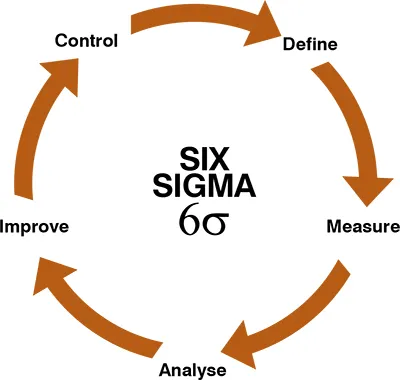
Six Sigma in Pharmaceutical Manufacturing Industry
Six Sigma plays a pivotal role in ensuring quality control, navigating regulatory compliance, and optimizing processes in the pharmaceutical manufacturing industry.
Firstly, it emphasizes stringent quality control measures, including rigorous testing of raw materials and final products to meet predefined quality standards, ensuring adherence to regulatory mandates.
Secondly, Six Sigma aids in navigating complex regulatory frameworks by aligning operations with standards set by regulatory bodies like the FDA and EMA. This is achieved through meticulous documentation, standardized procedures, and utilizing tools like Process Validation and Change Control.
Optimizing processes for efficiency is another core aspect of Six Sigma implementation. By identifying inefficiencies and minimizing waste, pharmaceutical companies can streamline production workflows, reduce cycle times, and enhance resource utilization, leading to cost savings and increased competitiveness.
Data-driven decision-making is facilitated by Six Sigma methodologies, utilizing statistical tools for data analysis to discern trends, correlations, and root causes of variation, thus informing proactive decision-making to elevate product quality and operational efficiency.
Moreover, fostering a culture of continuous improvement is crucial, encouraging innovation, collaboration, and accountability among employees to identify improvement opportunities and drive implementation.
Lastly, Six Sigma prioritizes risk management by providing tools like Failure Mode and Effects Analysis (FMEA) to anticipate potential failure modes and systematically manage risks throughout the product lifecycle.
An example of successful Six Sigma application in the pharmaceutical sector is seen in supply chain optimization, where a prominent pharmaceutical firm used Six Sigma to streamline operations, reduce costs, and enhance efficiency, resulting in significant benefits for patients and stakeholders.
Overall, implementing Six Sigma in pharmaceutical manufacturing offers numerous benefits, including increased efficiency, reduced waste, improved risk management, and ultimately, better outcomes for patients.

Efficient Supply Chain Models in the Pharmaceutical Industry
In the pharmaceutical industry, managing the supply chain efficiently is crucial not only for business performance but also for ensuring healthcare continuity. Disruptions can have far-reaching consequences, impacting healthcare delivery and patient well-being. Therefore, pharmaceutical companies must develop and improve supply chain models suited to the industry's complexities. These include strict regulations, quality assurance standards, temperature-sensitive transportation, and international logistics management amidst globalization.
Lean Supply Chain Model
The Lean Supply Chain model offers an effective strategy for addressing challenges in the pharmaceutical sector by focusing on waste reduction and maximizing value. Borrowed from manufacturing, this methodology revolves around five key principles: defining value, mapping the value stream, creating flow, establishing pull, and striving for perfection.
In the pharmaceutical industry, these principles translate into specifying drug quality requirements, outlining the production process from raw materials to finished products, ensuring continuous production, aligning production with demand, and continually improving processes. Implementing Lean principles promises significant cost reductions and increased efficiency in pharmaceutical supply chains. By eliminating unnecessary processes, reducing supply chain length, and encouraging cross-functional collaboration, performance can be greatly improved.
Agile Supply Chain Model
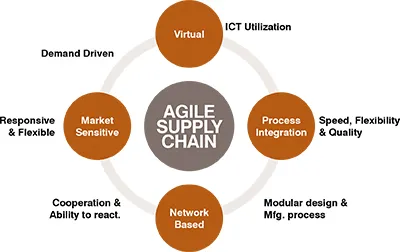
The Agile Supply Chain Model presents another effective strategy, particularly suited for an industry characterized by volatile demand patterns. With a focus on responsiveness and flexibility, the Agile model emphasizes quick decision-making, adaptable sourcing, and robust data analytics. This model resonates well with the pharmaceutical sector's emphasis on customer-centricity. It enables companies to swiftly respond to demand fluctuations and evolving customer needs, critical in a field where patient requirements can change rapidly.
Augmented by sophisticated predictive analytics, the agile model empowers pharmaceutical companies to accurately forecast demand and adjust supply chain operations accordingly. Agility facilitates swift product launches, providing a competitive edge in a dynamic market.
Hybrid Supply Chain Model
Recognizing the merits of both Lean and Agile models, a Hybrid Supply Chain Model, blending elements of both approaches, offers a nuanced and resilient solution for the pharmaceutical industry. The Hybrid model integrates Lean's efficiency and waste reduction with Agile's flexibility and adaptability. For instance, stable, high-volume products may benefit from a Lean approach, while agile strategies suit innovative, fast-changing products. This hybridization allows for cost-effective operations and agile response to evolving demands.
Digitalization and Advanced Analytics
Digitalization and advanced analytics are pivotal in achieving efficient supply chain management, offering real-time visibility, predictive capabilities, and automated decision-making. Technologies like IoT, blockchain, and AI streamline operations, enhance transparency, and improve decision-making. For instance, IoT devices monitor shipments, blockchain ensures secure transactions, and AI refines demand forecasting. Advanced analytics leverage big data and machine learning to drive optimization by identifying bottlenecks and optimizing sourcing, logistics, and inventory management.
Conclusion
In conclusion, the adoption of lean supply chain management stands as a pivotal opportunity poised to revolutionize the pharmaceutical sector profoundly. By embracing the fundamental tenets of lean principles and systematically optimizing processes, pharmaceutical companies have the potential to usher in a new era marked by heightened efficiency, resilience, and elevated levels of customer satisfaction. This paradigm shift promises to yield multifaceted benefits, ranging from streamlining operational workflows to reducing overhead costs and mitigating risks across the intricate web of the supply chain. The essence of lean supply chain management lies in its ability to strip away inefficiencies and redundancies, paving the way for leaner, more agile operations. Through a concerted effort to eliminate wasteful practices and streamline workflows, pharmaceutical companies can achieve significant cost savings while simultaneously enhancing the quality and reliability of their products. Moreover, by adopting lean methodologies, companies can foster a culture of continuous improvement, perpetually striving for excellence in every facet of their operations.