


One of the foundations of a modern pharmaceutical industry is aseptic filling, sterilization of pharmaceutical products, and their filling into containers to avoid contaminating them. The value and sensitivity of materials in personalized medicine, biologics, and cross-sectional clinical trials is high, and the need to ensure sterility is multiplied by small-batch production. The traditional aseptic filling techniques are very time-consuming in nature, also involve a high chance of the human factor being associated and they cannot be used in small-production, high-mix production.
Enter robotics. The automation, machine vision, and modular system design have developed, and more robotic solutions are used to increase the aseptic filling procedure. Such systems enhance precision and repeatability in addition to eliminating much human handling thereby decreased possibility of microbial contamination. They are flexible to usages of various container forms and allow a quick changeover between batches without opening the sterility.
This transition is of special significance because the pharmaceutical companies want to meet the higher regulatory standards and also respond to the market requirements of shorter time to market and increasing customization of therapies. Robotics offers a convincing answer to the problem since it will allow complying with Good Manufacturing Practices (GMP) and Annex 1 of EU GMP, which introduces the issue of contamination control and environmental monitoring.
This paper penetrates the issue of robotics revolutionizing the small-batch aseptic fills, what is positive about it, the technologies, the implementation hurdles, and the use of robotics in the future.
1. The Robotics Requirement in Aseptic Filling
An Eruption of Small-Batch Manufacturing
The trend in the pharmaceutical industry is moving towards specialized and personalized therapies like cell and gene therapy, orphan drugs, and biologics. Small productions of these products are normally done since they are highly potent, valued, and made at specific patient levels. Consequently, aseptic small-batch filling needs intense accuracy and fast turnaround, which the old fashioned manual or semi-automated systems find it impossible to fulfil.
The Drawbacks of the Old Systems
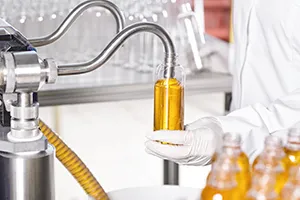
They mostly use manual aseptic filling that depends on trained operators working in cleanrooms. Even through an intense gowning procedure and an assortment of environmental controls, human operators pose the highest contamination threat. In addition, manual activities are inelastic and could be less accurate when working with small quantities. Different drug products, or different types of containers, will also demand time-consuming cleaning and validation activities to effect a changeover, which makes production less flexible.
2. Automation of Aseptic Filling

Accuracy and uniformity
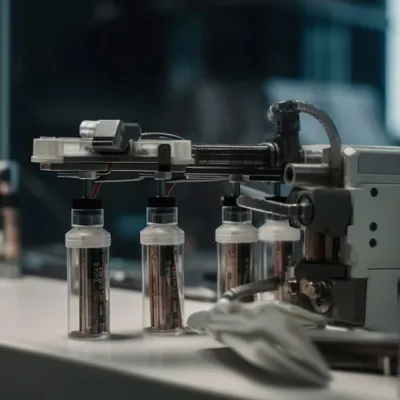
The same motions are reproducible and more accurate because robots are excellent when dealing with delicate biological substances in a sterile environment. Robots can perform complex operations with high precision with regard to placing stoppers in the syringes, assembly of containers to syringe filling, and assembly of labels, all to ensure that the loss of products is kept to the bare minimum. This consistency becomes critical when dealing with high-cost small-batch drugs when the difference between fill volumes is measured in microliters.
Lower Contamination Risk
Probably the greatest benefit of the robotics is the fact that human intervention remains minimum. RABS (Restricted Access Barrier Systems) or Isolators can also allow operation of robots, giving a complete enclosed environment, and allowing much reduced chances of contamination. Anomalies can further be identified by advanced robotic systems that have real time monitoring tools that are used to ensure enhanced aseptic assurance.
Agility in Changing Environments
Robotic systems are modular in nature and programmable. This will enable rapid retraining to various container types (cartridges, vials and syringes), fill volumes, and products. This versatility is seen as an advantage since the robotics is suitable with contract development and manufacturing organizations (CDMOs) who have to engage with a variety of projects with different specifications.
Regulatory Standards Compliance
The contemporary robotic aseptic fillers are developed according to the high standards of regulation, such as the EU GMP Annex 1 and aseptic processing requirements of the FDA. They well may have on-board data logging, environmental monitoring, and automated cleaning cycles so as to be thoroughly traceable and compliant.
3. Robotic Aseptic Filling-Technological Enablers

Machine Vision and Artificial Intelligence
Vision systems permit robots to do sophisticated quality tests, i.e. fill level tests, container inspection, and label accuracies in a real-time environment. Artificial Intelligence (AI) also helps optimize decision-making by studying patterns and identifying the abnormalities, creating a path to predictive maintenance and dynamic quality control.
Designs of modular isolator designs
Isolators where robotic systems are kept are usually under a sterile environment. New developments on isolator design favor the modular layouts which enable pharmaceutical corporations to design production lines that meet its demands. Its scalability plays an important role and can be of help to produce small-batches of varied volume and format.
Servo-driven Motion Control
The robotic arms found in aseptic tasks have servo motors that deliver a high speed/high precision movement. The systems provide enhanced management in speed, torque and positioning, which come in handy in preventing mechanical shock or product spill during filling and stoppering.
MES and SCADA Integration
The integration of Supervisory Control and Data Acquisition (SCADATM) systems and Manufacturing Execution Systems (MES) allows complete digitalization of robotic filling line. These systems ensure that the process is controlled in real-time, batch record and compliance management, all are vital aspects of GMP operations.
4. Use cases of the application
Personalized and Precision Medicine
Cell and gene therapies tend to have custom manufacturing necessities. Robotic systems satisfy such applications in that they accommodate single- use technologies, format changes, and automated documentation in a sterile environment.
Clinical Trial Supply
Clinical trials require elastic, small manufacturing scale of various formulations. The robotic aseptic systems at the same time can take longer fill volumes and packaging without much downtime, speeding up the trials in the process.
High-Potency Active Pharmaceutical Ingredients (HPAPIs)
HPAPIs are very toxic and need great confinement. The presence of robotic filling in the isolators will make sure that product sterility is preserved without exposing the operators.
5. Implementation Challenges
Large Upfront Investment in Capital
There is initial investment needed in robotic aseptic filling systems in terms of equipment and installations as well as training. Nevertheless, this expense usually becomes balanced by the efficiency that will also occur as well as reductions in wastes, and benefits to the compliances.
Technical Complexity
The combination of robotics to the current manufacturing infrastructure requires a multidisciplinary endeavor that involves the mechanical engineers, software developers, and the process experts. Maintenance and validation need also be performed frequently to keep performance high.
Change Management
Challenges in changing to a robotic system may be associated with differences between personnel who fear that their position will be taken by machines or do not possess the technical skills needed to operate the robots. The adoption thus needs to be well managed by provision of effective change management strategies such as upskilling and participation in system design.
6. Trends and outlook of Industries
ADOPTION of Robotics-as-a-Service (RaaS)
High capital requirements have made some providers offer RaaS models, where companies would rent robotic systems and only pay when using it. This template reduces the threshold of entry to small size and the upper middle sized enterprises.
Industry 4.0 integration
Robotics will be a major component of smart factory paradigm and combine with IoT, AI and digital twins. This type of integration will allow aseptic filling to be in real-time, predictive, and adaptive process control.
Entering into Developing Markets
With the world tending to increase their regulatory standards, the task of producing pharmaceuticals through aseptic robotic systems is becoming more in demand in the new markets where pharmaceutical industries are updating their facilities.
Conclusion
Robotics is changing the bench marks of aseptic filling especially the small batch pharmaceutical manufacturing. Robotic systems respond adequately to the exceptional conditions of personalized medicine and clinical trial production by reducing the risk of contamination, developing greater flexibility and precision. The costs may be huge initially and the complexity may be high, but the costs in efficiency, compliance and scalability in the long term are huge. With technology improving and prices dropping, robotic aseptic systems will gain increased popularity and will lead to the new era of smart, faster, and safer sterile manufacturing. Small-batch aseptic filling is not an automated process in the future, but a process carried out by robotics.