
The Shift from Batch to Continuous Manufacturing
Limitations of Traditional Manufacturing
The batch manufacture of drugs has been in use for long periods, with one batch of drugs being produced by fixed volumes with manual interactions at various processes. Although well established, batch processing has a number of problems:
• Inefficiency of resources: Delays between stages may turn into inactivity and waste of energy and materials.
• Scaling challenges: Scaling dilemma is one of the challenges in batch production because it is not able to respond to the unexpected changes fast in the market.
• Variations in quality: Varying quality across batches brings in some differences in product quality.
• Greater time-to-market: Batch processes tend to be time-consuming as far as processing, testing, and approval cycles are concerned.
• Chance of contamination: Single handing of stages one by one enhances the possibility of contamination or cross-contamination.
Why CM is Gaining Ground
Continuous Manufacturing has an alternative which is continuous supply of materials and the production of final products unhindered. The shift is preconditioned by a few factors:
1. Spreading demand to produce a wider drug pipeline, with rare and personalized medicines
2. Great emphasis was put on product quality enhancement with the help of real-time monitoring
3. The need of the industry to have cost effective production solutions
4. Regulatory push by the FDA and EMA among other bodies to embrace new ways of manufacturing
5. Automation, analytics and controls technology advancement
Continuous Manufacturing Benefits
Operational Efficiency:
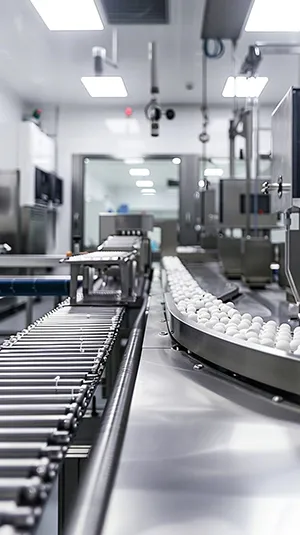
CM allows the smooth flow of materials and requires a minimum number of manual inputs. Real-time control systems maximize production and reduce the downtime, as well as the time lag between independent production phases that occur with a batch production. This helps the production cycles to be shorter and cost of operation is low.
Enhanced Product Quality:
Temperature, mixing and pressure parameters can be more closely controlled by use of continuous processes. The in-process monitoring devices identify the deviations at an early stage, hence lower variability and ensure the final product achieves the desired quality standard.
Improved Flexibility and Scalability:
The CM systems are more versatile than the batch systems. The manufacturers will be able to produce limited quantities to meet certain specifications or an increase in quantity depending on the increase in demand. This adaptability is especially important to niche markets and drugs with low life cycle.
Better Supply Chain Management:
CM increases the responsiveness of supply chain because it lessens the requirement of big inventories and long holding periods. This becomes essential in the manufacture of time-sensitive or short shelf life type of drugs.
Lower Risk of Contamination:
CM is used in closed systems that make human interaction with the product minimal and therefore there is a significant reduction in the risk of contamination, and a greater level of patient safety.
The use of CM in Personalized Medicine
Manufacturing Personalized Treatment
The transition to personalized medicine means that pharmaceutical companies will have to produce more customized medicine in smaller quantities. The CM backs it because it allows the production of individualized formulations or doses on demand relative to a particular person based on his or her genetic or physiological profile.
1. Small-scale manufacturing: CM enables small-scale, patient-specific therapies to be manufactured.
2. Custom drug production: It allows one to alter the properties of the drugs e.g., altering the dosage or release profile or excipient content.
3. Real-time changes: Owing to the real time data, CM systems are capable of controlling manufacturing parameters in real time.
Issues of CM to Personalized Medicine
Although promising, the introduction of CM-based personalized therapies is faced by a number of challenges:
1. Regulatory uncertainty: CM regulations continue to develop in the area of personalized medicine, posing a complexity to manufacturers that want to meet the regulations in various markets.
2. The need to have advanced analytics: Constant processes require strong analytical tools that can be used to control and monitor production in a real time.
3. Complex logistics: There is a need to have a very responsive and integrated supply chain that will support fast delivery of raw materials and final products in the customized treatment.
Supporting Technologies
The new forms of technology are assisting in going past these hurdles:
1. 3D printing allows producing personalized dosage forms at the point-of-care or biomanufacturing facilities or decentralized manufacturing facilities.
2. The miniaturization of production systems, able to produce small, customized doses with great efficiency, becomes possible with microfluidics.
3. The application of Artificial Intelligence (AI) is growing in the field of the prediction of the system performance, the preliminary finding of the faults, as well as the optimization of the process in manufacturing.
Regulatory Framework and Regulations
The International Regulatory Provisions
With the increased mainstream life of CM, regulatory bodies are getting adjusted to endorse safe and consistent CM use. Recommendations are to be followed:
• FDA Guidance on CM: Gives expectations of process validation, real-time release testing, and quality control.
• ICH Q13 Guideline: An international harmonized guideline designed between the International Council of Harmonization to help in the adoption of CM in different regulatory jurisdictions.
• EU GMP Guidance: EU GMP Guidance deals with when CM has been applied under Good Manufacturing Practice, European markets.
Compliance Strategies
Implementation of CM is successful with:
• Early interaction with regulators: Working with agencies in the development of processes is beneficial to facilitate more registration.
• Strong quality systems: Organizations need to spend in modern process analytical technology (PAT) equipment and quality-by-design (QbD) systems.
• Full documentation: Full documentation practice should keep traceable and safe records of CM processes that should be used to prove regulatory compliance.
Business Impact of Continuous Manufacturing
Return on investment and saving costs
The CM systems and infrastructure required need a high start-up expenditure, but the costs of the long run implications are large:
• Reduced wastage and rework: Monitoring of operations continuously will reduce the chances of deviation hence there is less loss of material.
• Reduced quality defeats: Quality failures are few when there is consistent output.
• Reduced labour: There is no need to employ lots of workers in a production team with automation.
Competitive Advantage
Drug firms utilizing CM have an advantage since they are more receptive to market demands. CM enables:
• The speed at which products take to be launched, particularly in times of pandemic, emergence situations
• More alignment to patient demand, enhancing satisfaction and access
• Increase ability to be innovative in formulation and delivery mechanism
Connection to Digital and Advanced technologies
Intelligent Manufacturing Systems

The future of CM is in CM with digital technologies, and the production of smart and connected manufacturing environment. These include:
• Process optimization, predictive maintenance and fault detection using AI and machine learning
• Automation and material handling robotics Exotic tasks automation Robotics
• Presence of IoT (internet of Things) in collecting data in real time across the production floor
• Blockchain on secure tracking and traceability through the supply chain
Scalable and Modular Solutions
New CM systems are designed on a modular basis and manufacturers have the ability of scaling up the production or pulling it down according to needs. Multiproduct manufacturing with very little reconfiguration are also possible using these modular platforms, and they can be of great value to contract development and manufacturing organizations (CDMOs).
Future Outlook:
CM adoption will speed up in the pharmaceutical industry during the upcoming years. It is expected that key developments will be:
• Widened acceptance by the regulators, confidence levels in CM systems strengthening with harmonized guidelines, and effective case studies
• More investment in digital engineering, full automation and integration of production lines
• Biologics have become and will continue to grow as technology evolves towards obtaining constant supply of complex biologic medicines and biosimilars
• More centralized options like decentralized manufacturing using portable CM units and digital controls, which can potentially allow the production even on-site, in the hospitals or remote places
With more Continuous Manufacturing already established in the pharmaceutical industry it will enable the industry to address increasing requirements of quality, safety, speed, and personalisation. CM is not merely the technical enhancement as it is also an innovative approach to the manufacturing of medicines and the speed at which it can be introduced to the patients.