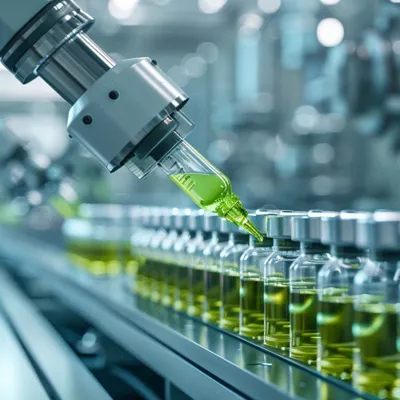
With the high level of dynamism surrounding the pharmaceutical industry, the phenomenon of contract manufacturing has become a critical pillar of innovation, cost-effectiveness, and quick scaling. Contract Manufacturing Organizations (CMOs) and Contract Development and Manufacturing Organizations (CDMOs) are at the industry center towards assisting the drug discovery organizations to concentrate on their core competencies which include marketing, distribution, and drug discovery. Outsourcing can be used to manufacture goods in external and specialized partners and thus allow a company to streamline its operations, have a shorter time-to-market and comply with the complex regulatory requirements.
Due to the modern scope of the healthcare industry across the world, this industry is in greater need of a reliable and innovative partner in contract manufacturing than ever before. This article is about the increasing significance of CMOs in the pharma business, the conditions of the market, strategic opportunities and outlooks capturing the industry.
The Evolving Role of CMOs in Pharma
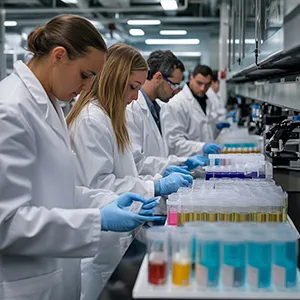
Contract manufacturing in pharma has ceased being merely a way of supplying extra manufacturing capacity. Current CMOs have evolved to become strategic partners capable of providing end-to-end services; such as formulation development, clinical material supply, commercial scale manufacturing and packaging.
CMOs of the present day are operating at high-tech facilities with modern technologies and have high quality and regulatory standards. These do not just support conventional small-molecule drugs but also are developing capacities in biologics, cell and gene therapies, and high-potency active pharmaceutical ingredients (HPAPIs). This shift represents not only the growth in dependence on exogenous innovation but also the trend within the industry toward more dynamic, leaner forms of business.
Market Trends and Growth Drivers
The worldwide market of pharmaceutical contract manufacturing has enjoyed massive growth, which has been stimulated by escalating R&D spending, the rising complex nature of drugs and the demand to cut costs. Biopharmaceuticals and personalized medicine are also increasing the pressure on specialized skills and the right to use production systems.
Global Market Forecast
The chart below shows the increasing business market in the contract manufacturing business internationally:
As it has been observed, the market is supposed to expand from USD 103.4 billion in 2023 to USD 166.8 billion by 2030, which indicates strong and stable demand.
The major factors are:
• Greater outsourcing by smaller, middle-sized biotech companies.
• Big pharma lowering fixed costs and growing their flexibility in operations.
• Increase in demand for high-quality manufacturing environments that are based on compliance with high-quality manufacturing in the emerging markets.
• More emphasis on the speed-to-market/supply chain robustness post COVID-19.
Key Benefits of Contract Manufacturing

The advantages that can be obtained through the help of contract manufacturers are so numerous and extend farther than mere cost savings:
• Speed and Flexibility: CMOs provide pretested structures, infrastructures, and processes that speed up time-to-market greatly.
• Expertise: CMOs usually possess expertise in defining specialized dosage forms, therapeutic areas or technologies that can provide a high level of technical expertise and process capabilities.
• Regulatory Knowledge: With expertise in the various geographies where they work, Experienced CMOs are aware of regulatory requirements in each region and they ensure that they maintain these requirements throughout the lifecycle of the product.
• Scalability: Manufacturers are able to increase or scale production scaling down or up to fluctuations in demand without large long-term capital investment requirements.
Table: In-house vs Contract Manufacturing Comparison
| Criteria | In-house Manufacturing | Contract Manufacturing |
| Capital Investment | High | Low or none |
| Time to Market | Slower due to setup | Faster due to existing setup |
| Expertise & Technology | Internal capabilities only | Access to specialised experts |
| Scalability | Limited by facility | Easily scalable |
| Regulatory Support | Internal compliance team | Regulatory experience across markets |
| Risk Exposure | Higher internal risk | Shared risk with partner |
Challenges in the CMO/CDMO Ecosystem
Contract manufacturing has many challenges even though it has its benefits:
• Quality Assurance and Oversight: This is because it is not always easy to maintain quality levels of products in each site or vendor when you are working globally.
• Regulatory Complexity: Regulations that must be adhered to by CMOs at an international scale include the FDA, EMA, PMDA, and other regional regulatory bodies.
• Data Integrity and IP Risks: There will be a chance of intellectual property leakage or data breach whenever dealing with third parties.
• Capacity Constraints: Excessive demand in terms of niche segments like sterile injectables or biologics may cause bridges and even capacity shortages in the supply chain.
• Supply Chain Choke: The supply chain dependencies are expanding globally and border exposure to logistics and geopolitical risks.
Sustainability and ESG Considerations in Contract Manufacturing
The concept of sustainability is gaining much attention in contract manufacturing. The pharma companies have come to choose CMOs that practice environmental responsibility and ethical sourcing. The energy-efficient facilities and reduction of waste and carbon-emitting processes have become one of the main factors of selection. Moreover, Environmental, Social, and Governance (ESG) standards are being incorporated into the choices of outsourcing.
Proactive CMOs are matching a sustainable worldwide climate change and applying the principles of green chemistry to lower the impact of drug manufacturing on the environment.
As the regulatory bodies and the investors are raising more pressure on the sustainability front, the ESG-compliant business alignments will be a potent part and parcel of creating responsible, future-ready drug supply chains.
Emerging Technologies and Digital Transformation
The digitalization of the contract manufacturing industry is changing the industry. Smart, quick and efficient manufacturing is being made possible by advanced technologies:
• Quality by Design (QbD) system and Process Analytical Technology (PAT) can be used to enhance the quality of the products and vice versa decrease in waste.
• Robotics and Automation make it more efficient and reduce human error, especially at the sterile level.
• AI and Machine Learning contribute to predictive maintenance, process optimisation and capacity planning.
• Blockchain offers traceability, transparency, and confidence within the multiparty collaboration.
• The reason is that Cloud-Based Platforms allow real-time communication of data between sponsors and CMOs, which would achieve greater visibility and responsiveness.
These technologies are key to establishing trust, minimizing errors, and adhering to the expectations set by global regulators.
Strategic Partnership Models
Outsourcing relationships are going through change. Rather than transactional, ad hoc contracts, the increasing number of CMOs or CDMOs are working towards long-term strategic alliances with their companies.
Major ones are
• Integrated Development-Manufacturing Partnerships: Bringing together development in the early stage with scalable manufacturing, providing end-to-end support.
• Risk-Sharing Agreements: There are cases whereby partners invest and share the reward depending on the success of the project, especially in a novel or complex therapy.
• JVs or Acquisitions: There are a few large pharma companies taking investments or acquisition stakes in CDMOs to gain access to capacity and technology.
These have the effect of building mutual trust and goal symmetry, as well as co-innovation, necessary in rapidly growing sectors like biologics or mRNA-based therapies.
Regional Outlook and Future Opportunities
Asia-Pacific
The subcontinent region consists of India and China as leaders in outsourcing services since they have cost-effectiveness, skills, and infrastructure on a large scale. They are appealing to both clinical and commercial-scale production due to improved regulatory approaches and the talent base.
North America and Europe
These are called innovation regions, regulatory regions and standards regions. It is fuelled by the complex biologics, personalised medicine and advanced therapies.
Emerging Markets
Areas like Latin America, Eastern Europe, and Southeast Asia are experiencing a rise in activities amongst CMOs as a result of high healthcare reach and domestic manufacturing incentives.
Conclusion:
Contract manufacturing is no longer a mere cost-cutting activity but is also an ability enabler of innovation, swiftness and innuendo in the pharmaceutical sphere. As more complicated therapies, personalised medicines and the streamlining of supply chains become demanded, strategic alliances with competent CMOs/CDMOs are proving to be important requirements.
In order to thrive in such an environment, the pharmaceutical firms have been required to be collaborative in their approach and invest in digital integration and prioritize long-term, transparent relations with their outsourcing partners. Agility, specialisation and synergy are the future of pharma manufacturing, and nowhere is this revolution more likely to come about than through contract manufacturing.