

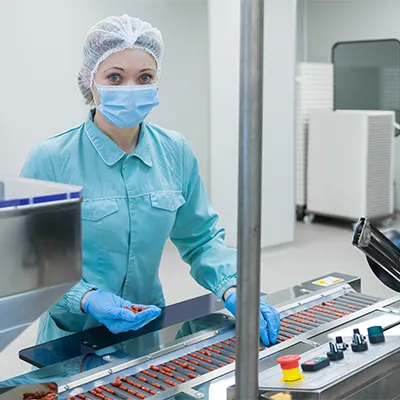
The drug manufacturing industry has continued to require batch processing, a step wise approach that divides the various production phases amongst different points. Although such a way is safe and effective, it may be rather time consuming and inflexible. A more modern and recent system is continuous manufacturing in which the materials are fed continuously in a system and the last product comes out with no break.
The range of the benefits of this method is notable, and they include the shortened process of production, a decreased number of manual operations, and real-time oversight. Besides these gains, implementation of continuous manufacturing is accompanied by significant considerations on compliance, quality management and acceptance by regulatory bodies. Consistency of products, overseeing process alterations and conforming to inspections are all the issues of concern among companies and governing bodies.
Evolving Regulatory Landscape:
Continuous manufacturing is being helped by regulatory agencies on a world wide scale but not yet fully harmonized. The Food and Drug Administration (FDA) of the United States has been supportive extensively in the country including the adoption of the Emerging Technology Program and guidance documents. The European Medicines Agency (EMA) in the European Union has provided a little bit of accommodation to those firms reporting continuous manufacturing data as part of a marketing authorization application.
Quality by design, process validation and its lifecycle exist in guidelines such as ICH Q8 to ICH Q12 and in other international guidelines. But as they were first made with batch-based manufacturing, they are currently being adapted in consideration to CM.
Among the biggest difficulties is the question of varying expectations and degrees of readiness among the control agencies across the world. This may complicate global submissions especially when there are various ways, one would want to maintain the same manufacturing process, explaining and justifying the same.
Basic Regulatory Issues:
The shift in production mode, to continuous production, needs new concepts of process validation and registry filing. In batch production, it is easy to state when a lot starts and when it ends and hence easier to spell out quality as well as correct deviations. In CM, however, the process of production is going on and the definition of a batch should have the reference to the time-based or the quantity based units.
CM frequently employs real-time release testing (RTRT) and, in that case, the quality of the product is evaluated by in-line or on-line sensors rather than typical end-product testing. Although it can result in faster decisions, it needs thoughtfully developed process analytical technology (PAT) tools and sophisticated analyses of risks. Such technologies have to be well defined and justified in regulatory filings which cannot be done easily within extant structures.
The other question to consider is what to be done in the case of deviations or equipment failures. A problematic batch can be identified and explored upon in batch processing. CM is more intricate as the identification and isolation of the affected material is to be detected with a powerful control plan.
Quality Assurance Consideration:
In continuous manufacturing, quality assurance must be proactive, data-oriented and throughout the process. End-product testing in its conventional form is no longer appropriate. Rather, the firms should aim at ensuring quality is built-in during the design stage of the process through quality by design (QbD) principles.
These include identification of important process parameters, continuing monitoring and predictive tools to eliminate quality problems as they happen. In this respect, data integrity is even more crucial because a significant portion of the decision-making process goes along with automated systems and digital records.
As well, quantification of equipment, cleaning verification, and supplier control are to be reassessed. As an illustration, in CM, cleaning validation may need to be checked constantly, in place of a one-time assurance, as materials are continually coming by means of the pipeline.
Good Manufacturing Practice and Inspections:
Application of current Good Manufacturing Practice (GMP) guidelines to continuous manufacturing is not necessarily easy. Regulations Inspections Regulation inspection is normally based on batch process where every operation can be monitored and records can be made.
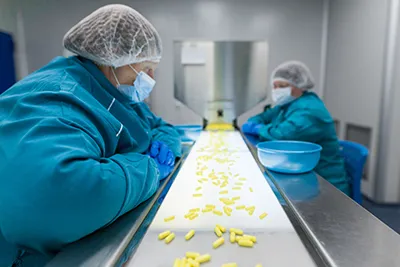
In the case of CM, new technologies that should be comprehended by its inspectors are PAT tools, data analytics platforms, and integrated control systems. The manufacturing companies need to make sure that they have a well trained workforce and this workforce can demonstrate the means of keeping quality in a continuous system.
Records which are electronically maintained, audit trails and security of systems are all under close examination upon inspection. The businesses should be capable of proving that they are capable of identifying, investigating and rectifying such deviations without bringing the process to a halt and without threatening the safety of the products.
Plans on how to deal with the Challenges:
Although these challenges are quite complicated, a number of measures can enable CM manufacturers to surmount regulatory and quality assurance problems. Contact with the regulatory authorities early is highly recommended. This gives the companies an opportunity to get feedback and help out to meet their expectations before making a marketing application.
Modular systems that enable flexible production scales and facilitated readjustment of processes are being practiced in some firms. Process control and fault detection can also be achieved with the help of the advanced technologies such as digital twins and machine learning models.
A QA point of view involves, strong control strategy and this must be backed up with risk assessment and proper documented procedure. Data and automation systems must be tested and necessary maintenance should be carried out on them to maintain accuracy and compliance.
Technology Infrastructure and Data Systems:
Continuous manufacturing is highly dependent on such a high-intensive digital environment to ensure a continuous production process. Manufacturing Execution Systems (MES), Supervisory Control and Data Acquisition (SCADA) systems and Internet of Things (IoT) devices are the essential elements of processes monitoring and real-time process management. Such systems generate immense data that should be stored safely and should not violate the data integrity specifications. Consequently, the high level of cybersecurity systems and verified software systems is needed to safeguard electronic records and maintain reliability of systems.
Lifecycle Management and Post-Approval Changes:
Among the more complicated elements of CM is the impact that it has on lifecycle management. The main part of CM is continuous improvement, which may bring about more and more process enhancements. Consequently, it becomes imperative to control post-approval changes. Change management can be supported and streamlined by the use of regulatory tools like the ICH Q12 guideline in order to have established protocols to streamline change management allowing ease of making changes without need to have a new approval every time.
Workforce and Organizational Readiness:
CM as well needs a change in the skill set and culture of the workforce. The staff has to be trained to use digital technologies, analyze data, and read processes. Quality professionals in particular need to adjust to a more proactive approach, where real-time data sources are used to make sure things are in compliance, no longer relying on the retrospective checks. Training and change management programmes are important to facilitate a successful transition and need to be invested in.
The development of Industry and Examples:
Continuous manufacturing of a few commercial products has already been introduced in a few pharmaceutical companies. These first movers have collaborated with the regulators to earn their trust and show the trustworthiness of CM.
As another example, a large-scale producer was approved to manufacture an HIV drug that was 100 percent done during a continuous process. This implied RT testing, automation of quality control, as well as closed systems. Its authorization left a significant precedent and demonstrated the potentiality of effective regulatory cooperation.
The learning points in these cases to the rest of the industry is that although the transition to CM is complicated, it is possible with proper planning and regulatory involvement.
| Aspect | Batch Manufacturing | Continuous Manufacturing |
| Batch Definition | Fixed lot size | Time-/volume-defined sections |
| Testing | End-product testing | Real-time release testing (RTRT) |
| Process Validation | Static | Dynamic and ongoing |
| Inspection | Easier step-wise review | Needs tech-savvy inspectors |
| Data Management | Manual/episodic | Automated, continuous, digital |
| Change Management | Rigid, document-heavy | Adaptive, requires lifecycle tools |
Conclusion:
Continuous manufacturing is no longer a concept of the future it is becoming an increased component of pharmaceutical manufacturing. It comes with great benefits such as increased speed of production, minimization of wastage and better product quality. Nevertheless, due to the shift in the number of batch to continuous processes there is a new level of regulation and quality assurance needed.
Regulators and producers should collaborate to revise regulations, exchange experience, and make sure that quality and safety should be the priorities. Although challenges can still be observed, continuous manufacturing can revolutionize the industry with the help of flexible, science-based regulation and robust quality systems.