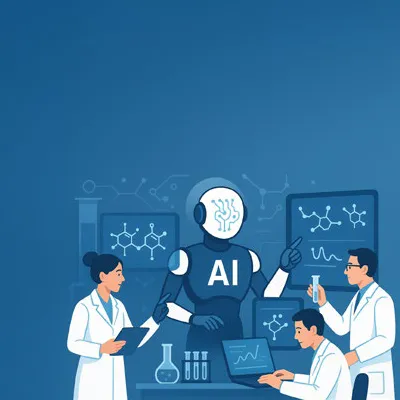
Drug discovery, research and development is becoming more complex, with life sciences companies encountering a range of challenges. Traditional processes are already slow and inefficient, with 90% of drug development projects failing before reaching patients. Companies must also contend with a challenging regulatory landscape, supply chain and manufacturing delays, and rising research and development costs.
To respond to issues and developments proactively, companies need to be able to make informed decisions to improve efficiency through effective use of data, not just from discovery, but from elsewhere in the development and manufacturing process. Used well, this information - production records and supply chain information - can inform research and development approaches and support efforts to streamline the path from discovery to clinical trial. However, many pharma companies are still unable to mine their data effectively, due to issues with poorly connected legacy systems and siloed data. This is making an already-challenging drug discovery and development process even more taxing.

In a competitive landscape, many companies are responding by embracing advanced technologies that optimise efficiency and improve outcomes. Agentic AI is one such solution. This promising emerging technology harnesses the analytic capabilities of generative AI, but is also capable of acting autonomously on its recommendations.
The challenge of acting on data effectively
At every stage, the pharmaceutical R&D process generates valuable data. Companies must be able to capture all of this data - from all stages - on-demand, and use it to create meaningful insights and strategies.
If a company is unable to do this, it can disrupt its ability to make decisions that improve efficiency and can limit valuable insights in the discovery process.
Many companies are limiting their potential because they are working with disparate legacy systems, creating data siloes that are more difficult to access and analyse - particularly in conjunction with data from other parts of the product life cycle.
Furthermore, there is an industry-wide recognition that traditional workflows can no longer keep pace with today’s challenges.
In many cases, operations still require human action to authorise a variety of routine tasks, which can create bottlenecks that can slow down or delay discovery and development projects.
Standard AI systems are adept at mining data for insights much more rapidly and effectively than human agents. However, these insights still require human approval and action, which can lead to delays.
Agentic AI is an intriguing development in AI technology addressing this problem. Unlike traditional AI, which examines data for human consideration, Agentic AI can both interpret and act autonomously on its recommendations. It leverages multiple agents to investigate complex situations, weigh potential outcomes, and make independent decisions based on its learned knowledge and programmed objectives. While having a human in the loop is still crucial, Agentic AI can provide a far greater level of assistance and unlock a range of possibilities.
This promises a number of key benefits for life sciences companies, such as:
• Accelerated drug discovery: Agents can autonomously analyse vast datasets of biological information and explore how targets interact within complex biological pathways, even before in vivo or in vitro testing has occurred.
• Optimised analytical development: Agentic AI can autonomously design and execute in silico experiments to test target viability, reducing the time required to identify and validate drug targets.
• More effective formulation development: Agentic AI can identify promising drug candidates and optimise the structure of lead compounds to improve their pharmacological properties and reduce side effects.
• More efficient clinical research: Agents can analyse preclinical data, identify safety concerns and optimise designs for in vivo studies, and assist in patient recruitment, data monitoring and event reporting.
• Hyper-accelerate clinical trial setup and conduct: Agentic AI can add a valuable experience layer on top of traditional processes and SaaS solutions. Agents can empower protocol authors by auto-generating protocol content, and significantly increase productivity for data managers by automating several tasks in trial setup, conduct and closure.
• Empower R&D stakeholders with intelligence: Agents can support strategic asset-level decision-making based on regulatory intelligence and provide insights that inform operational and commercial decision-making
• Enable right-first-time submissions: Agents can compare draft submissions content with previous submissions, health authority correspondence, and external regulatory intelligence, to select content that will best increase the probability of submission success
• Increase speed to productivity for R&D stakeholders: Agents can be personified to provide digital assistance, such as searching, analysing and providing contextual answers (like human SMEs) from multiple sources of information
• Smoother transfer into clinical manufacturing: Agents can review and analyse data in the discovery and research process to identify efficiencies that can accelerate the transfer of projects into clinical manufacturing.
Agentic AI can also assist with strategic decision-making, optimise regulatory submissions, and provide impact assessments when regulations or standards are updated.
Responsibly integrating Agentic AI
The benefits of this approach are compelling. However, life sciences companies need to consider a range of factors before implementing.
For example, it is vital to address issues with siloed data and disparate legacy systems, so that Agentic AI can access the data it needs. This includes harmonising information through actions such as the standardisation of datasets and using application programming interfaces (APIs) to connect different systems.
Companies must also clean, curate and validate data to maximise model accuracy and reliability, and conduct rigorous validation across diverse datasets to ensure that agents are robust.
Standardised metrics for tracking the performance of AI agents remain essential. Companies must ensure that there are effective security safeguards for sensitive data, and that strong regulatory frameworks establish clear lines of accountability when an error occurs. A degree of human oversight is also important for monitoring quality and spotting issues, such as algorithmic bias.
While surmountable, technical challenges such as these often fall beyond the internal expertise of life sciences organisations. This is where informed digital transformation partners can and should step in as partners to establish the right safeguards - and make sure that crucial questions are addressed and considered at the outset.
Agentic AI and the future of drug discovery and development
The integration of industrial AI agents into processes promises a wide range of benefits, particularly in the life sciences space.
Agentic AI can offer more proactive and predictive capabilities, which can help to deliver faster and more effective drug development. Companies will be able to develop more personalised treatments and explore new avenues for tackling previously intractable diseases. More efficient discovery and development will have significant cost implications, and agents will be able to optimise processes to better adhere to regulatory requirements.
When combined with other emerging technologies such as advanced robotics and quantum computing, the pace of discovery looks set to accelerate still further.
This technology will also be able to complement automated systems in fields such as smart manufacturing, with expert human workforces increasingly working seamlessly alongside AI agents.
For this future to be realised, forward-thinking life sciences companies must ensure that they consider the potential of innovations such as Agentic AI today. Perhaps more importantly, they need to work with the right people.
By collaborating with digital transformation experts with experience in Agentic AI, companies can ensure their systems are soundly designed, have the ability to scale, and can help them harness the full potential of this exciting shift.