Sponsored by:

A Scalable Primary Cell-Based 3D Human Skin Organoid Platform
Advance barrier biology and dermatotoxicology research with a scalable, primary cell-based 3D human skin organoid platform.
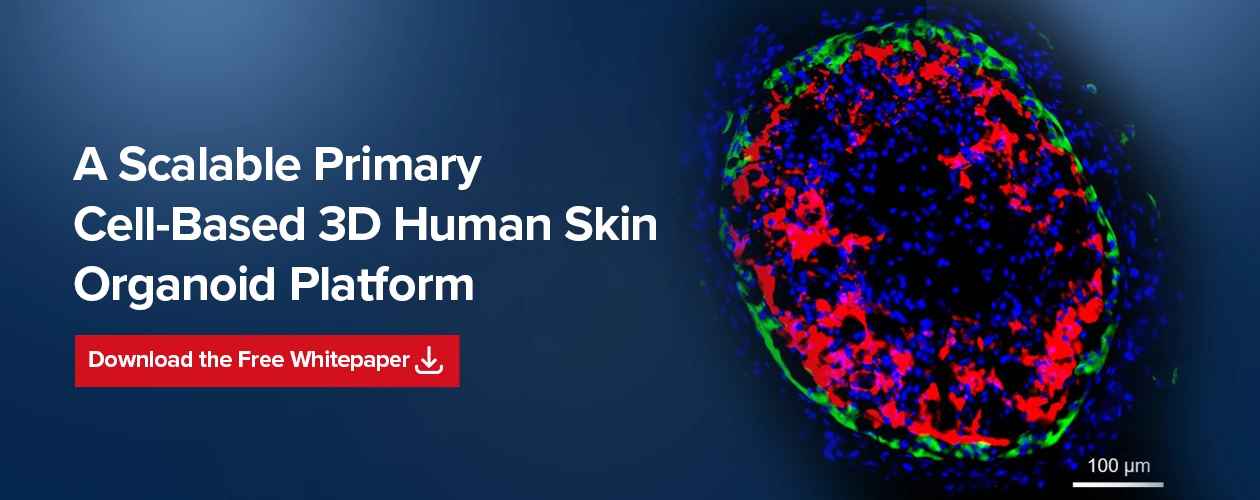
Advance barrier biology and dermatotoxicology research with a scalable, primary cell-based 3D human skin organoid platform. Generated by co-seeding normal human epidermal keratinocytes (NHEK) and dermal fibroblasts (NHDF), the model rapidly self-organizes into physiologically relevant bilayer skin organoids in a 96-well format.
The platform supports long-term culture, functional barrier formation, and reproducible UV injury studies, enabling high-throughput screening for skin biology, environmental insult testing, inflammation research, and dermatotoxicology applications.
Key Highlights:
- Rapid self-assembly into bilayer human skin organoids within 66 hours using primary epidermal keratinocytes and dermal fibroblasts.
- Compatible with 96-well high-throughput screening workflows for scalable and reproducible organoid generation.
- Develops physiologically relevant skin architecture with epidermal-dermal organization, basement membrane formation, and epidermal differentiation.
- Demonstrates functional barrier formation, reduced permeability, and sustained viability for up to 21 days in culture.
- Supports UV-induced injury studies, showing dose-dependent changes in viability, barrier integrity, and inflammatory cytokine release for dermatotoxicology and environmental insult research.