

Sponsored by:

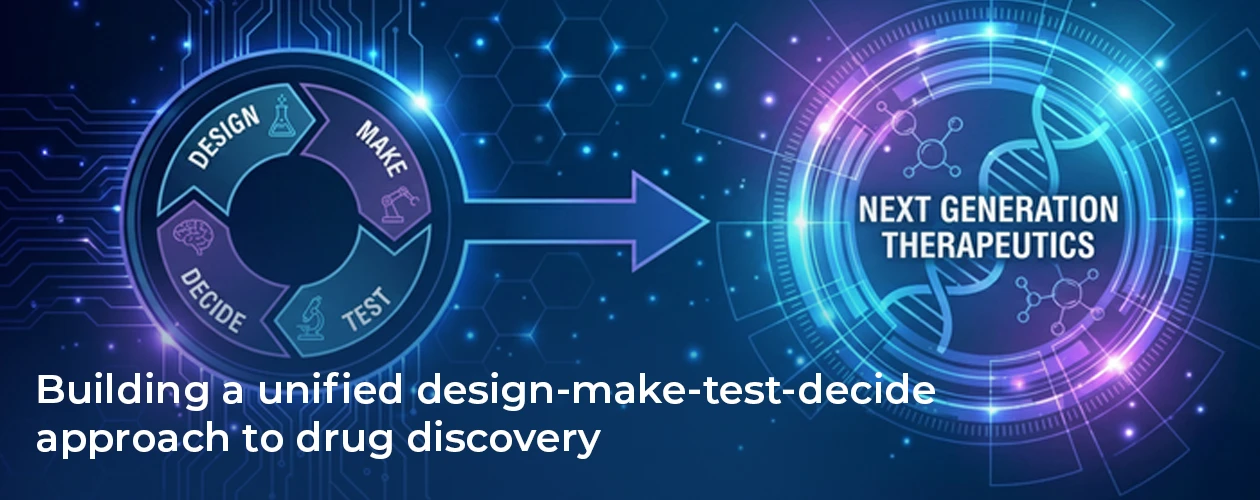
Building a unified design-make-test-decide approach to drug discovery
The rise of modalities like antibody-drug conjugates (ADCs) and engineered cell therapies has added new layers of complexity to this process.
Drug discovery has long followed a core loop: design a molecule, synthesize it, test its biological properties, and analyze the results to inform the next round of design. This iterative process, known as the design-make-test analyze (DMTA) cycle, has driven decades of innovation in small-molecule therapeutics.
The rise of modalities like antibody-drug conjugates (ADCs) and engineered cell therapies has added new layers of complexity to this process. With specialized teams, diverse data types, and scattered systems, modern discovery programs face increasing challenges in transitioning smoothly through the DMTA cycle and capturing timely insights to guide decisions.