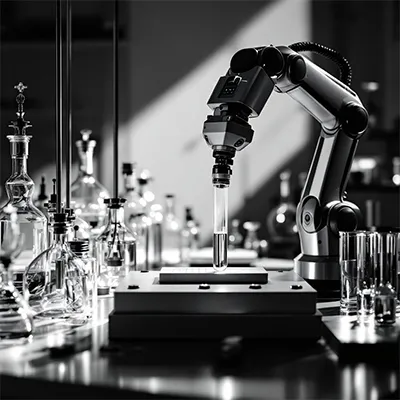
Modern laboratory automation is changing this situation. Automation can help the biotech organisations to meet and even beat their deadlines, enhance the quality of their data and remain compliant by eliminating repetitive tasks, streamlining the resources utilised and ensuring consistency in the processes. Automation is the new business concept in most research facilities to advance scientific breakthroughs in an orderly and sustainable manner.
The Changing Landscape of Biotech Research
The process of drug discovery in biotechnology is a sequential procedure whose starting and ending points entail the identification of potential biological targets and validation of a potential agent that qualifies to be tested in clinical trials, respectively. Every procedure will require accuracy, scalability, and speed. Today, the sheer analysis of experimental data has burst due to the fast development of techniques like genomics, proteomics and computational modelling.
With the use of the correct systems, such large sets of data are hard to govern. Research scientists are more likely to take too much time engaging in manual work, e.g. scheduling equipment, preparing samples, or physically compiling results than they do never mind scientific processes. This inefficiency is expensive not only in the sense of wasting time but also the opportunity to ensure that the prospective leads could be determined earlier on in the process.
Automation is a direct solution to these issues because it incorporates both of the hardware and software to perform repetitive tasks and receive comparable data needing little orientation to accomplish a predetermined task.
The Typical Problems With Biotech Drug Development and the Solution Automation Offers
Inefficiencies in Laboratory Scheduling and Workflow Management
Scheduling of the labs is tricky in most cases more so when a number of teams use the same equipment and resources. Manual methods (spreadsheet, email coordination) are likely to cause conflicts, delays and under-utilised instruments. One mistake in the schedule can ruin an entire batch of experiments with great financial losses.

Automation Advantage: Automated schedules are organised using centralised calendars and resource delivery instruments in doing so they assure maximum use of equipment. The best time slot per task can be determined with algorithms, down time can be reduced, and schedules will automatically update is there a delay. This enhances the efficiency of the laboratories and maintains research projects on schedule.
Fragmented Data Management and Lack of Real-Time Insights
The sources of data used in biotech research are extensive with respect to various instruments and analytical tools.
Automation Advantage: A key benefit of automation, implemented via the use of Integrated Laboratory Information Management Systems (LIMS) and Electronic Laboratory Notebooks (ELNs), in combination with automation hardware allows centralisation of data collection and storage. Experiment dashboards show progress, quality control data and result in real-time so faster and more confident decisions can be reached.
Compliance and Data Integrity Risks
Regulatory regimes like Good Laboratory Practice, Good Manufacturing Practice and 21 CFR Part 11 impose a heavy emphasis on data integrity, audit trails and security.
Automation Advantage: Automated systems produce time-stamped audit trails that are secure, and they impose standard operating procedures. The compliance features, which are built-in, minimise chances of breach of regulations and hence, allow complete, correct, and easily accessible records in the course of audits.
Limited Scalability as Research Needs Grow
With the growing activities of research studies, labs should scale up in a quality-maintaining manner. Manual systems tend to be rigid in the ability to add higher volumes of samples to process, or workflow extensions without the capacity to result in delays.
Automation Advantage: In the case of being able to scale the platform as additional instruments are added or as robotic modules are included or software capabilities are expanded within the scalable automation platform. The flexibility helps to make sure that laboratories can handle growth with significant operational disturbances.
Employee Resistance to New Technologies

The implementation of new technologies may lead to the fear of employees that worked according to stable manuals. Adoption can be retarded by doubts about security of employment, or system complexities or the learning curve.
Automation Advantage: Simple to use automation interfaces that are backed by custom training programmes aid the adoption process. Gradual process of onboarding, custom interactive tutorials, and follow-up support contribute to the feeling of confidence and convince teams not to resist innovation, rather than to accept it.
Key Applications of Lab Automation in Biotech Drug Discovery
The automation is involved throughout the entire drug discovery process. The major applications are:
• High-Throughput Screening (HTS): Robots used in screening systems enabled multi-thousand compound tests to be carried out against biological targets, in less than the time taken using manual procedures. This speeds up precisely what lead identification and allows scientists to test a broader quantity of candidates.
• Automated Sample Preparation: The preparation of samples, whether by pipetting, dilution, etc., is effectively carried out under automated control systems that have very high levels of precision. This limits the probability of contamination and enhances replicability.
• Assay Development and Optimisation: Automation allows assays to be consistently prepared and perform optimisation quickly prior to scaling in to run in advance in HTS.
• Genomics and Proteomics Workflows: Having patented RNA-seq and chemistry-based protein analysis technologies utilising efficient workflows, next-generation sequencing (NGS) platform and automated protein analysis systems support accurate results in term of target identification and validation, even with highly sensitive purposes.
• Integrated Data Management: Since it is possible to integrate LIMS and ELNs with automated instruments or share centralised research data in case of collaboration and compliance, you may develop the single point to accumulate all research data.
Real-World Impact: From Bottlenecks to Breakthroughs
Prior to automation, their high-throughput screening procedure would only accept 200 compounds in a single day, a procedure that required lengthy hands-on monitoring in order to complete. Throughput was grown to well over 2,000 compounds per day by coupling robotic handling systems and automated data analysis, reproducibility grew by 15 percent and error rates were reduced dramatically.
Equivalent improvements are observed in ready-to-use sample preparation workflows. A group of researchers studying genetic rare diseases decreased preparation time by 60 percent, and increased NGS library consistency linking to more accurate and quicker sequencing output.
Automation and Artificial Intelligence: The Next Frontier
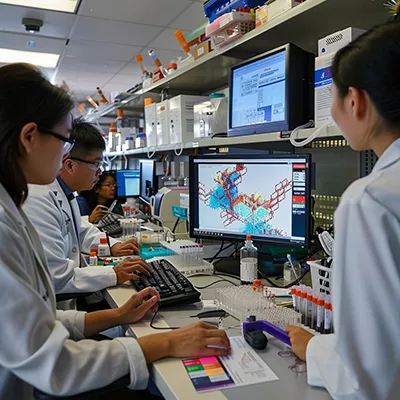
Lab automation with the help of AI and machine learning is transforming biotech research. Big data is a complex, diverse set of data capable of being analysed by AI algorithms to find patterns and draw conclusions, make predictions, and optimise experimental design. This is especially useful in:
• Target Identification: by performing AI-driven analysis of omics files, one can discover novel therapeutic targets that were previously undiscovered by employing more conventional methods.
• Lead Optimisation: It is an algorithm that uses machine learning algorithms to estimate the most promising compounds to test more, in turn spending less time in less viable ones.
• Predictive Maintenance: Artificial intelligence systems are able to keep check on instrument performance and predict when maintenance is required before the failure happens thus minimising downtimes.
Artificial intelligence increases the efficiency and effective of automated systems by building a feedback loop between the performance of an experiment and subsequent testing policies.
Future Trends in Lab Automation
Lab automation involves a number of trends that determine the future:
1. Integration: There is possible internet of things (IoT) integration to connect hardware lab equipment, providing remote monitoring capabilities, automated alerts and the ability to easily and easily transfer information between instruments.
2. Cloud-Based Lab Management: Cloud-based systems enable researchers to conduct experiments and share data across workflows regardless of physical location which makes studying in geographically distributed teams easier.
3. Robotics-as-a-Service (RaaS): Smaller research facilities could find it more economical to subscribe to an automation systems because it is cheaper to subscribe to than to purchase.
4. Personalised Medicine Support: Automation systems are moving towards supporting small-batch, as well as custom production processes that support growth of targeted therapies.
Cross-Departmental Impact
The downstream processes also get the benefits of automation in biotech research. For example:
• Manufacturing: In R&D, processes become more standardised and validated and can then be transferred easily to the production level, minimising scale-up risks.
• Regulatory Affairs: Licensing of compliant products is made easy by thorough automated documentation.
• Quality Assurance: The third aspect is continued monitoring and automated verification that the quality standards will be maintained continuously.
Automation promotes organisation-wide efficiency as they eliminate silos between teams of R&D, manufacturing, and compliance.
Conclusion:
The use of sophisticated laboratory automation can no longer be regarded as a luxury add-on; it is a key driving force of contemporary biotech drug discovery. Automation breaks down business obstacles to innovation through the simplification of work processes, data centralisation and the creation of mechanisms which improve compliance, resulting in the wastage of resources.
Biotech research is moving towards a more data-driven, collaborative industry, and those laboratories that invest in scalable, intelligent automation solutions will lead in quickly, accurately and effectively delivering new therapies. Being in a competitive industry and being highly regulated industry, automation is not about doing more, but about doing better science faster.