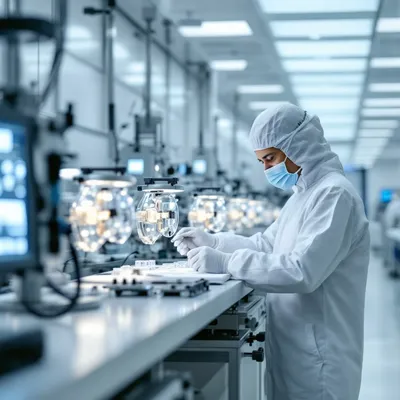
The modern drug manufacture incorporates the use of automation machinery. With the industry under pressure of more demand, strict regulations and the need to be more efficient when producing, automation presents one of the solutions of ensuring that production is smooth without jeopardizing the safety and quality outputs. The trend towards automation is not so much who is going to lose the human labour, but who is going to have more exactness, consistency, and a capable scale. Automated machines are changing preparation and delivery of medicines in the most concrete ways since material handling to packaging.
Automation in the Pharmaceuticals Developments:
The industry of producing pharmaceuticals has gone through a transitional period in the automation of many of the procedures with the use of simple mechanical aids evolving to the intricate, computer-assisted systems. Automation initiatives that were pioneered early on largely concerned routine duties, e.g. counting tablets or filling bottles. Nevertheless, through modern technology in the form of robotics, artificial intelligence, and digital surveillance devices, the modern automation machines are able to oversee an entire production line to a level that human contact has been reduced to a bare minimum.
This transformation has also been quickened with the advent of Industry 4.0. Fine-grained data with real-time data analysis in smart factories with interconnected systems would make it possible to predictively maintain facilities, optimise processes, and make quicker decisions. This technological change has changed the industry to more continuous and efficient models of production as compared to the batch oriented production.
Key Drivers for Adopting Automation Machinery
There are a number of reasons why drug manufacturing companies are inclined to lean towards heavy investment in automation equipment:
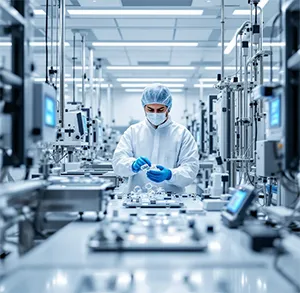
• Regulatory compliance: Good Manufacturing Practice (GMP) standard demands accuracy, retraceability, reproducibility which the automation aids.
• Increasing demand: The world population is increasing, the population ageing, and the growing access to healthcare which stimulates consumption of medicine.
• Quality assurance: The automated systems reduce the risk of contamination and human error, and as such guarantee uniformity of the product quality.
• Cost-efficiency: Although the amount to be invested in the system is high, the automation lowers labour cost over a long period and also boosts productivity.
• Time to market: The time to market can be reduced by automated systems allowing firms to meet needs in the market rapidly.
Types of Automation Machinery in Pharmaceutical Manufacturing
The automation machinery is very broad and includes types of equipment of various manufacturing phases of the production process.
1. MHS - Material Handling System
Transport of raw materials in the manufacturing facility takes place through automated material handling systems. They comprise conveyor belts, automated guided vehicles (AGVs) and robotic arms. These systems lower manual picking up, lower the chance of contamination, and guarantee exactness while transporting the materials.
2. Mixing and Blending equipments
Automated mixing machines are used in the formulation processes to make sure that active ingredients of drugs (APIs) and excipients are mixed with a high degree of precision. This gets rid of inconsistencies and enhances the quality of the batches. Product uniformity is achieved due to the programmable controls which make it possible to accurately duplicate mixing parameters.
3. Granulation Machinery
Powder mixtures used in tablet compression demand the use of automated granulators namely; wet and dry granulators. Such a system is under tight environmental conditions, which include humidity and temperature, to maintain the quality of the granules.
4. Tablet Press, Capsule Filling Machines
The high end tablet presses and capsule fillers can have a production of thousands of units in a single minute. These machines have the capacity of real time monitoring, through which they monitor weight changes, damaged tablets, or capsules and avoid wastage.
5. Coating Machines
Automated coating systems cover tablets with the use of uniform film or sugar layers, which are needed to release the definite required dosage and to provide the product with higher stability. More advanced have the possibility of bringing about changes in the coating parameters automatically in response to environmental conditions.
6. Headspace filling equipment Sterile, Aseptic Filling Equipment
Still in the manufacture of injectable drugs, sterile filling equipment guarantees transfer of the product free of contamination in containers like vials, syringe, or ampoules. They work under controls of environments which frequently use isolators, and the restricted access barrier system (RABS).
7. Quality Control Systems / Systems of Inspection
Automated visual inspection systems come in the form of cameras, sensors and artificial intelligence to identify defects in tablets, capsules or liquid-filled containers. They are able to inspect them on the presence of cracks, foreign elements or wrong labeling.
8. Packaging Machinery and Labelling machinery
Bottling, blister packing and labelling are carried out on automated packaging lines quickly and accurately. Serialisation codes can also be printed by integrated systems in order to conform to track and trace requirements.
Benefits of Automation Machinery in Pharmaceutical Manufacturing
There are a number of measurable benefits of the implementation of automation machinery:
• Sampled increase - Output is greatly boosted with machines that are able to work around the clock.
• Durable and quality - Consistent products can be produced through automation which have low variability.
• Occupational security - Reduces the manual transfer of dangerous items.
• Data combination - Manufacturing execution systems (MES) are connected to machines that give real-time performance data.
• Regulatory compliance - Automated documentation and batch records enhance traceability.
Challenges in Implementing Automation
Although this has been very beneficial, automation in pharmaceutical manufacturing is not free of difficulties:
• High capital investment: The expenditure of buying and installing automation devices could be enormous.
• Skill gap: The employees need to undergo training in order to work and coordinate advanced equipment.
• Integration problems: New machines may be complicated to accommodate with old systems.
• Regulatory validation: The GMP requirements make automated systems go through serious testing.
• Technology obsolescence: With the rate at which technology is rapidly changing, there are chances that equipment may become outdated within a short time.
Case Applications of Automation in Pharmaceuticals
Continuous Manufacturing
In some firms, a continuous line of manufacturing processes were implemented where raw materials were introduced to the system and finished goods that were produced never stopped. Robot equipment manages the mixing, granulation, compressing, and packaging process all in a single stream process.
Sterile Production Lines
In high-risk injectable drugs, automated filling lines produce sterility assurance at the highest level because there is less human contact. Robotic arms work with vials, and inspection systems are built-in so that the safety of the product is certified prior to packaging.
Personalised Medicine
Automation is helping to evolve to individualised treatments. Small-batch capable machines may be available to make customised doses fast to accommodate the niche of patients.
Role of Robotics in Automation Machinery
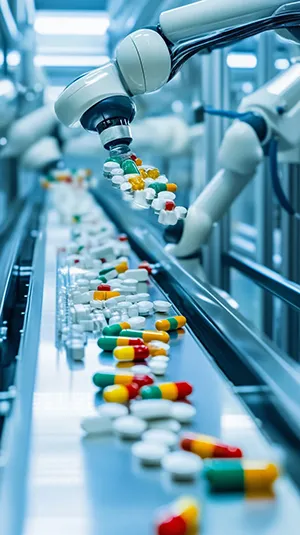
Robotic technology is the key element in the pharmaceutical automation of today. The tasks that can be conducted by robotic arms are:
• Placing and picking products
• Managing dangerous chemicals
• In aseptic operating conditions
• Conducting complex inspection
Even collaborative robots (cobots) are now being set up that safely interact with human operators without a guarding barrier.
Digital Integration and Industry 4.0
Through the combination of digital technologies with the automation machinery, the latter is becoming smarter. Predictive maintenance is possible through sensors, Internet of Things (IoT) devices and artificial intelligence, shrinking the downtimes. The analytics of data would aid in optimisation of production and digital twins would provide a scenario to simulate manufacturing to determine the areas where improvement could be done before any form of implementation.
It is also possible to remotely control machines because of the use of cloud-based systems that can be monitored even by the engineer anywhere. This is of beneficial use especially to international pharmaceutical firms that operate at several locations.
Regulatory Considerations
Regulatory compliance is not abolished by automation-it is increased. The automated systems may be set to adhere exactly to the standard operating procedures (SOPs) and all products manufactured therein will be as per specifications.
Nevertheless, regulators like the US Food and Drug Administration (FDA) and European Medicines Agency (EMA) insist on proofs that the automated processes are validated. This involves:
• Installation Qualification (IQ) - Ensuring the proper installation of equipment.
• Operational Qualification (OQ) - Tracing that the equipment is operating as specified.
• Performance Qualification (PQ) - checking to show repeat performance against production regimes.
Data integrity principles also need to be enforced via automated systems, which is accurate, complete, and cannot be tampered with.
Sustainability and Automation Machinery
Automation machines help to achieve the sustainability target since they help the use of resources and minimising the wastes produced. Accurate quantity of materials can be measured with the use of the machines reducing them to excess usage of the raw materials. The power consumption is minimized by energy efficient designs and monitoring in real-time. Besides, the automated cleaners also minimize water and chemicals.
Future Trends in Pharmaceutical Automation Machinery
Even greater technological progress, namely the use of automated production technologies, will define the future of pharmaceutical manufacturing:
• Integration of Artificial Intelligence: Artificial intelligence in the machinery will be able to forecast problems before they happen in production.
• Adaptive Manufacturing: Stimuli will allow equipment to alter parameters based on on the fly data.
• Modular Systems: The bits of designs will be flexible to facilitate reconfiguration of the systems within a short time to accommodate various different product lines.
• Advanced Robotics: Higher utilization of autonomous robots in clean rooms and harmful environments.
• Integration with 3D Printing: Automation of dosage form development and low-cost on demand production of complex dosage forms using additive manufacturing.
Conclusion
Automation equipment is no longer optional upgrade it is something that pharmaceutical manufacturers need in order to satisfy the world demand, deliver quality products, and comply with the demands of regulations. Though this process has its difficulties in the starting and the process, its role benefits outnumber the adverse effects as seen in the long run. The automation machinery is transforming the pharmaceutical manufacturing, which can be related to efficiency, consistency with the product, safety of the workers, or sustainability.
Technology evolves rapidly, and, therefore, even more advanced and smarter equipment will be introduced to the industry and manufacturers may fabricate medicines quicker and safer than ever before. In the end, automation will be essential in providing better delivery of life-saving treatments to patients, making it one of the fundamental elements of the pharmaceutical future.