Laboratory Workflows for Faster Drug Development
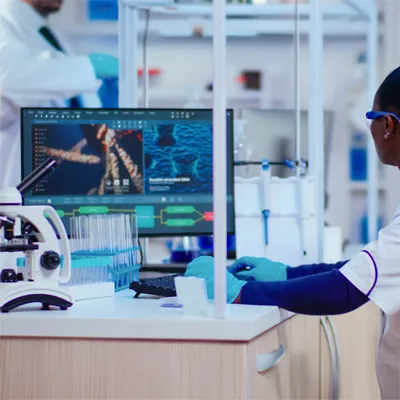
The pharmaceutical sector is faced with the challenge of bringing new drugs faster to patients with no reduction in terms of safety and quality. According to increasing global health requirements, exotic disease characteristics and the competitive influences on the market, it is expected to have greater efficient research and development. Laboratories form the focus of this endeavor, and the processes that govern their operation are crucial when resolving how quickly and efficiently a laboratory can identify and develop new drugs and make them available to the market.
The introduction of superior technology has changed the face of laboratory operations over the course of the last decade. Laboratories today are not physical spaces filled with instruments only, but communal ecosystems that integrate automated systems, digital platforms and tools with analytical software. Such technologies will assist in decreasing human labor, increasing data accuracy and acceleration of decision-making in the drug development process.
The Role of Laboratory Workflows in Drug Development
All processes of the experiment planning and preparation, analysis and reporting are considered. In pharmaceuticals, they may take years to bring a drug through research and development, with potentially many teams and even labs over the globe. An effective workflow makes the activities to be organized, resources well utilized as well as flow of information between various development phases.
Automatic handling and rapid workflows are especially relevant in pre-clinical drug discovery, where drug researchers are required to screen thousands of potential compounds in order to produce only a few to continue development. Later in the cycle, as testing and validation become stricter, workflows must cope with complex experimental designs, regulatory documentation and demanding schedules. Any efficiency problem at these processes may cause delays which will lengthen the time it takes to make a drug available to patients.
Impact of Technology on Laboratory Efficiency
Technology is transforming laboratory procedures through possibilities of automating lab processes, improving data management and networking of instruments with broader digital systems. With automation, the role of tedious manual steps which are performed in the process of sample preparation, pipetting, or measuring et cetera, becomes minimized and scientists can concentrate on the analysis of results and improvement of the project. Automated sample handlers and robots have higher sampling and reduced error rates compared to human technicians because hundreds of samples can be processed by such machines than a technician processing even a single sample in the same timeframe.
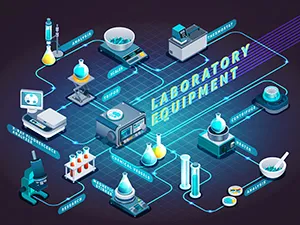
Laboratory Information Management Systems (LIMS) are systems that have proven to be necessary especially in handling excessive data in experiments. LIMS enhance accessibility of data by allowing more and easier access to results through the use of a central place, which stores, tracks and shares data thus limiting loss or duplication. Instruments can also be integrated directly with such systems so that results will be measured automatically and in real-time.
The second important novelty has been the combination of Laboratory device with elements of the cloud. This enables scientists in various sites to have live information, share their analyses and view experiments. This kind of connectivity extends to global drug development programmes where research activities can be spread over multiple countries and time zones.
Streamlining Data Analysis
Data analysis is one of the most important parts of laboratorial movement and it may slow the flow of drug development greatly. Conventional ways of analyzing data used to entail manual data entry, the use of a variety of software applications, and the tedious process of report generation. Newer generation tools in analysis are quicker and more precise and this can actually be achieved through using complex algorithms with user-friendly interfaces.
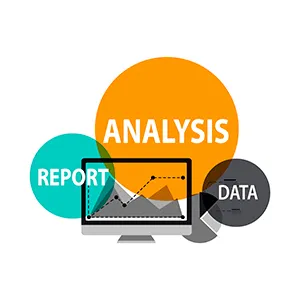
Artificial intelligence and machine learning are gaining attention to find the trends in experimental data, make predictions, and suggest what actions should be taken next in the study.
Reducing Bottlenecks in Laboratory Processes
A laboratory workflow may be slowed down by bottlenecks at hundreds of points, including whether equipment and reagents are available, who is available to work, and when analysis time is available. It is important to pinpoint such bottlenecks and counter them in order to uphold a constant rate of work. Automation would assist it in that it would see the completion of routine duties in a consistent manner with no delay. Equally, predictive maintenance technologies have the power to enable teams to know when equipment might require repairing before they experience any surprise shut-downs.
Another issue that can be reduced is laboratories standardizing processes, thereby leading to decreased delays. With the help of standardized protocols and instruments, as well as standardized software, organizations can establish that data produced at point A can be easily compared to or combined with that of point B. This is especially critical in joint drug development initiatives where more than one partner can be developing different elements to the same programme.
Improving Collaboration across Teams
In few cases, the development of a drug is the work of a single laboratory. It uses chemists, biologists, pharmacologists, toxicologists, regulatory experts with everybody playing a role in different aspects of the process. Good workflows also help the team to collaborate: data is easily viewed in an accessible form, and there are means of tracking progress between teams.
Digital collaboration tools may allow collaboration on project-planning, resource scheduling and tracking project milestones. These platforms manage to keep all stakeholders informed and engaged to ensure alignment and consequently mitigate the possibility of duplicated work or hit deadlines. They also offer a joint history of decisions and changes and this aspect is useful in terms of regulatory compliance.
Enhancing Quality and Compliance
Speed in the drug development is necessary and yet this should not be at the cost of quality. Regulatory agencies need precise records of everything which is done in a laboratory and non-compliance may be paid through exorbitant delays or even through rejection of a drug application. Technology can be used in preserving quality by indicating that every action on the workflow should be documented, time-stamped, and traceable.
Basic paper records have now been swapped largely with electronic laboratory notebooks (ELNs), so historical information is much easier to search and locate. LIMS and other systems can be connected to ELNs making it a compliant digital record of every experiment. Not only does this allow compliance, but it also allows easier audits and inspections due to clear organized documentation.
Automation also results in quality by lowering the variability, which is introduced in manual processes. Consecutive handling, measuring and analyzing of samples enhances result reliability that consequently facilitates more sound decision-making all through the development process.
Sustainability in Laboratory Operations
More pharmaceuticals are interested in making their activities more sustainable. The labs can support this objective by changing energy-efficient devices, minimizing wastes, and decrease the hazardous substances utilization. Workflow optimization could also be effective in minimizing redundant procedures, merging experiments and making the use of the resources more efficient.
One way in which sustainability can be facilitated through digital use is the virtual test or test, where the materials do not have to be wasteful. Remote analysis and monitoring makes the travel demands of staff lower, and predictive analytics can be used to plan the utilization of resources in a more optimal manner. Sustainable lab practices can, in the long-term, lower costs, as well as environmental impact.
The Future of Laboratory Workflows
More integration of automation, digitalization, and data will probably determine the future of laboratory workflows. Already under development in a limited number of regions are fully automated laboratories, or what are referred to as lights- out labs, labs that can conduct experiments 24 hours a day with very little human intervention. Such plants may multiply output significantly and comply with high preciseness and steadiness.
Artificial intelligence can have an even greater influence not only in analyzing data, but also in designing experiments. AI systems may suggest optimized processes that depend on historical data and the current goals of the project and available resources. This would enable the labs to be very responsive to emerging opportunities and challenges.
The hybrid would also be a priority with regard to interoperation between instruments and systems. By making sure that devices manufactured by various companies will be able to communicate freely, the laboratories will have a form of flexible, scalable workflows that can be adapted to the requirements of the laboratory. This will be facilitated by standardized data formats, and open integration protocols.
As these technology advances beyond infancy, professional staffs in the laboratory will be required to acquire new skills that will enable them to work in more digital settings. Skill in data science, program development, and systems integration will be new requirements to match conventional laboratory-based methods. Nevertheless, the presence of human expertise will still be in demand to decipher the results, make strategic decisions, and make sure that the research process can meet both ethical and regulatory requirements.
Conclusion:
The fastness of the process of creating new drugs lies in the effectiveness of the laboratory operations. Laboratories can reduce delays, high accuracy in achieving the destination of converted medicine by managing data, automation of processes and collaboration through the aptitude of technology. The modern tools and systems already had a substantial impact, but there is a potential that the future of laboratory activities is going to be even more integrated and smarter.