The conventional technology in pharmaceutical manufacturing has been characterized with manual procedures, quality checks that are labor-intensive and human intervention of production. Although this has led to the development of revolutionary medicine, it is becoming increasingly untenable as far as requirements upheavals like increased healthcare demand, higher regulatory standards, and the urge to create cost-effective but high-quality production of health products are hectic.
One way to correct these challenges is through automation which imposes a solution to change the current solution by bringing about options that are less variable, and more productive and that facilitate easy regulatory compliance. Whether it is robotics to handle sterile drug packaging or artificial intelligence (AI) - enabled predictive maintenance and data analytics, automation is no longer a concept of the future, but it is already taking over pharmaceutical operational rooms.
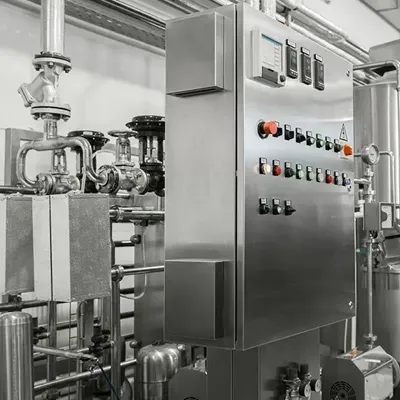
Increasing requirements for automation in drugs
The pharmaceutical industry operates in one of the highest regulated environments in the world. The quality, safety, and effect of the drug are non-negotiable. Manual production processes, although reliable, are exposed to human errors, disabilities, and scalability problems. Quickly complex medicines require a level of complications, especially biological and individual means, accuracy, and copying of qualifications that can only provide automation.
In addition, the global health crisis as the Covid-19 epidemic vigilant in traditional production systems. Rapid vaccine development, delivery of large-scale and quality monitoring requirements require speed and efficiency level that cannot be achieved with manual procedures alone. Automation appeared as an important promoter of flexibility and adaptability.
Core technologies running automation
Robotics and machine vision
Robot weapons are used in pharmaceutical plants, such as vial filling, packaging, marking and other tasks. Machine vision systems increase the accuracy of inspecting real-time products and detect invisible human eye defects. Sterile environment Automation in an environment of sterility minimizes the potential of pollution and allows continuous production.
Machine learning/Artificial intelligence
AI algorithms analyze large datasets to adapt to the algorithm production processes, predict the equipment and to streamline the supply chain logistics. Machine learning models can identify disabilities, recommend adjustments and improve batch quality. For example, the future modeling helps to estimate the deviation before affecting the integrity of the product.
Process analytic technology
Pat devices enable checking real-time and control of vital process parameters, including pH, temperature and the composition of chemicals. Manufacturers can avoid the last product check and ensure quality throughout the cycle, minimize waste and guarantee compliance.
Internet Things (IoT)
IoT-driven devices gather information about production lines, laboratory devices and storage. This data improves traceability for integration, facilitates remote monitoring and enables future maintenance. For pharmaceutical companies, IoT ensures transparency in supply chains and transparency in accordance with regulatory requirements.
Advanced production approach
The use of new technologies which includes continuous production and the 3D printing technological change the heart of the drug production. Continuous production decreases batch production to uninterrupted production, less down time and stabilization is improved. Meanwhile, 3D printing supports personal medicine.
Benefits of automation in drug production
Better efficiency and productivity
Automatic systems reduce shutdown, streamlining work flow and accelerate the production deadline. By reducing manual intervention, pharmaceutical companies can meet increasing global demand by maintaining high quality standards for quality.
Increased quality and compliance
Automation ensures compliance with good production practices (GMP). With the monitoring of real-time and digital journal mining, companies can provide regulators accurate and sound data, which reduces the risk of matching.
Cost-reduction
Although significant pre-investment for automation is required, it reduces operating costs in the long time by reducing labor expenses, reducing waste, and improving resource use.
Workforce security
The automatic system limits human risk of dangerous chemicals and sterile environment, constructs safe jobs, and reduces health risks.
Agility in production
Automatic production lines can be quickly adapted to new drug formulations or scaling requirements. This flexibility is particularly valuable during spikes in vaccine development or in demand.
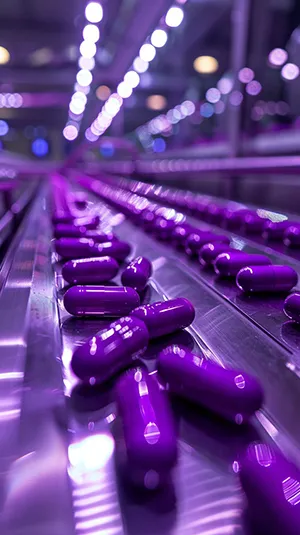
Application from the real world
• COVID-19 Vaccine manufacturing: In order to increase the production of the vaccine, pharmaceutical giants turned to automation as a key to achieve speed and stability in the mass production of millions of doses.
• Biological manufacturing: the automation technology allows proper handling of sensitive biological materials, minimizes pollution and has stability.
• Packaging and serialization: Automatic packaging systems integrate the serialization code to meet global anti-resistance rules.
• Quality control: Vision system and AI-operated analysis replace manual inspections that take time and detect deviations at high speeds.
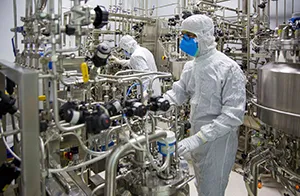
Automation challenges
High capital investment
The cost of implementing robotics, AI and advanced production infrastructure may be prohibited for small and medium-sized companies.
Job change
While automation reduces repetitive functions, employees must be excusable in areas such as data analysis, AI and system management. The workforce can slow down resistance and training intervals.
Integration complexity
The Heritage system cannot easily match new automation technologies, causing different challenges.
Cybersecurity risk
Enhanced interconnectedness through the digital means of IoT and digital platforms puts an organisation at risk of cyberattacks, interference with production, or theft of sensitive data.
Regulator adaptation
While automation improves compliance, regulatory structures often hang behind technological innovation, causing uncertainty for manufacturers.
Future of automation in medicines
The pharmaceutical industry is gradually moving towards Pharma 4.0, which is a concept from Industry 4.0. It uses a completely digital, paired, and intelligent production ecosystem. The most important features of the future landscape include:
• Digital twins: virtual models of production systems that follow, predict, and adapt.
• Blockchain: Ensure transparency and safety in drug portability in the global supply chain.
• Personalized therapy: Automation enables the production of a small batch of patient-specific agents.
• Green Production: Energy-efficient automatic system that reduces environmental footprints.
Conclusion
The automation changes undeniably affect drug production. It provides unique benefits in efficiency, quality, and safety, while making the industry respond quickly to the requirements for public health services. Robotics, AI, IoT, and continuous production are not mere technical supplements - they constitute a paradigm shift in the way in which medicines are to be developed, produced, and distributed.
Nevertheless, despite the persistence of obstacles like cost, workforce adaptation, and regulatory barriers, there are long-term benefits that outweigh setbacks in the long term. Over the coming decades, automation will not only optimize drug operations, but will also shape a future where medicines are more accessible, affordable, and similar personal needs.