
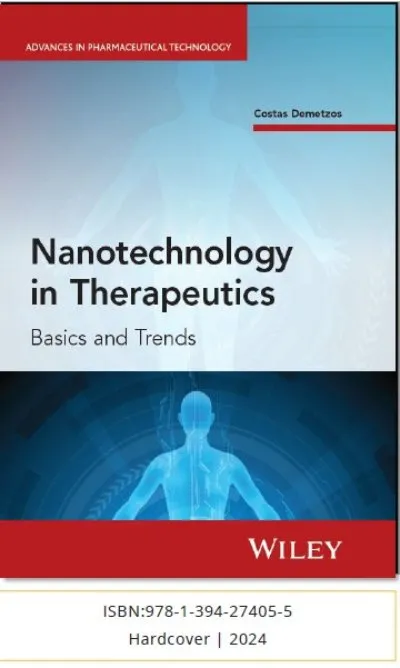
1. What inspired you to create Nanotechnology in Therapeutics: Basics and Trends, and how does it address the evolving landscape of nanomedicine today?
Nanotechnology has evolved from a research topic into a cornerstone of drug delivery, diagnostics, and personalised medicine. Its rapid development and transformative impact in these fields have inspired me to explore it further. Moreover, the need to design nanodrug delivery systems that mimic biological functions motivates me to work experimentally and in writing to develop nanomedicines that assist clinicians, researchers, and students in applying the principles of nanotechnology in therapeutic applications and in their education.
2. The book traces the journey of nanotechnology from concept to clinical reality. How has this evolution influenced modern therapeutic design and delivery?
The evolution of nanotechnology from bench to clinic has transformed modern therapeutics. The rational design of drug delivery nanosystems that mimic biological functions through biophysical algorithms enhances efficacy and minimises toxicity. ‘Theranostic’ platforms further bridge diagnostics and therapy, enabling real-time monitoring and advancing truly personalised medicine. Moreover, nanoplatforms composed of biocompatible and biodegradable materials are safe for use in the final nanoformulation, improving therapeutic outcomes.
3. Among the various nanostructures discussed - such as lipid nanoparticles, polymeric micelles, and dendrimers - which do you believe hold the greatest promise for future drug and gene delivery?
In my view, lipid nanoparticles are the most promising nanoplatforms. Compared with polymeric or dendrimeric nanoparticles, they are composed of naturally metabolisable lipids, minimising toxicity and enhancing biocompatibility and biodegradability, thus facilitating regulatory approval. Moreover, lipid nanoparticles have already demonstrated real-world clinical success and are regarded as promising nanocarriers for delivering drugs, macromolecules, and genetic materials against serious diseases.
4. Lipid nanoparticles revolutionised mRNA vaccine delivery during the COVID-19 pandemic. How do you foresee their role expanding beyond vaccines into broader therapeutic applications?
Lipid nanoparticles (LNPs) are promising nanoplatforms that could expand therapies across multiple therapeutic areas, including gene editing. They also hold great potential in cancer therapy, as LNPs can deliver RNA to silence or reprogramme oncogenes. Moreover, LNPs can encapsulate macromolecules such as proteins or peptides to selectively target tumour cells, as well as transport bioactive molecules for the treatment of metabolic or rare diseases. In personalised medicine, they can be tailored to a patient’s genetic profile, optimising therapeutic response.
5. You emphasise “bio-inspired nanosystems.” Could you elaborate on how mimicking biological systems enhances the functionality and safety of nanotherapeutics?
Bio-inspired nanosytems are composed of biomaterials that are essential components of the human body and are designed as stimuli-responsive nanoplatforms that respond to bio-environmental stimuli (e.g. pH, enzymes, etc.). By mimicking lipidic rafts and cell surface properties, they can recognise specific cellular targets, enhancing the efficacy and safety of the encapsulated biomolecules. Through self-assembly, bio-inspired nanosystems mimic human cell membrane morphology while remaining functional. Furthermore, nanosystems such as lipid nanoparticles follow the fundamental principles of biological membranes.
6. The book highlights the convergence of nanoinformatics, artificial intelligence, and machine learning. How are these technologies reshaping the discovery and optimisation of nanoscale therapeutics?
Nanoinformatics, Artificial Intelligence (ΑΙ), and Machine Learning are enabling technologies essential for the intelligent development of nanomaterials and the rational design of nanoplatforms. Data mining combined with AI maximises the functional properties of nanodevices by analysing large datasets, uncovering biological patterns, and optimising key design parameters. For the pharmaceutical industry, the benefits include discovering new molecules and biological targets, precise data mining, optimising bioactive formulations, identifying effective biomaterials for nanocarriers, and accelerating development and regulatory processes.
7. How can computational modeling and predictive analytics improve translational success rates for nanomedicines from laboratory research to clinical use?
Computational modelling, predictive analytics, and in silico simulations enable the rational and precise design of nanocarriers by optimising their composition, physicochemical, and surface properties and predicting physical and biological stability of the final formulation. These approaches create a translational framework from bench to clinic of nanomedicines that improve efficacy, reduce toxicity and adverse therapeutic effects, accelerate manufacturing, and support safe-by-design development of nanocarriers encapsulating bioactive molecules. Furthermore, they enhance regulatory compliance, ultimately increasing the clinical success rates of nanomedicine.
8. Regulatory evaluation of nanotherapeutics remains a major challenge. What reforms or frameworks do you believe are most urgent for ensuring both innovation and safety?
The regulatory approval of nanotherapeutics is challenging due to the complexity, chaotic behaviour, and non-linear dynamics of self-assembled nanocarriers, making batch-to-batch reproducibility and the production of identical prototypes difficult. Regulatory agencies should take these issues into consideration and require clarification of the morphological characteristics of nanocarriers, whether alone or encapsulating a drug. Inspired by AI-based protein structure prediction, intelligent algorithms could precisely characterise nanocarriers’ lyotropic phases, improving their efficacy, safety, and reproducibility, and supporting more reliable regulatory evaluation.
9. In what ways do current toxicity and biocompatibility assessments fall short when applied to nanoscale systems, and how can these gaps be addressed?
Nanoparticles exhibit properties different from the biomaterials from which they are composed, due to their self-assembly process. Factors such as size, surface area, surface properties, shape, and ζ-potential can alter biological interactions, biodistribution, immune responses, and ADME profiles. Consequently, their toxicity and biocompatibility differ from the original biomaterials. Standard assays often fail to identify such effects. To address this, essential testing protocols, advanced in vitro models, computational tools, and AI-driven simulations should be employed, ensuring safer nanomedicine development.
10. Collaboration between academia, industry, and regulatory bodies is crucial. What models or partnerships could accelerate the path of nanomedicine from bench to bedside?
Collaboration between academia, industry and regulatory agencies should be strengthened to accelerate the translation of nanomedicines from bench to clinic by shortening the development timeline. Promising models include science hub platforms, where regulators and researchers work together to guide compliance and clinical requirements. AI-driven models and shared databases for preclinical and clinical nanomedicine data can improve predictive accuracy, optimise design, and accelerate decision-making for safer and efficient nanomedicines.
11. What ethical or societal implications arise as nanotherapeutics begin interacting with sensitive biological barriers such as the brain or placenta?
Sensitive biological barriers raise ethical and societal concerns regarding safety, long-term effects, and informed consent. Transparency is essential to ensure patients are fully informed about potential risks. Scientists should actively engage with the public, explaining complex issues related to nanotechnology to reduce fear and build trust. Societal education is crucial for the acceptance of nanomedicine applications, promoting confidence in these innovations and addressing public concerns responsibly.
12. How do you envision nanotechnology contributing to precision medicine and personalised therapeutics in the next decade?
Nanotechnological platforms should be designed based on biological targets and biophysical surface abnormalities well known as ‘lipid rafts’, reflecting the cell’s ‘cryptic codes’ linked to infections or neuro-immune disorders. Nanocarriers must selectively target diseased tissues, minimising adverse drug reactions. Theranostics enable real-time monitoring and dynamic therapy, while nanomedicines tailored to a patient’s genetic profile optimise dosing and pharmacokinetics. Enhanced drug penetration across sensitive barriers and AI-driven design further accelerate the development of personalised therapeutics.
13. The book also serves as a learning framework. How can educators and young researchers best use it to understand both fundamentals and emerging trends?
Educators and young researchers should have a thorough understanding of both the fundamentals and emerging trends in nanotechnology. Key aspects, such as stability, surface phenomena and particle-biological interactions, are vital for therapeutic applications. The development of nanotechnology-based vaccines and advanced characterisation techniques highlights current progress and should be studied. Moreover, Artificial Intelligence, Machine Learning, chaos theory, nonlinear dynamics, quantum phenomena and insights from biology and biotechnology guide innovative nanocarrier design. Finally, ethical, safety and regulatory considerations are essential for understanding nanotechnology advancements.
14. Finally, if you could leave readers with one defining message about the future of nanotechnology in therapeutics, what would it be?
Nanotechnology in clinical practice and in therapeutics is no longer an innovative field but a catalyst for biomedical sciences and their applications. Based on emerging technologies such as Artificial Intelligence, Machine Learning, computational modeling, bioinformatics and the evolving field of biotechnology, it is creating new approaches for targeted, personalised and efficient interventions against disease. The future of therapeutics, diagnostics and prophylactic approaches, including vaccination, is an emerging field and profoundly interdisciplinary, with nanotechnology at the core of this transformation