1. Making Pharmaceuticals has matured into a key cross-industry platform in the UK and Ireland. How do you define its strategic role today within the broader European pharmaceutical and nutraceutical landscape?
I think where Making Pharmaceuticals sits today is really as a practical, accessible platform for the industry. There are a lot of large-scale European events that operate at a very strategic or global level, but what we’ve built here is something that’s much more grounded in day-to-day challenges.
In the UK and Ireland in particular, it’s become a place where people can come together across the full value chain - from development through to distribution - and now increasingly into nutraceuticals as well. And importantly, it’s free to attend, which removes a big barrier and opens up the conversation to a much wider audience.
2. What major industry shifts have most influenced the event’s evolution over the past decade?
Over the past decade, a few big shifts have really shaped how the event has evolved.
Regulation has obviously become more complex, particularly with changes in the UK landscape. At the same time, supply chain resilience has moved up the agenda - it’s no longer a background function, it’s business-critical.
And then you’ve got the convergence with nutraceuticals, which is accelerating quite quickly. All of that has meant we’ve had to move beyond a traditional pharma event and create something that better reflects how the industry actually operates today.
3. The co-location of Making Pharmaceuticals, Distributing Pharmaceuticals, and Making Nutraceuticals is central to the event. How do you ensure true integration and value across these domains?
For us, integration is key - otherwise you just end up with three events sitting next to each other.
What we try to do is design everything around shared challenges rather than individual needs. So, whether you’re in manufacturing, distribution, or working in nutraceuticals, you’ll see common themes around compliance, quality, supply chain, and innovation.
It’s about encouraging people to step outside their usual focus. The real value comes when someone in GMP starts thinking about GDP implications, or when pharma professionals start exploring what’s happening in nutraceuticals.
4. What measurable outcomes or collaborations have emerged from this multi-event format?
We see the impact quite clearly in the kind of conversations that happen on site.
Exhibitors consistently tell us they’re having higher-quality discussions with decision-makers, rather than just collecting leads. We also see a lot of crossover - manufacturers speaking with logistics providers, pharma companies engaging with nutraceutical businesses.
It’s those kinds of interactions that often lead to partnerships or new ways of working, and that’s really what the format is designed to enable.
5. What is your strategic approach to ensuring the programme consistently delivers high-value, decision-relevant insights?
We’re very conscious that people’s time is limited, so the content must be immediately useful.
That means focusing on real-world case studies, practical interpretation of regulation, and insights that people can take back into their organisations. We work closely with industry bodies and regulators to make sure the sessions reflect what’s happening on the ground - not just theory.
6. How do you identify and prioritise themes that will shape the industry conversation at the event?
We’re constantly speaking to exhibitors, attendees, and partners, as well as what we’re seeing in terms of regulatory and market developments.
All presentations are reviewed and shaped through our expert advisory group, which we’re very grateful to have access to. Their insight ensures the content is both credible and genuinely valuable to the audience.
Ultimately, we prioritise topics where there’s a clear need for clarity - where people are asking, “what does this mean for me, and what do I need to do next?”
7. How do you position the conference as a platform for actionable, business-critical outcomes rather than passive knowledge sharing?
That’s something we’re very focused on - making sure the event isn’t just about listening, but about doing something with what you’ve learned.
We encourage sessions to be as practical as possible, whether that’s breaking down regulatory expectations or sharing implementation examples. And because you’ve got the exhibition alongside the conference, people can immediately connect those insights with potential solutions.
So ideally, attendees leave with clear next steps, not just ideas.
8. How is the event helping stakeholders navigate ongoing challenges such as regulatory complexity, cost pressures, and supply chain disruptions?
The event is really built around the challenges the industry is facing right now.
Regulatory complexity is a big one, so having input from organisations like the MHRA is hugely valuable. Cost pressures and efficiency are another key theme, and then, of course, supply chain resilience continues to be a major focus.
By bringing all those elements together, we’re helping people look at these challenges in a more connected way, rather than tackling them in isolation.
9. In what ways does the programme support evolving compliance and regulatory alignment across the UK and EU?
There’s definitely a need for more clarity in this area, and that’s something we try to support through the programme.
By bringing together regulators and industry experts, we can create a space where people can better understand how requirements are evolving and how others are approaching them.
It’s about helping attendees translate regulation into practical action within their own organisations.
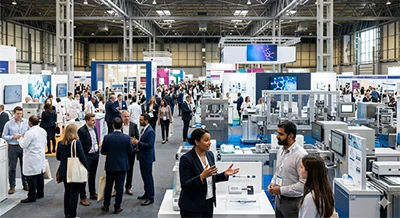
10. With 150+ exhibitors, how do you curate an exhibition experience that drives meaningful engagement and innovation discovery?
For us, it’s not about having the biggest exhibition - it’s about having the right mix of exhibitors.
We want to represent the full value chain and make sure there’s a strong connection between what’s happening in the conference and what’s on the show floor.
The goal is that people can walk the exhibition and have genuinely useful conversations - discovering solutions, comparing approaches, and getting a better sense of what’s out there.
11. What emerging technology or solution trends are you seeing from exhibitors this year?
There’s a clear trend towards technologies that support both compliance and efficiency.
We’re seeing a lot around digitalisation, AI in manufacturing and quality processes, and tools that improve supply chain visibility and traceability.
Sustainability is also becoming more prominent, not just as a concept but in terms of practical solutions that companies can implement.
12. How are you enhancing networking to ensure high-value, outcome-driven interactions among attendees, exhibitors, and industry leaders?
We’re trying to make networking more intentional and valuable.
That includes structured opportunities like networking breakfasts, QP workshops, and sponsored drinks receptions, but also creating more informal touchpoints where conversations can happen naturally - whether that’s around scientific posters, ingredient display areas, or within the exhibition itself.
The aim is to move beyond surface-level networking and create opportunities for meaningful, outcome-driven interactions.
13. The convergence of pharmaceuticals and nutraceuticals is accelerating—how is this shaping the event’s direction and content strategy?
It’s a really interesting shift, and one that’s definitely influencing the direction of the event.
We’re seeing more overlap in terms of manufacturing standards, quality expectations, and even regulatory scrutiny. At the same time, there’s growing interest from pharma companies in adjacent markets.
So, expanding the nutraceutical focus allows us to support that crossover and give attendees a broader perspective on where opportunities might lie.
14. Looking ahead, what is your long-term vision for Making Pharmaceuticals in terms of scale, global relevance, and industry impact?
Looking ahead, the focus is on continuing to build on the strong foundations of the existing event, ensuring it evolves in line with the needs of the industry.
That includes creating even more opportunities for our exhibitors - whether that’s enhancing our current offering or exploring adjacent areas of interest within regulated markets. By bringing complementary industries together under one roof, we can create greater value for exhibitors, speakers, and attendees alike.
Ultimately, it’s about making sure the event continues to grow in a way that is meaningful and impactful, while staying relevant to the audiences we serve.
Read the full article — it's free
Register with Pharma Focus Europe to unlock expert insights, research articles and in-depth industry analysis.