


Clinical trials play a key role in coming up with new medicines and new ways of treatment. Although the attention is usually paid to design, execution, and outcomes, the tasks after completing the trial are also very important. Post-trial access (PTA) is the administration of positive manipulations to the subjects post the official handing over of a trial. The ethical guidelines, such as the Declaration of Helsinki, emphasize that PTA should be addressed, especially when the intervention that is being tested is effective and necessary to the remaining patient wellness.
Such access also furthers the association between researchers and participants and signifies an attitude towards justice especially where vulnerable or resource-limited groups are used as trial populations. Proper post-trial care is essential not only to the individual rights but also to the integrity of the scientific enterprise.
Ethical Basis for Post-Trial Access
The PTA ethical basis is based on respect for a person, beneficence and justice. The time and risks to health of participants who were involved cannot be in vain, as they should gain access to the same that worked during trials.
What are the most important ethical guidelines?
• Declaration of Helsinki (WMA, 2013)—Declares that participants of trials must be guaranteed of getting access to the interventions which have been found to be beneficial.
• CIOMS Guidelines—Highlight the need to engage in policies at the national level to acquire PTA.
• Good Clinical Practice (GCP)—It emphasizes the necessity of transparency and communication with the participants after the trial.
Ethical considerations are, however, likely to come into conflict with practical constraints particularly when considering multi country trials where the infrastructures in various nations may be uneven in terms of healthcare provision. In some countries, clear policies or implementation structures are absent and thus care may be discontinued or not met by the sponsors.
International Regulatory Perspectives
The various regulatory authorities of the world have diverse attitudes towards PTA:
| Region | Regulatory Body | PTA Guidance |
| European Union | EMA | This emphasises transparency and publication of results under EU CTR 536/2014 |
| United States | FDA | No direct mandate for PTA but encourages ethical conduct through trial agreements |
| India | CDSCO | NDCT Rules 2019 mandate post-trial provision if participants benefit from investigational drugs |
| WHO | WHO Ethics Review Committee | Calls for country-level frameworks for PTA in all settings |
Such differences tend to cause discrepancies during implementation especially in the resource poor nations. There are structural issues to promote a harmonized system world-wide due to the presence of national policies and the unavailability of legal commitments.
Practical Challenges to Implementation
In spite of a regulatory and ethical approval, PTA has some logistic and systematic issues:
• Uncertainty Regulatory Approval - Regulatory approval may fail to be given to the intervention once it is out there.
• Policy Misalignment - Lack of supporting health policies or reimbursement systems in the host countries.
• Sponsor Withdrawal - Sponsors can also leave trial sites without committing in the long term.
• Supply Chain Complexities - Availability of investigation drugs requires storage, distribution and local clearance.
• Data Ownership and Liability - In some cases who is responsible to provide follow-up care or negative events may not be made clear.
Such problems are even worsened in less affluent areas where the national infrastructure is scarce. In numerous settings investigational products are not allowed to be distributed after the research even though the participants would be likely to benefit because of the continued treatment.
Strategies to Enable Post-Trial Access
In order to rise above this challenge, stakeholders have to involve themselves earlier and working as a team:
1. Planning of protocols - The trial protocols must define PTA strategies and budget them.
2. Ethics Committee Oversight - Review boards can review the plans of PTA in the process of trials approval.
3. Local Health System Integration - Integrate with the public health systems to take over the intervention after the trial.
4. Regulatory Engagement - Consult regulators early on the conditional access mechanisms.
5. Bridging Mechanisms Use - temporarily during the time one is seeking regulatory approvals.
6. Public-Private Partnerships - Cooperation with other governments or non-governmental organisations, to jointly finance and allocate medicines after trials.
Participant Communication and Informed Consent
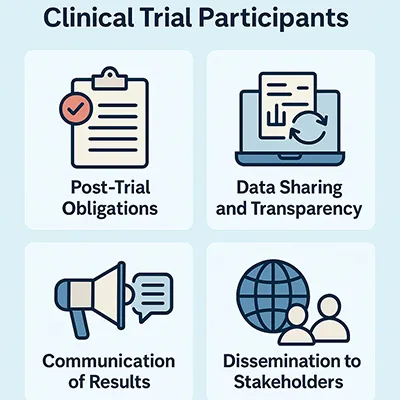
Open communication is imperative when dealing with trial participants. The elements that should be clearly indicated in the informed consent forms are:
• The availability of PTA will be introduced.
• Access time and mode of access
• Conditions of renewal or abolition
The expectations of the participants must also be controlled at the very beginning otherwise there will be a misunderstanding. Explicit, intelligible, and culturally competent information promotes credibility and is a way to make certain decisions informed. There are instances also when periodic updates are required in case the conditions of access change.
Data Sharing and Dissemination of Results
Increased transparency is not limited to post-trial care of patients. It is the responsibility of sponsors and investigators to:
• Commit to publish every result whether positive or negative
• Record and renew studies in websites such as ClinicalTrials.gov or EU Trials Register
• Provide lay summaries of presentations to participants and the general population in a language that is accessible
Negative or inconclusive results that are not disseminated distort the scientific literature and impose on the quality of informed decisions. Responsible dissemination will also support the fact that findings will add meaning to overall healthcare developments and prevent duplication of efforts.
| Dissemination Channel | Audience | Importance |
| Clinical Trial Registries | Regulators, Public | Fulfils transparency requirements |
| Peer-reviewed Journals | Researchers | Advances scientific knowledge |
| Lay Summaries | Participants | Respects participant rights and comprehension |
| Media Outlets | General Public | Broad awareness, but must be accurate |
| Conference Presentations | Scientific Community | Facilitates real-time exchange and critique |
Addressing Inequity in Access
Inequities in global health usually lead to low or unavailable PTA in low and middle income countries. Solutions include:
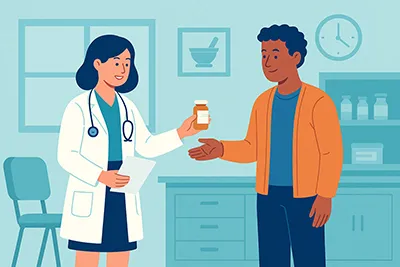
International Funding Contribution of international parties in equity capital
• Global Funding Mechanisms – common capital of international parties
• Compulsory Licensing—The permission by governments in the national interest to manufacture locally
• Technology Transfer Agreements—partners with the local manufacturers Technology Transfer Agreements
• Differential Pricing Models—Tier pricing depending on the national income level
• Health Policy Reform—Another good policy is the reinforcement of national order to make the inclusion of PTA in designs of the trial a requirement.
These are some of the initiatives because they promote fairness and uphold the ethical principle of justice, especially in cases where research benefits are also to be distributed equitably.
The Road to the Future
Access to trials after trials end is not a side issue; it is core clinical research ethics. Moving forward:
• The trial protocols ought to include PTA planning.
• Regulatory authorities need to provide a harmonized set of guidelines everywhere.
• Transparency, equity, and continuity of care are some of the attributes that sponsors ought to embrace.
• PTA should be a priority in the ethics evaluations.
• The national governments ought to enact favorable frameworks.
Integrating PTA into the research culture of the world will demand accountability and support by civil society, researchers, funders, and patients.
To the Future: The Common Task
Securing the post-trial access to the treatment does not fall solely on the shoulders of a sponsor or an investigator; it is a joint effort. Regulators, ethics committees, local health mines, and even patient activist groups need to be involved at the early design stages of trials to develop sustainable post trial care infrastructures. With an increased prevalence of global trials, particularly in low- and middle-income countries, focusing on the differences related to continuity becomes vital. The standardization of international regulations, enhanced dialogue with trial subjects and the introduction of national healthcare would allow converting the post-trial care into a standard procedure. It is only in this way clinical research can be more useful to science as well as to society.
Conclusion:
Ethical and practical considerations in clinical research are necessary to provide the trial participants with post-trial access to treatment. Continuity of care, responsible sharing of results and equal access will enhance trust in the public and promote scientific integrity, as well as take heed of the efforts of the research participants. Driven by the increased complexity and scope of clinical research, we are also asked to increase the commitment to those who make it happen.
Researchers, sponsors, and regulators can no longer consider PTA discretionary but as a moral requirement, a sorely needed add-on to the attention and respect that must be given to each subject of clinical testing.