
Production in the field of biopharmaceutical manufacturing is the most radiated and complex part of the life sciences industry. The need to comply with quality, safety and consistency is extremely high in monoclonal antibodies, recombinant proteins, vaccines and gene therapy. Conventional process development systems have frequently been reactive with the end-product testing being used to detect problems. But this approach of reaction can result in delays, cost inefficacies, and inconsistency.
Pharmaceutical sector has in the recent past been turning to Quality by Design (QbD) to help meet these challenges. It was introduced by regulatory bodies like the U.S Food and Drug Administration (FDA) and has since been followed by all other countries, QbD is a science based risk based approach to the development and manufacture of pharmaceuticals. Instead of concentrating on the product testing after the fact, QbD ensures that it comprises the quality in it at the very beginning.
This article discusses how QbD contributes to manufacturing biopharmaceuticals, the methods and approaches QbD can utilize, regulatory aspects, and the future of QbD in achieving more reliable, sustainable and innovative production.
The Concept of Quality by Design in Biopharma
The concept of QbD rests on the idea that, rather than testing quality into a product, it should be built in. This school of thought appreciates the fact that biopharmaceutical manufacturing is highly dynamic and driven by biological systems, raw materials and process conditions. A formal framework is thus required to define critical parameters and to entail their management.
Core Principles of QbD
1. Target Product Profile (TPP) - Documenting the desired attributes of the biopharmaceutical product in terms of safety, efficacy and quality attributes.
2. Critical Quality Attributes (CQAs) - The physical, chemical, biological or microbiological attributes which it is critical to manage to assure product quality.
3. Critical Process Parameters (CPPs) - Identification of process factors that influence CQAs.
4. Design Space - Identification of the multidimensional space of process parameters that can regularly produce a product that attains CQAs.
5. Control Strategy - Enacting monitoring and controls to keep processes within design space.
Through the application of these principles, QbD offers deeper understanding of the process and enhanced flexibility to manufacturers leading to a reduction in the probability of the unexpected failures.
Methods and Approaches in QbD Implementation
The application of QbD in the biopharmaceutical manufacturing involves the combination of the scientific knowledge and management of risks and advanced tools.
1. Risks Assessment Tools
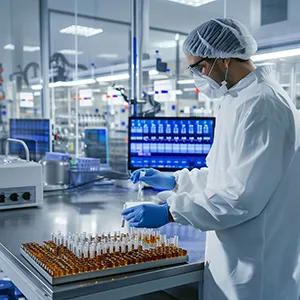
QbD is supported with risk management Failure Modes and Effects Analysis and Hazard Analysis and Critical Control Points tools are typical examples of the tools used to evaluate risks and prioritise controls and process development.
2. Design of Experiments (DoE)
DoE is a well-organised procedure of examining a number of factors to determine how they affect product quality. In upstream and downstream bioprocessing, DoE is used to optimise variables like pH, temperature, rate agitation and feed strategy.
3. PAT - Process Analytical Technology
PAT allows real time monitoring and control of manufacturing processes. Techniques, including spectroscopy, use online sensors to determine attributes such as nutrient concentrations or cell viability and protein content.
4. Data Analytics and Modelling
The multivariate data modelling, machine learning, and multivariate statistical analysis are advanced to aid to identify the design spaces as well as predict the performance of the process. Digital twins of bioprocesses are raising to become useful systems to model and improve processes.
QbD Across Biopharmaceutical Manufacturing Stages
Upstream Processing
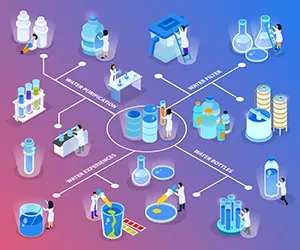
The cell growth and productivity variability may have a marked influence on yield and quality within cell culture or fermentation. The use of QbD will help manufacturers better define the most appropriate growth conditions and feed strategies, thus assuring consistency.
Clarification & Filtration
Clarification is to remove cell debris, and impurities, centrifugation and filtration are parts of clarification. Principles of QbD are used to determine the important parameters like the flow-rates, filter capacity, and shear forces affecting efficiency and product recovery.
Purification (Downstream Processing)
Removal of impurities is vital, as is the retention of product integrity; chromatography and filtration are essential. The optimisation of resin selection, elution conditions, and load capacities facilitated by the use of QbD approaches can be used to increase robustness.
Formulation and Fill-Finish
This is carried out further to formulation where by, the addition of excipients and testing of their stabilities has been done, to ensure the product retains its efficacy until it reaches the end of its shelf life. With fill-finish, QbD allows controlling contamination, as well as dosing accuracy risks.
Regulatory Implications of QbD in Biopharma
Regulatory bodies all around the globe highly recommend the QbD as the way a modern drug development should look.

Regulatory Guidance
• Principles of QbD are identified in the ICH Q8 (Pharmaceutical Development).
• Quality Risk Management (ICH Q9) offers guidelines of risk assessment.
• QbD is combined with quality management systems in CH Q10 (Pharmaceutical Quality System).
Advantages on Regulatory Submissions
• Whenever possible, the manufacturers can have a wider leeway to modify the parameters without having to resubmit them to the authorities since it will be demonstrated that there was a clear design space.
• With the submission of the information in a form of a QbD submission, regulators are assured of the strength of the process.
• Improved understanding of processes has the potential to accelerate the process of change and scale-up approvals.
Registration with QbD frameworks also leads to the minimization of regulatory compliance and product recall.
Strategic Advantages of QbD in Biopharma Manufacturing
1. Enhanced Product Quality - There is active management of the CQAs which result in safer and uniform products.
2. Operational Efficiency - Lean processes eliminate variability, waste and downtime.
3. Cost Savings - Reducing batch failures and rework saves a lot of money.
4. Flexibility under Regulations - Design spaces makes it easier to be more agile when responding to market needs.
5. Innovation Enablement - QbD can offer the ledgered basis necessary to implement novel technologies such as in Peter, bioprocessing continuous and single-use systems.
Challenges in Implementing QbD in Biopharma
Although the benefits of QbD are abundantly clear, the implementation of QbD has not been without hiccups throughout the biopharmaceutical industry. Among the challenges lies the high level of scientific and technical knowhow needed in order to utilize the QbD tools which include the multivariate data analysis and advanced risk analysis. Several organizations also have the limitation of resources because creating the design spaces and running large scale Design of Experiments (DoE) can be time and cost-consuming.
The next impediment is that of cultural change required in organisations. Established practices that involve end-product testing are ingrained and changing to a proactive QbD model may be resisted, and in some cases involve retraining, multi-level collaboration and executive endorsement. Furthermore, the combination of digital systems and Process Analytical Technology (PAT), necessary to monitor real-time also requires heavy investment on infrastructure and good data governance.
Last is the regulatory interpretation. Although QbD is encouraged by the agencies, some companies are fearful that the product will create a variances in expectations in different parts of the world. These obstacles point to the idea that QbD development needs not only technical but also organisational resolution and regulatory specificity.
Future Outlook for QbD in Biopharmaceutical Manufacturing
1. Digitalisation and Industry 4.0
Integration of digital technologies, automation, and advanced analytics will consolidate QbD, because it will be possible to make decisions in real-time and predictive control.
2. Continuous Bioprocessing
QbD is key in the development of continuous product manufacturing platforms, and where constant ability to operate under steady state requires precise monitoring and control.
3. Single-Use Technologies
Single use bioreactors, filters, and sensors are on the rise. The use of QbD frameworks assists in evaluation of risks that come with extractables, leachables and inter-batch variability of disposable equipment.
4. Advanced Therapies
Cell and gene therapies involve a lot of patient-to-patient variability, so QbD offers a systematic method in which reproducibility and compliance can be met.
5. Sustainability Considerations
As well, it is expected that the development of greener bioprocessing will be supported by the actions of DNG-D, which will be directed at reducing the energy requirements, water requirements, and the amount of waste that gets created.
Conclusion
Quality by Design has changed how the biopharmaceutical products are developed and manufactured. By integrating quality into all aspects of the process QbD gives manufacturers more process insight, flexibility with regulators and greater confidence in that product safety and efficacy.
With the biopharma industry shifting towards digitalisation, continuous processing, advanced therapies, the QbD is only going to gain significance. Finally, it is not only a requirement related to the regulation but a forward-looking plan that focuses on innovation, sustainability, and patient confidence.