The Growing Role of Real-World Evidence in European Drug Development
Lakshmi, Editorial Team, Pharma Focus Europe
Real-world evidence has moved from the margins of European pharmaceutical regulation to the centre of decision-making. Federated data networks, the European Health Data Space and joint clinical assessments under the EU HTA Regulation are reshaping how medicines are developed, approved and valued. This article examines the infrastructure driving adoption, the strategic opportunities for pharma leaders, the methodological risks that remain, and a regulator-led multiple myeloma study that shows real-world evidence at work.
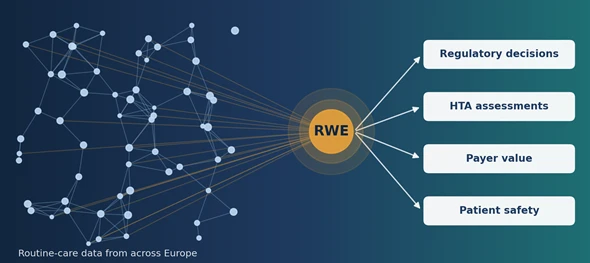
Real-World Evidence Steps Beyond the Clinical Trial
For decades, the randomised controlled trial has been the gold standard of pharmaceutical evidence in Europe, and it still is. Yet the evidence that shapes a medicine's journey from laboratory to patient is no longer confined to the controlled world of the trial protocol. Electronic health records, disease registries, insurance claims, biobanks and patient-reported data are now being mobilised at continental scale, and European regulators have made it clear that they intend to use them.
The shift is practical rather than philosophical. Trials answer the questions they are designed to answer, in the populations they enrol, over the time frames they can afford. They reveal far less about the elderly patient living with three comorbidities, the child with an ultra-rare condition, the safety signal that surfaces only after years of routine use, or the way a therapy performs across 27 healthcare systems with very different treatment pathways. Real-world evidence (RWE), the clinical evidence produced by analysing real-world data (RWD), is designed to fill precisely these gaps.
For pharmaceutical leaders, the consequences now reach well beyond the pharmacovigilance department. Real-world evidence increasingly influences trial design, regulatory dossiers, health technology assessment (HTA) and pricing conversations. This article explores how Europe has built the infrastructure to generate RWE at scale, where it adds genuine value across the development lifecycle, where its limits still lie, and what a regulator-led study in multiple myeloma reveals about the direction of travel.
From Afterthought to Boardroom Priority: Real-World Evidence Comes of Age
Historically, many European sponsors treated real-world data as a post-authorisation obligation: a registry requested as a condition of approval, or a safety study negotiated late in the review process. That posture is becoming increasingly expensive, because three forces have converged to change the role of RWE.
The first is the fragmentation of modern therapeutics. Precision oncology, cell and gene therapies and treatments for rare diseases target patient populations that are often too small or too heterogeneous for conventional two-arm trials. When a randomised comparator is unethical or impractical, well-characterised real-world cohorts can provide context that regulators cannot obtain from any other source.
The second is the rising expectation of European payers. Health systems under sustained budget pressure want to know not only whether a medicine works under trial conditions, but whether it delivers value in everyday practice. Managed entry agreements, outcomes-based contracts and periodic reassessments all depend on data collected after launch.
The third, and most decisive, is institutional investment. European regulators are no longer simply receiving real-world evidence from sponsors; they are generating it themselves. Once the regulator holds an independent evidence base, a sponsor can no longer assume that the story of its product ends with the pivotal trial.
250 Million Patients, One Network: Inside Europe's Real-World Evidence Engine
The centrepiece of this investment is DARWIN EU, the Data Analysis and Real World Interrogation Network, whose coordination centre was set up in February 2022 to serve the European Medicines Agency (EMA) and the wider European medicines regulatory network. Its architecture reflects a distinctly European answer to the tension between data utility and data protection. Instead of pooling patient records in a central repository, participating data partners convert their data into a common data model. The data remain with the partner institution, analyses run locally using shared code, and only aggregated results travel.
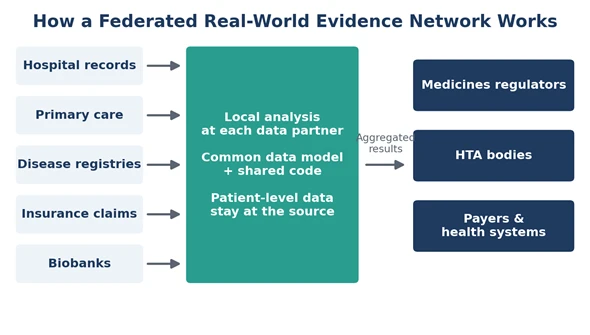
Figure 1: The federated model keeps patient-level data at source while delivering aggregated real-world evidence to decision-makers.
The model has scaled rapidly. Between February 2024 and February 2025, EMA's regulator-led pathways delivered 59 studies, of which 33 were completed and 26 were ongoing, with DARWIN EU acting as the primary route. The median time from protocol approval to final results was around four months, significantly faster than conventional observational research. In the following reporting period, up to February 2026, 108 research topics were assessed and 88 studies were completed or ongoing, with the network able to draw on data from around 250 million patients. The subjects have ranged from drug utilisation and disease epidemiology to vaccine effectiveness, medicine shortages and specific safety questions.
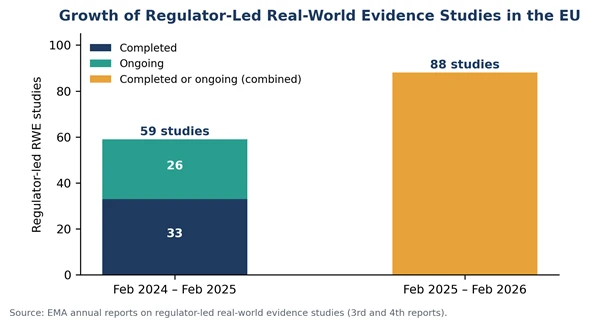
Figure 2: Regulator-led real-world evidence studies in the EU grew sharply across two consecutive reporting periods.
For industry, the significance is twofold. Regulators can now test hypotheses independently and quickly, which raises the bar for sponsor-generated evidence. At the same time, published protocols, transparent methods and a common data model provide a shared language that sponsors can adopt to make their own real-world studies more credible and more readily accepted.
Discovery to Market and Beyond: Real-World Evidence at Every Stage of Pharma Development
It is tempting to view RWE as a late-stage tool. In practice, some of its most strategic uses occur long before a marketing authorisation application is filed.
In early development, real-world data describe the natural history of a disease, the size and characteristics of the target population and the prevailing standard of care, sharpening go/no-go decisions.
During clinical development, RWD help refine trial design. Eligibility criteria can be tested against real patient populations so that sponsors avoid enrolling a cohort that bears little resemblance to the people who will eventually receive the medicine. Feasibility analyses identify sites with enough eligible patients, and historical outcome data support more realistic sample size assumptions.
In selected situations, particularly in rare diseases and single-arm oncology studies, real-world cohorts may serve as external comparators. European regulators have accepted such comparisons as supportive evidence, but they examine them closely for comparability of populations, endpoints, follow-up and data completeness.
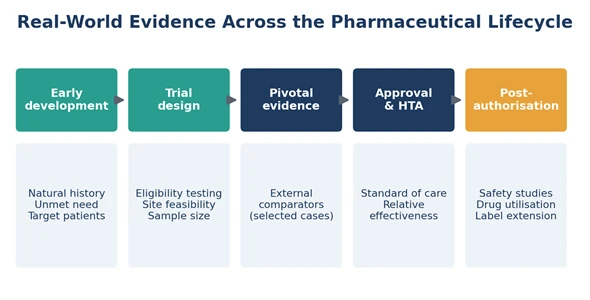
Figure 3: Real-world evidence contributes value at every stage of the pharmaceutical development lifecycle.
After authorisation, RWE carries its most familiar responsibilities: post-authorisation safety studies, effectiveness research, drug utilisation monitoring and support for label extensions. Increasingly, it also informs the discussions with HTA bodies and payers that ultimately determine whether a medicine reaches patients at all.
One Dataset, Two Gatekeepers: Real-World Evidence Unites Regulators and HTA Assessors
Europe's policy landscape is aligning around data in ways that make real-world evidence difficult to ignore. The EU Health Technology Assessment Regulation began applying in January 2025, introducing joint clinical assessments for new oncology medicines and advanced therapy medicinal products, with the scope set to widen progressively in the years ahead. These assessments evaluate relative clinical effectiveness across defined populations, interventions, comparators and outcomes, frequently covering more combinations than a single pivotal trial can address. Real-world data on current treatment patterns and comparator outcomes are therefore likely to become valuable context for assessors.
In parallel, the European Health Data Space regulation entered into force in March 2025. It creates a common framework for the secondary use of electronic health data for research, innovation, policymaking and regulatory purposes, with provisions phasing in over several years through national health data access bodies.
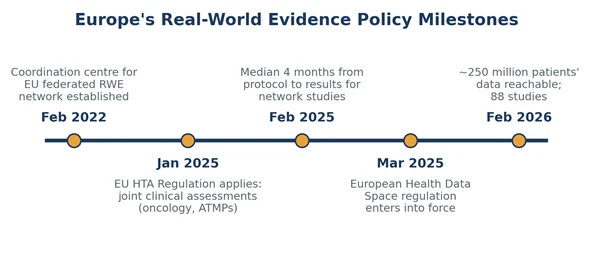
Figure 4: Key milestones shaping Europe's real-world evidence landscape.
The regulatory network's strategy to 2028 and the ongoing reform of EU pharmaceutical legislation point in the same direction: evidence generation that continues across the product lifecycle rather than concentrating on a single pre-approval moment. For pharmaceutical companies, this means evidence plans must be designed with regulators, HTA assessors and payers in view from the very beginning.
Confident but Wrong? The Credibility Test for Real-World Evidence
None of this makes RWE a replacement for rigorous clinical trials. Observational data carry well-documented vulnerabilities, including confounding by indication, missing or inconsistently coded information, immortal time bias and wide variation in how outcomes are recorded across healthcare systems. A poorly designed real-world study can produce answers that are confident but wrong.
European regulators have therefore placed strong emphasis on transparency and pre-specification. Registering protocols before analysis, justifying why a data source is fit for purpose and running sensitivity analyses that test the robustness of findings are now expected rather than optional. Approaches such as target trial emulation, in which an observational analysis is structured to mirror a hypothetical randomised trial, have gained ground because they make assumptions explicit and reduce several common sources of bias.
Data quality remains a stubborn challenge. The same diagnosis may be coded differently from one country to another, and laboratory values, biomarker status or disease severity may be missing from administrative records altogether. Common data models make diverse sources analysable together, but they cannot create information that was never collected. Sponsors that invest early in understanding the provenance and limitations of every data source are far better positioned to defend their evidence under regulatory scrutiny.
Case Study: 30,000 Patients Later – Real-World Evidence Redraws Europe's Multiple Myeloma Map
Multiple myeloma, a rare cancer of the plasma cells in the bone marrow, illustrates both the promise and the practical value of regulator-led real-world evidence. The disease has seen rapid therapeutic innovation over the past decade, with new drug classes and successive lines of treatment reshaping outcomes. For regulators and HTA bodies, that pace creates a genuine problem: trial comparators become outdated quickly, and evidence on how patients are actually treated across Europe is fragmented across national systems.
To address this, a DARWIN EU study characterised patients, treatment patterns and survival in multiple myeloma, covering more than 30,000 patients diagnosed between 2012 and 2022 across multiple European data sources. Importantly, the study was designated as the first of two use cases piloting how real-world data generated through the network could support decision-making by HTA bodies and payers, not only by medicines regulators. Results were shared with the relevant EMA committees and stakeholders, and the protocols and results of the network's studies are made publicly available in a joint regulatory catalogue of real-world data studies.
Three lessons stand out for pharmaceutical developers. First, regulators and assessors can now build an independent, multi-country picture of standard of care and patient outcomes within a disease area, against which a sponsor's claims about unmet need or comparator performance can be checked. Second, the study shows that a single, well-designed real-world analysis can serve regulatory and HTA audiences simultaneously, reducing duplication and aligning expectations across decision-makers. Third, it demonstrates that large-scale, cross-border analysis is achievable without centralising sensitive patient data, a precedent likely to influence how the European Health Data Space evolves.
For companies developing haematology and oncology products, the practical takeaway is that the benchmark for 'current clinical practice' is increasingly being defined by public real-world evidence. Engaging with that evidence early, and designing internal studies that are methodologically compatible with it, is fast becoming a competitive necessity rather than an optional extra.
Winning Regulatory Trust: A Pharma Real-World Evidence Strategy Built for Europe
The companies gaining the most from RWE tend to treat it as a portfolio capability rather than a series of individual studies. That begins with integrated evidence planning, in which clinical, regulatory, market access, medical affairs and epidemiology teams agree from Phase II onwards which questions trials will answer and which will be addressed through real-world data.
Access to data is the next determinant of success. Europe's data landscape is rich but uneven, and long-term partnerships with registries, hospital networks and academic groups take time to establish under the General Data Protection Regulation. Organisations that build these relationships and invest in common data model expertise now will be ready to use the European Health Data Space as it matures, rather than scrambling to catch up.
Early dialogue with regulators matters too. Scientific advice procedures, including parallel consultations involving HTA bodies, give sponsors the opportunity to test whether a proposed real-world design will be considered acceptable before significant resources are committed. Finally, talent is a constraint that deserves board-level attention: pharmacoepidemiologists, biostatisticians and data scientists who understand both the methods and the regulatory context remain in short supply across Europe.
Conclusion: The Real-World Evidence Race Has Already Begun
Real-world evidence has moved decisively from the periphery of European drug development towards its centre. Federated regulatory networks now deliver independent studies in months, the EU HTA Regulation is bringing relative effectiveness into a shared European framework, and the European Health Data Space promises broader and more lawful access to health data in the years ahead. The multiple myeloma study shows how a single, well-designed analysis can inform regulators and HTA bodies alike.
Yet the value of real-world evidence depends entirely on its credibility. Transparent protocols, fit-for-purpose data and rigorous methods separate evidence that persuades from evidence that is dismissed. For pharmaceutical leaders, the strategic question is no longer whether to invest in RWE, but how quickly they can build the data partnerships, methodological expertise and integrated planning needed to use it well. The companies that answer that question first will shape Europe's next generation of medicines.

Lakshmi is a science writer with a foundation in the laboratory. She earned her master's in biotechnology and trained through research internships at ICGEB (JNU) and DIPAS, DRDO, with her work appearing in the Egyptian Journal of Veterinary Sciences. Now APCRM-certified and part of the editorial team at Pharma Focus America and Pharma Focus Europe, she reports on pharmaceutical technology, research, and innovation — giving complex science a clear and confident voice for industry leaders.