The Architect of the Void: When 3D Printing Becomes the Body’s New Bone
Baher A. Daihom, Assistant Professor, Cairo University
This article explores the transformative role of 3D bioprinting in treating bone cancer. By integrating patient-specific scaffolds with localised, time-released chemotherapy and osteoinductive bio-inks, this technology moves beyond traditional metal implants. It offers a dual-action "Trojan Horse" strategy, simultaneously eradicating residual malignancy and architecting natural biological regeneration.
Introduction:
In the quiet, pressurised hum of a modern surgical suite, a surgeon holds a high-definition scan of a young patient’s femur. On the screen, a jagged, dark shadow marks where an osteosarcoma has claimed its territory. For decades, the script for this moment has been written in cold, hard steel. The surgeon would remove the cancer, and in its place, they would bolt a generic titanium rod, a "spare part" that is strong but silent, a permanent stranger in the body’s living ecosystem.
But a new narrative is being written in the laboratories of pharmaceutics and bioengineering, one where the "empty space" left by cancer isn't a permanent loss, but a temporary vacancy. This is the story of 3D Bioprinting, a technology that is shifting the role of the researcher from a manufacturer of mass-produced medicine to an architect of individualised life.
The Geometry of a Second Chance
Imagine a printer, not spit-firing ink onto paper, but delicately extruding a translucent, life-giving gel. This "bio-ink" is a sophisticated pharmaceutical cocktail of the patient's own stem cells, calcium-based minerals, and signaling proteins.
When a patient loses a section of bone to cancer, the loss is never a perfect square or a clean circle. It is irregular, winding, and unique. Traditional implants are like trying to fix a delicate porcelain vase with a heavy-duty hammer; they provide strength, but they lack the "grace" of the original structure. They often lead to a phenomenon known as "stress shielding," where the rigid metal absorbs the entire mechanical load, causing the remaining natural bone to wither away from lack of use.
3D printing allows us to map that void with a laser’s precision. By converting an MRI scan into a digital blueprint, we can now print a scaffold, a microscopic "jungle gym" that fits the patient’s defect down to the width of a human hair. This is not just a cosmetic fix. When the body’s own cells see a structure that looks and feels like home, specifically one with a porosity designed to mimic the "honeycomb" nature of human marrow, they don't fight it. They move in. They begin to anchor, to breathe, and to rebuild.
The Trojan Horse: Healing and Fighting Simultaneously
The most harrowing part of bone cancer treatment is not always the surgery; it’s the ghost that lingers after the tumor is gone. Microscopic "seeds" of cancer can hide in the surrounding tissue, waiting for the surgeon to stitch the wound before they begin to grow again. To fight them, we have historically flooded the entire body with systemic chemotherapy a "scorched earth" policy that kills the cancer but leaves the patient exhausted, nauseated, and frail.
This is where the "Smart Scaffold" changes the pharmaceutical game.
Imagine that a 3D-printed bone acts as a Trojan Horse. As the printer builds the scaffold layer by layer, it weaves in tiny, time-released reservoirs of chemotherapy, such as doxorubicin or cisplatin. Once implanted, the scaffold stays perfectly still, but it is far from passive. It begins to "whisper" medicine directly into the surrounding tissue. It kills any remaining cancer cells on contact, while simultaneously releasing "signals" (growth factors like BMP-2) that call for new blood vessels to grow.
It is a dual-track recovery: the scaffold is a warrior fighting the last of the war, and a master carpenter building the new house, all at once. By the time the drug payload is exhausted, the cancer is gone, and the structural rebuilding is well underway.
A Living Legacy
As months pass, something miraculous happens. Because the scaffold is crafted from "bio-resorbable" materials, substances like polycaprolactone or hydroxyapatite that the body recognises as natural components, it slowly, gracefully dissolves. It does not stay a second longer than it is needed. As it vanishes, the patient’s natural bone fills the gaps it leaves behind.
Eventually, the 3D-printed structure is gone entirely. What remains isn't a metal rod or a foreign object that might set off an airport metal detector or cause a lifetime of cold-weather aching. It is the patient’s own bone, restored and cancer-free. We are moving away from a world of "mechanical repairs" and toward a world of "biological restoration." We are learning that the body doesn't just need a replacement; it needs a map. 3D bioprinting provides that map, ensuring that for the survivor of bone cancer, the "empty space" isn't a memory of what was lost, but a foundation for what is to come.
The Ethics of the "Digital Bone"
As we stand on the precipice of this medical revolution, we must look beyond the gleaming steel of the laboratory and ask the harder questions. The transition from mass-produced implants to "batches of one" challenges the very foundation of our current healthcare economy.
1. The "Wealth Gap" in Regenerative Medicine. Currently, 3D bioprinting is an expensive, boutique endeavour. The cost of medical-grade bio-printers, clean-room facilities, and the harvesting of autologous stem cells (the patient's own cells) is astronomical. There is a looming ethical risk: will we create a two-tiered system where the wealthy receive biological restoration while everyone else receives the "metal rods" of the 20th century? As editors and practitioners in the pharmaceutical sciences, our next great "printing" challenge isn't technical, it's logistical. We must find ways to standardise these bio-inks and scale the manufacturing processes to ensure that "personalised" doesn't mean "exclusive."
2. The Regulatory Paradox Our regulatory bodies, such as the FDA and EMA, are built for the era of the "Average Patient." They approve drugs and devices based on their performance across thousands of identical subjects. But how do you regulate a 3D-printed scaffold that is, by definition, different for every single person who receives it? We are seeing a shift toward "Process Validation" rather than "Product Validation." If we can prove the printer and the bio-ink are safe, we must trust the digital blueprint to do its job. This requires a level of digital literacy in healthcare regulation that we are only beginning to develop.
3. The Point-of-Care Shift The most profound change will be the location of the "pharmacy." In the future, the pharmacy may not be a room full of bottles, but a sterile room with a printer. This moves the responsibility of quality control from the industrial manufacturer to the hospital staff. The pharmacist of 2030 will likely need to be as comfortable with CAD (Computer-Aided Design) and rheology as they are with molecular biology.
The Verdict: 3D printing in bone cancer therapy is more than just a new tool; it is a new philosophy. It demands that we treat the patient not as a collection of symptoms to be suppressed, but as a unique biological landscape to be cultivated. The "Architect of the Void" is here, and they are printing the future, one layer of life at a time.
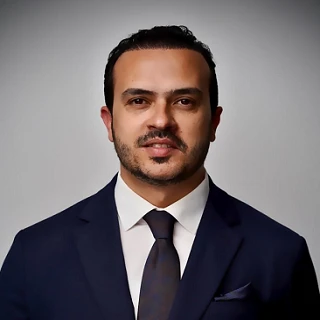
Baher A. Daihom is an Assistant Professor at Cairo University and a high-achieving translational scientist specialising in nanotechnology and 3D-printed drug delivery. A Fulbright Scholar at the University of Texas at Austin and an alumnus of UTHSC, he focuses on designing innovative nano-platforms and pediatric formulations, bridging the gap between advanced pharmaceutical engineering and impactful clinical applications.