Strategic Synthesis: Shift to Continuous Manufacturing in Pharmaceuticals
Amit Malviya, Vice President Quality Assurance, Zest Pharma
Transitioning to Continuous Manufacturing is a strategic imperative for global competitiveness, shifting from inventory management to flow management, maximizing velocity and asset utilization. Integrating PAT and localized production mitigates batch-rejection risks and supply chain vulnerabilities; therefore, a phased "start small, scale fast" implementation strategy is vital to ensure long-term ROI.
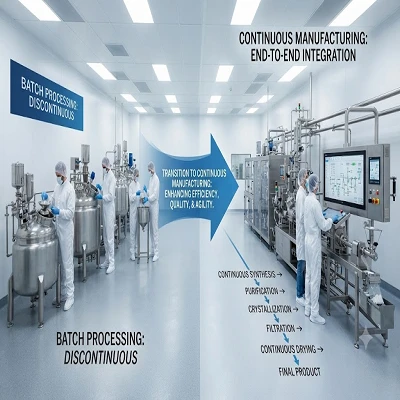
Contextualizing the Manufacturing Evolution
The pharmaceutical industry is at a decisive inflection point, necessitated by a move away from legacy batch processing toward Continuous Manufacturing (CM). This transition is no longer a peripheral innovation but a core strategic imperative for organizations seeking to maintain global competitiveness and uphold the highest standards of patient safety. By dismantling the silos of fragmented production, the industry can finally address the systemic inefficiencies that have historically compromised speed and reliability. Continuous Manufacturing redefines the production lifecycle by replacing discrete, stop-and-start intervals with a singular, high-velocity stream. In this model, raw materials are fed into an integrated system, transformed through various chemical or physical stages, and simultaneously harvested as finished products in a non-stop process. This seamless integration shifts the organizational focus from inventory management, where capital is tied up in "wait states" between stages to flow management. This transition compresses production timelines from months to days, creating an agile operational framework that ensures quality is an inherent attribute of the process rather than a final check.
Structural Differentiators: Batch vs. Continuous Processing
The technical distinctions between batch and continuous flows are the foundations of operational excellence. Moving to CM requires a holistic rethink of asset utilization and quality assurance, shifting from a reactive posture to a proactive, data-driven methodology.
- Process Flow / Disconnected Cycles: Materials wait between discrete steps, causing inventory bloat and significant equipment idle time.
- Optimized Asset Utilization: Uninterrupted flow maximizes throughput and eliminates the logistical friction of intermediate storage.
- Quality Control / Reactive Validation: Offline testing occurs post-production; an error results in the total loss of the batch and high rejection costs.
- Real-time Safeguards: In-line monitoring allows for immediate "course corrections," effectively eliminating the financial burden of batch-rejection.
- Time & Speed | High Latency: Mandatory hold times and cleaning cycles extend the lead time to months, delaying revenue realization.
- Rapid Market Response: Production is reduced to days, drastically increasing capital turnover and the ability to meet urgent patient needs.
- Flexibility / Fixed Capacity: Scaling up requires re-validation and different equipment, creating significant risk between Clinical Phase II and Phase III.
- Seamless Scalability: Volume is adjusted by changing run time, removing scale-up risks and allowing for elastic supply without new equipment. |
These structural advantages provide a more responsive business model where "just-in-time" delivery becomes a reality, directly impacting the bottom line through reduced risk and heightened operational agility.
High-Value Drivers for Continuous Adoption
The strategic rationale for CM adoption is centred on addressing the volatile demands of the modern pharmaceutical market. We must view these drivers not merely as technical benefits, but as levers for market leadership.
Accelerated Time-to-Market
By eliminating the artificial delays inherent in batch processing, we can transition from development to commercial delivery in days. This speed is a critical differentiator, allowing organizations to capitalize on first-to-market advantages and respond to public health crises with unprecedented velocity.
Enhanced Product Quality via PAT
The integration of Process Analytical Technology (PAT) serves as a sophisticated safeguard, monitoring critical quality attributes in real-time. This eliminates the binary "pass/fail" risk of batch manufacturing, ensuring that every unit meets exacting standards through automated, continuous adjustments.
Supply Chain Resilience
CM enables the de-risking of the supply chain through localized, smaller-footprint facilities. This "just-in-time" localized production minimizes the strategic vulnerability of over-reliance on foreign suppliers and serves as a vital buffer against global drug shortages.
Sustainability and Cost Efficiency
Continuous lines require a significantly smaller physical footprint and lower energy consumption. By reducing material waste through precise process control, CM aligns operational goals with corporate Environmental, Social, and Governance (ESG) targets while driving long-term OPEX reductions. While these high-value drivers offer a compelling case for adoption, the transition requires a disciplined approach to navigating the regulatory and capital investment landscape.
Navigating the Implementation Landscape: Regulatory Support and Barriers
Aligning technological innovation with global regulatory frameworks is essential to ensure market compliance and operational continuity. We must treat compliance as a collaborative strategic pillar rather than a hurdle. Regulatory Enablement Health authorities, specifically the FDA and EMA, have become active proponents of CM, providing comprehensive guidance to standardize real-time release testing (RTRT) and model-based control. This proactive support offers a clear regulatory pathway for manufacturers, facilitating the validation of continuous processes and ensuring that innovation remains compliant from inception. These are not deterrents but necessary investments for future-proofing the organization:
- High Upfront Investment: Designing end-to-end lines requires significant initial capital, yet these costs are offset over time by the massive reduction in batch-rejection and inventory carrying costs.
- Complex Development: Managing mass flow rates requires advanced technical precision. This necessitates a strategic shift in talent acquisition toward engineers and scientists with expertise in automated, integrated systems.
- Data Management Infrastructure: The move to CM generates an influx of high-frequency data, requiring investment in robust digital architectures to ensure process stability and regulatory transparency.
Future Outlook and Strategic Recommendations
The future of pharmaceutical manufacturing is inextricably linked to digital transformation. To manage the complexities of continuous production, the industry is increasingly leveraging Artificial Intelligence (AI) and Digital Twins. These tools create high-fidelity virtual simulations of the production line, allowing us to test process changes and optimize parameters safely before any physical implementation occurs.
Strategic Roadmap: A Phased Implementation Plan. To mitigate risk and build internal maturity, we recommend a "start small, scale fast" approach:
- Phase 1: Unit Operation Pilots: Begin by transitioning specific, isolated operations to continuous flow specifically blending to establish foundational knowledge.
- Phase 2: Intermediate Integration: Expand the pilot setup to include subsequent operations like granulation and tablet coating, validating the hand-offs between these stages.
- Phase 3: Full-Scale Integration: Move toward a fully integrated end-to-end continuous line once pilot operations have demonstrated stability and ROI.
- Phase 4: External Benchmarking: Utilize resources from the United States Pharmacopeia (USP) Advanced Manufacturing program to access technical case studies and refine validation protocols. The shift from batch to continuous manufacturing is no longer a matter of "if" but "when." As the industry standardizes around this high-velocity model, the transition to CM is the only viable path to achieving the speed, quality, and resilience required to succeed in the modern pharmaceutical landscape.
Conclusion:
The transition to continuous manufacturing (CM) redefines pharmaceutical production by shifting the organisational focus from inventory management to high-velocity flow management. By compressing production timelines from months to days and eliminating batch-rejection risks, this shift is no longer a matter of "if", but "when". Ultimately, standardising around CM is the only viable path to achieving the speed, product quality, and supply chain resilience required to survive and succeed in the modern market

Amit Malviya is the Vice President, Quality Assurance at Zest Pharma and serves as a Technical Adviser at Emorphis Technologies, contributing to its Artificial Intelligence (AI)-powered quality compliance and pharmaceutical manufacturing automation division. He brings over two decades of experience in the pharmaceutical industry, with expertise spanning manufacturing operations, quality management systems, process improvement, and regulatory affairs.