10 Effective Strategies to Reduce Water Waste in Pharmaceutical Manufacturing
Kate Williamson, Editorial Team, Pharma Focus Europe
The reduction of water wastes should be done to ensure that pharmaceutical production is made sustainable. This article will focus on 10 possible methods of helping pharma manufacturing be more water efficient such as water audits, CIP optimization, closed-loop systems, water-saving technologies, and staff engagement. The practices will provide pharmaceutical water sustainability, lower cost, and regulatory and green manufacturing efforts.
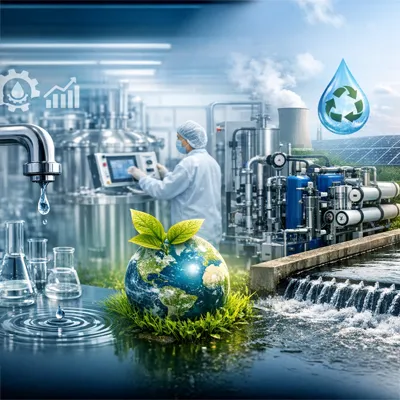
Introduction:
Water is a resource of great concern to pharmaceutical manufacturing since it is essential in the cleaning of equipment used in manufacturing operations, as well as in drug formulations. Nevertheless, the pharmaceutical industry presents another leading water consumer and therefore reduction of water wastes should be at the top of the agenda regarding sustainability. Pharmaceutical facilities must deal with two issues at once; managing quality control on a rigorous level and water conservation. Water conservation measures in the pharmaceutical sector are effective to not only minimize costs of operation, but also increase corporate social responsibility and environmental management.
This article will discuss 10 successful tips to decrease water waste in pharmaceutical production, focusing on pharma manufacturing water efficiency solutions and innovative technologies, and industry best practices.
1. Conduct a Comprehensive Water Audit
Prior to the need to introduce any water saving measures, one must be aware of the current consumption trends. Pharmaceutical plant water audit helps to determine the water consumption in all processes used by the plant, where it can be consumed excessively and where it may leak.
Some of the crucial steps in water audit are:
- Testing the rates of water flowing at various locations in the plant.
- Determining equipment and processes of high consumption.
- Leaks, overflows as well as inefficient usage is detected.
- Measuring the generation of wastewater.
Identification of water loss sources helps the pharmaceutical companies focus on interventions and set a base on which the effectiveness of water waste reduction in pharma production is measured.
Answering a common question: In which processes do pharma manufacturing have common sources of water waste? The primary offenders are leaks in pipeline, inefficient cleaning-in-place (CIP) systems, too much cooling water, and poor reuse of the process water.
2. Optimize Cleaning-in-Place (CIP) Systems
Cleaning-in-Place (CIP) systems are very important to the product safety of pharmaceutical plants but they require excessive water. Through the practice of pharma clean water, businesses will find it easier to save a lot of water when it comes to CIPs.
Strategies include:
- Enterprise reuse of rinse water in primary cleaning.
- Using automatic monitoring of the adjustment of water flow according to the requirements of the processes.
- With uniform cleaning spray balls and nozzles of high efficiency.
These practices do not only conserve water but also minimize the use of energy and the rate at which water is wasted, and this has a cumulative effect on pharma manufacturing water thrifthood.
3. Implement Closed-Loop Water Systems
Recirculating or closed loop water systems reduce the quantity of water released into the environment by reusing water several times in the production process. An example would be water employed in cooling towers or heat exchangers which can be treated and recirculated rather than disposed.
Benefits include:
- Considerable decrease in water extraction either through municipal or natural sources.
- Reduced cost of wastewater treatment.
- Increased adherence in environmental regulations.
This is among the greatest economical water conservation strategies in pharma production, which agrees with the sustainable water management in pharmaceutical production.
4. Integrate Water-Saving Technologies
Long term water efficiency can be achieved by investing in modern water saving technologies in pharma plants. Water consumption can be monitored and controlled in real-time with the help of innovations in sensors, smart meters, and automated flow controllers.
Examples include:
- Ultrasonic flow meters as detectors of leakages and abnormality.
- Automated non-operational equipment shut-off valves.
- High scale filtration and water purification systems to facilitate reusability of water.
Such technologies help the pharmaceutical firms to reduce the amount of water that is wasted at the pharma plants without negatively affecting the high quality standards.
Addressing a question: How to install water saving technology in pharmaceutical plants? Begin with pilot projects in the regions with large water demand, track the outcomes, and implement technologies throughout the plant gradually.
5. Reuse and Recycle Process Water
Pharmaceutical processes create large quantities of waste water that can be extracted, re-used in non-critical areas, including cooling, cleaning or landscaping. The reduction of wastewater in the manufacture of pharma can be done through:
- Ultrafiltration systems and reverse osmosis (RO) systems.
- Auxiliary processes Rainwater harvesting.
- HVAC system reuse of greywater.
Following these steps, the companies will manage to optimize the usage of pharma plants water and minimize the environmental footprint of their work by several folds.
6. Educate and Engage Plant Staff
In pharma, human behavior is one of the most important issues in the management of industrial water. Those employees that perceive the relevance of water conservation will be more inclined to practice best.
Key initiatives include:
- Water saving operation of machinery training.
- Team incentive programs on the accomplishment of water reduction targets.
- Easy instructions and reminders in places of high traffic.
Answering another common query: What is the significance of water conservation in the pharma manufacturing? Besides the environmental responsibility, it decreases the cost of production, minimizes the risk of regulatory measures, and contributes to sustainability, which are becoming the main concern of investors and stakeholders.
7. Optimize Cooling and Heating Systems
Large amounts of water are used in cooling towers and HVAC systems in pharmaceutical plants. These systems can be maximized to save a lot of money:
- Installation of variable speed pumps to control the flow of water according to the demand.
- The air-cooled condensers should be used where possible.
- The use of water treatment chemicals to reduce the rate of scaling and frequency of blowdown.
The strategies will facilitate the sustainability of pharmaceutical water and improve the efficiency of the process of pharma production.
8. Adopt Green Manufacturing Practices
Incorporation of green manufacturing in the activities of pharmaceutical industries is a comprehensive way of minimizing water wastes. This includes:
- Developing processes that reduce water consumption at the beginning.
- Choosing water saving equipment.
- Limiting the use of chemicals which pollute water and can be easily recycled.
These solutions of pharma water waste reduction are in tandem with sustainability together with operational excellence hence leadership in environmental responsibility.
9. Collaborate with Water Management Experts
Water management consulting of pharma companies is in the interest of many pharmaceutical companies. External experts can:
- Audit water at a detailed level.
- Suggest the best technologies to use in saving water.
- Plan water efficiency solutions plant-specific.
The cooperation with experts will assist in ensuring that not only scientifically but also economically possible, the water conservation strategies will lead to the quantifiable reduction of the water consumption and waste.
10. Monitor, Measure, and Improve
Pharma manufacturing water efficiency is achieved through constant improvement. The use of an intensive monitoring system enables firms to monitor water consumption, detects deviations and take corrective measures. Best practices include:
- Placing real-time water meters and real-time process area dashboard.
- Areas of review: To evaluate performance against targets, conduction of periodic reviews.
- Comparing with industry standards so as to determine new opportunities.
This is attained through these steps that will help pharmaceutical companies to ensure long-term cost-reduction and environmental improvements in pharmaceutical manufacturing through sustainability in managing water.
Conclusion
There is not only an environmental necessity to limit the waste of water in the pharmaceutical production industry, but it is also a business move. Good measures like carrying out water audits, streamlining CIP systems, adopting closed loop water systems, incorporation of water saving technologies, and involving plant personnel have practical advantages.
Moreover, process water reuse, HVAC/cooling systems optimization, green manufacturing, work with water management professionals, and continuous monitoring of performance are some of the measures to make sure that pharma clean water practices can be maintained.
A pharmaceutical company that adopts these 10 strategies will realize that their organization is pharmaceutical water sustainable, enhanced efficiency in their operations and their image as environmentally friendly organizations.
Answering key questions for pharma leaders:
- How can we reduce pharma manufacturing water waste?
Audit, streamline, implement water-saving technology, and involve employees.
- What can pharmaceutical corporations do to conserve water during production?
By means of reuse of process water, closed loop system and green manufacturing processes.
- What is the solution in order to minimize water wastages in pharmaceutical manufacturing facilities?
Introduce uninterrupted monitoring, employee education, and lean process engineering.
- Which are economical ways of saving water in pharma manufacturing?
CIP optimization, recirculation water systems and automated flow control technology.
With the implementation of these measures, pharmaceutical manufacturers will be able to achieve significant water savings, reduce wastewater, and establish the pace of pharma manufacturing water efficiency in the industry.
.webp)
Kate, Editorial Team at Pharma Focus Europe, leverages her extensive background in pharmaceutical communication to craft insightful and accessible content. With a passion for translating complex pharmaceutical concepts, Kate contributes to the team's mission of delivering up-to-date and impactful information to the global Pharmaceutical community.