Radical Optionality to Leadership Reinvention: Dual Framework for Biotech-CDMO Transformation
Dr. Kishore Hotha, President, DR.HOTHA'S Life Sciences LLC
This paper presents a dual framework uniting radical optionality and reinvented leadership to transform biotech–CDMO performance. By embedding flexibility in systems, capability-based leadership, AI-driven decision support, and trust-centered culture, organisations can adapt to volatility, accelerate innovation, and convert scientific and regulatory complexity into sustainable competitive advantage.
Why Optionality and Leadership Reinvention
Biotech and CDMOs stand at a pivotal crossroads. On one side, scientific complexity is accelerating—new modalities such as antibody–drug conjugates, mRNA, oligonucleotides, and cell and gene therapies demand faster, more adaptive development models. On the other side, systemic pressures are tightening—the biotech funding squeeze, the Biosecure Act, and fractured global supply chains are forcing organisations to do more with less, under sharper scrutiny.
Traditional playbooks no longer fit this reality. Fixed-capability CDMOs built for efficiency, not agility, struggle to pivot when molecules change mid-phase or when sponsors shift priorities overnight. At the same time, leadership structures designed for scale and control—hierarchical, title-driven, and siloed—are slowing down decision-making exactly when speed and trust are at a premium. The result is an industry caught between scientific ambition and operational inertia.
To break this deadlock, two parallel shifts are essential: radical optionality in systems and reinvented leadership teams. Optionality means building platforms, processes, and cultures that can absorb uncertainty, reconfigure quickly, and offer sponsors multiple viable paths to the clinic or market. Leadership reinvention means moving beyond “hero executives” to cross-functional mosaics of capability, where teams lead with agility, shared ownership, and trust.
Together, these dual strategies redefine what it means to succeed in the biotech–CDMO partnership model. They transform complexity from a liability into a competitive advantage.
| Why It Matters | What’s Not Working | The Opportunity |
| Scientific complexity and geopolitical pressure are reshaping the biotech–CDMO landscape, demanding faster, more integrated responses. | Legacy CDMOs rely on fixed capabilities, while leadership remains siloed and hierarchical—leaving organizations unable to pivot when timelines compress or strategies shift. | Pairing radical optionality in operations with reinvented leadership teams creates a dual strategy for resilience, speed, and trust—turning complexity into a competitive advantage. |
"The future will belong to those who turn uncertainty into strategy, not paralysis"
The Breaking Point of Legacy Models
For years, CDMOs and biotech organisations relied on a playbook that prized efficiency and control. Fixed-capability labs were optimised for repeatability, not adaptability. Leadership structures were modeled on big pharma hierarchies—command chains, rigid titles, and departmental silos. That worked when pipelines were predictable, funding was abundant, and regulatory expectations followed steady rhythms.
That era is gone. Molecules now pivot mid-phase, modalities cross boundaries, and sponsors expect development partners to flex instantly without renegotiating scope. Yet too many CDMOs still operate as if efficiency alone equals differentiation. Meanwhile, leadership teams are stretched thin—stuck in firefighting mode, overpromising timelines, and leaving critical decisions in “ownership limbo” as silos block accountability.
The cost is measured not just in missed milestones but in eroded trust. Biotechs increasingly view some CDMOs as slow-moving, transactional vendors rather than adaptive partners. And internally, top talent burns out navigating systemic gaps that leadership refuses to confront. In this environment, legacy models don’t just slow progress—they actively endanger relevance.
| Why It Matters | What’s Not Working | The Opportunity |
| Biotechs need CDMOs that can flex and lead alongside them—every delay erodes clinical timelines, investor confidence, and patient access. | Efficiency-only systems and siloed leadership structures can’t absorb volatility. Overpromising and reactive management erode credibility with sponsors and burn out internal teams. | Replace legacy models with adaptive systems and capability-driven leadership mosaics—structures that absorb uncertainty, distribute ownership, and rebuild trust. |
Radical Optionality: Flexibility as the Operating System
Optionality isn’t about having excess capacity or backup plans—it’s about building systems that can reconfigure in real time. In today’s biotech landscape, molecules evolve mid-phase, regulatory guidance shifts with new data, and sponsors demand alternate routes to the clinic at the first sign of risk. A CDMO designed only for efficiency can’t keep pace. A CDMO designed for optionality can.
Radical optionality means structuring labs, processes, and teams to absorb shocks without losing momentum. It’s cross-trained scientists who can shift from oligonucleotide synthesis to lipid nanoparticle work within days. It’s platform-agnostic analytical systems that validate across modalities. It’s digital visibility that allows rapid decision-making when a sponsor’s priorities shift.
The difference is stark: in one ADC project, a CDMO that had invested in pre-qualified conjugation workflows and flexible HPAPI teams pivoted within 48 hours to address a potency risk. They avoided a six-week delay and a multimillion-dollar revenue loss. That’s not luck—that’s operational design for optionality.
When sponsors choose partners today, they’re not just asking “can you deliver to spec?” They’re asking, “Can you pivot when the spec changes?” Optionality is no longer a differentiator—it’s the price of admission.
| Why It Matters | What’s Not Working | The Opportunity |
| Development pathways are fluid. Optionality ensures programs don’t stall when molecules, regulations, or sponsor priorities shift unexpectedly. | Fixed-capability labs and rigid workflows collapse under volatility, leading to costly rework, missed milestones, and lost credibility. | Embed radical optionality through modular systems, cross-trained teams, and platform-agnostic infrastructure—turning uncertainty into an advantage rather than a threat. |
"In biotech, the winning move isn’t delivering the plan—it’s thriving when the plan changes"
Reinventing Leadership Teams: From Titles to Capabilities
If radical optionality is the new operating system, reinvented leadership is the processor that makes it run. The challenge is that most CDMO and biotech leadership teams are still built around titles and hierarchies, not capabilities. They mirror legacy pharma models: a few “hero executives” shouldering responsibility, while the rest of the organisation waits for direction. That structure cannot keep pace with today’s volatility.
Reinvented leadership means designing teams as mosaics of capability rather than pyramids of control. No single leader can embody everything needed—regulatory fluency, digital adoption, CMC depth, AI integration, and sponsor trust. But collectively, a cross-functional team can. The new model isn’t about one leader holding all the answers; it’s about the team being the system of answers.
This requires capability-first design. A role is defined not by its title, but by the critical capability it brings: AI-driven program management, digital-first quality systems, biotech–regulatory integration, or global-local harmonisation. And instead of endless reporting lines, leadership collaboration is formalised through councils, responsibility maps, and shared OKRs that turn dialogue into delivery.
At the core, reinvented leadership is about trust. Teams that operate with psychological safety, transparent communication, and shared ownership can move faster and make better decisions. In biotech, trust is not soft culture—it is execution currency.
| Why It Matters | What’s Not Working | The Opportunity |
| Complex pipelines and compressed timelines demand leadership teams that can integrate science, regulation, and strategy at speed. | Title-driven hierarchies and siloed executives stall decision-making, trap brilliant science between functions, and leave accountability fragmented. | Redesign leadership around capability mosaics, not titles—cross-functional teams that lead collectively with agility, trust, and shared ownership. |
AI and Data as Enablers of Both Flexibility and Leadership
Optionality and reinvented leadership don’t work in isolation—they require connective tissue. That glue is AI and data. The organisations that treat AI as an experiment or a side project are missing the point. In the biotech–CDMO ecosystem, AI must be embedded directly into how decisions are made, risks are managed, and value is created.
For operations, AI delivers predictive modelling that anticipates stability issues before they surface, identifies risks in tech transfer, and accelerates method validation. For leadership, AI augments decision-making—providing scenario planning for program pivots, automating proposal development, and modeling global supply chain disruptions in real time. It doesn’t replace judgment; it sharpens it.
The key is ownership. AI must be integrated into leadership systems, not left to IT silos or innovation “sandboxes.” When leaders understand and trust AI-driven insights, the organisation becomes more agile. Decisions move from reactive to proactive, from gut-feel to data-anchored. And when sponsors see this level of rigour, trust accelerates.
AI is not a future option—it is a present requirement. In an industry where days can mean millions of dollars and patient outcomes, leaders who fail to integrate AI into their operating model risk obsolescence.
| Why It Matters | What’s Not Working | The Opportunity |
| AI and data are force multipliers—unlocking predictive power, accelerating pivots, and enabling leaders to operate at the speed biotech now demands. | Many organisations relegate AI to pilots and side projects, leaving critical decisions driven by hierarchy and gut instinct instead of real-time insight. | Make AI a core leadership discipline—embedding it into program management, regulatory planning, and supply chain orchestration to transform optionality and leadership into daily practice. |
"When AI moves from side project to core discipline, agility becomes measurable"
Cultural Core: Embedding Optionality and Trust
Even the best systems and leadership models collapse without the right culture to sustain them. Optionality isn’t just about flexible labs or modular org charts—it’s about creating an environment where people feel empowered to adapt, experiment, and act without waiting for top-down approval. Leadership reinvention isn’t just about new structures—it’s about trust becoming the operating principle.
Too many organisations still treat culture as HR’s job or a branding exercise. But in biotech–CDMOs, culture is execution. A team that feels psychologically safe will surface risks earlier, propose creative alternatives, and absorb setbacks without fear. A team that lacks trust will hide problems, delay decisions, and burn out talent. The difference is measured directly in timelines, costs, and sponsor confidence.
Embedding optionality into culture means rewarding agility and curiosity, not just adherence to process. It means building retention strategies around purpose and mastery, not only compensation. And it means leaders modeling transparency and accountability so trust cascades downward and outward—creating partnerships where sponsors see clarity instead of opacity.
In a sector defined by volatility, culture is not a soft edge. It is the foundation that turns optionality and leadership systems into sustainable advantage.
| Why It Matters | What’s Not Working | The Opportunity |
| Culture dictates whether optionality and leadership reinvention can actually stick. Trust and transparency are the real accelerators of speed and resilience. | Organisations often treat culture as cosmetic. This leads to silos, hidden risks, talent flight, and sponsor distrust—all fatal in compressed biotech timelines. | Make culture measurable and intentional: embed trust, transparency, and psychological safety into everyday behaviors so optionality and leadership can scale across people, platforms, and partnerships. |
The Dual Strategy: Optionality + Leadership Reinvention
Optionality without leadership risks chaos. Leadership without optionality risks rigidity. Only when the two are fused does a CDMO or biotech organisation unlock resilience at scale.
Optionality equips systems to absorb volatility—pivoting labs, redeploying teams, and presenting sponsors with multiple viable pathways. Reinvented leadership ensures those choices are orchestrated with clarity, trust, and strategic intent. Together, they form a dual strategy: one enabling adaptability, the other ensuring direction.
This isn’t theoretical. CDMOs that can show sponsors both operational agility and a leadership system that inspires confidence are the ones securing the most strategic partnerships. Biotechs, under funding pressure, no longer buy capacity alone—they buy trust, adaptability, and shared accountability. The organisations that offer both win repeat business, build credibility, and position themselves as long-term innovation partners rather than transactional vendors.
The path forward isn’t about adding layers or chasing buzzwords. It’s about embedding optionality into operations while redesigning leadership as a system of collective capability. That duality—flexibility plus orchestration—is what will define the next generation of biotech–CDMO success stories.
| Why It Matters | What’s Not Working | The Opportunity |
| Optionality enables speed and adaptability; leadership reinvention ensures clarity and trust. Together, they transform complexity from burden to advantage. | Organisations that pursue one without the other either move fast but erratically (optionality without leadership) or remain controlled but stagnant (leadership without optionality). | Adopt a dual strategy where optionality and leadership are fused—creating systems that flex under pressure and teams that orchestrate with confidence. |
Closing Thoughts: From Complexity to Advantage
Biotech’s future is uncertain by design. Therapies are becoming more personalised, pipelines more fluid, and global supply chains more fragile. For CDMOs and biotechs alike, the question isn’t whether disruption will happen—it’s how prepared they are to absorb it and turn it into progress.
The old mindset of efficiency as differentiation and hierarchy as leadership no longer applies.
Speed matters, but speed alone is brittle. Control matters, but control alone is suffocating. What this era demands is a new operating logic: optionality embedded into systems and culture, paired with leadership reinvented as a collective capability.
Organisations that embrace this dual strategy will not only keep pace with evolving science and regulation—they will shape it. They will earn trust, attract talent, and convert complexity into enduring advantage. Those that cling to old models will find themselves outpaced, outmaneuvered, and forgotten.
The future belongs to the CDMOs and biotechs that stop playing defense against uncertainty and start orchestrating it as their edge.
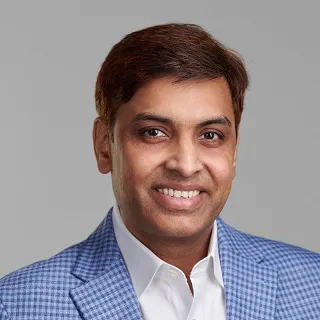
Dr. Kishore Hotha, PhD, MBA, is President of Dr. Hotha’s Life Sciences LLC and a global biotech–CDMO leader with over two decades of experience advancing CMC strategy, analytical innovation, and regulatory excellence across small and large molecules. He has authored over 100 publications and serves on multiple editorial boards shaping pharma and biotech transformation.