How Pharma 4.0 Is Revolutionizing Drug Manufacturing
Kate Williamson, Editorial Team, Pharma Focus Europe
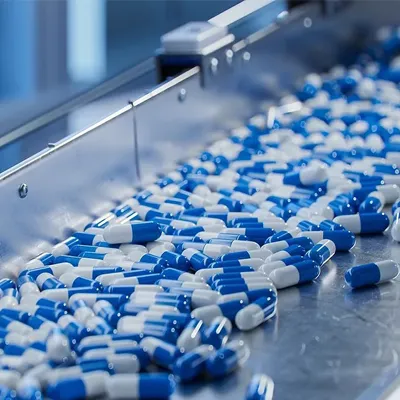
Pharma 4.0 is a digital revolution in the pharmaceutical business, which combines AI, IoT, automation, and data analytics to revolutionize drug production. It advances smarter pharmaceutical production and accelerates the process of drug development by improving efficiency, quality and compliance, which will lead to intelligent, data-driven, and patient-centric operations of pharmaceutical operations globally.
Introduction:
The pharmaceutical industry in the world is experiencing a digital transformation, rejuvenated by the advent of Pharma 4.0 - an industry phenomenon that is based on Industry 4.0. Due to the readjustment of the manufacturing industry to Industry 4.0, the automation, data interchange and intelligent ecosystem, the pharmaceutical ecosystem is similarly being reorganized with Pharma 4.0 technologies. Research and development, scale production, and supply chain management Pharma 4.0 is bringing the new wave of smart manufacturing, analytics in real time and better quality of the product.
The essence of Pharma 4.0 is a combination of cyber-physical systems, Internet of Things (IoT), Artificial Intelligence (AI), and Machine Learning (ML), and enhanced analytics to establish data-driven, interconnected manufacturing networks. The transition can make pharmaceutical manufacturers attain precision, efficiency, and compliance at unprecedented levels with the help of traditional systems. Regulatory demands change, and the patient-centric provision of medications turns out to be essential, which is why it is no longer a choice to accept Industry 4.0 pharmaceutical innovations but a strategic requirement.
Key Technologies Driving Pharma 4.0 in Drug Manufacturing
The drug production of Modern Pharma 4.0 is based on a complex of innovative digital technologies aimed to improve accuracy, traceability, and productivity. All these systems form a connected setting in which data is exchanged freely between sensors and control systems and enterprise platforms, which enables real-time decision-making.
At the centre of this change is automation. By automating Pharma manufacturing, manual procedures that are automated by intelligent robotics and automated inspection systems are done away with. This will guarantee the uniformity of the quality of products, minimize the risk of contamination, and maximize the throughput among the production lines.
In addition to automation is the digital twin, which are virtual models of physical systems that are used to simulate, optimize and predictive maintainability of the processes. Simulating the behavior of equipment in a computerized design will allow the manufacturer to predict possible failures before they happen to minimize downtime and maintenance costs.
The other pillar is the use of advanced process analytical technology (PAT), which utilizes real-time data to regulate vital quality characteristics in the production process. Together with pharmaceutical quality assurance digital platforms, PAT guarantees detecting and correcting deviations immediately, building a positive attitude towards quality.
Meanwhile, the sensors with IoT capabilities constantly record data about the process, and cloud computing helps to store and access data safely in each part of the world. Such technologies combined allow creating an agile, transparent, and compliant pharmaceutical production environment.
Benefits of Pharma 4.0: How Pharma 4.0 Improves Drug Manufacturing Efficiency
How Pharma 4.0 enhances the efficiency of drug manufacturing is a multi-dimensional question whose answer is in the affirmative. The adoption of smart technologies in the process of producing drugs provides objective gains in terms of speed, cost-efficiency, and reliability of the product.
Predictive performance optimization is one of the leading advantages of Industry 4.0 in the pharmaceutical production industry. These parameters of production can be monitored in real-time, and various adjustments to the process can be made, which leads to minimum wastage, and the final product will be of the same quality. The automation and information-driven systems also minimize the necessity in human intervention and as such, the risks of human error are minimized.
Furthermore, batch records and manufacturing data can be digitized and can be traced easily. All raw materials, processing, and quality control is registered digitally, and all the procedures are carried out in accordance with drastic regulatory provisions like 21 CFR Part 11 by FDA and EMA directives.
Synchronization of the supply chain is also efficient. The integrated data systems enable pharmaceutical manufacturers to have end to end visibility of the material flows to facilitate production planning agility and improved inventory. This does not only reduce lead times but also alleviates the problem of stockouts or excess production.
R&D to production, distribution Pharma 4.0 changes operations into intelligent ecosystems in which efficiency and quality are inseparable and result in faster time-to-market and increased patient safety.
Implementing Pharma 4.0 Technologies in Drug Development and Manufacturing
Drug development based on Pharma 4.0 technologies has to be carried out in a logical, systematic manner. A winning adoption does not just mean implementation of new tools but it also means reshaping organizational culture, modernizing of old systems and ensuring that the technology potential is matched to business interests.
An effective Pharma 4.0 digital transformation plan starts with the evaluation of the current level of digital maturity of a company. This entails finding the data management gaps, automation preparedness, and competence of workforce. When benchmarks are set, firms will be able to focus on areas where the adoption of the digital will have the most significant effect, whether this is process monitoring, quality management, or optimization of logistics.
Pharma 4.0 has been facing one of the challenges of integrating the new systems with the existing infrastructure, which was never intended to be interoperative. The new modernization of these systems can be achieved through scalable platforms such as modular automation platforms, cloud data lakes, and APIs that can intervene between traditional systems and modern systems.
Training of employees and acculturation is also crucial. Digital transformation requires new capabilities along with a change in mindset to be more data-oriented when making decisions. The IT teams, engineering, and quality teams will have to work cross-functionally to provide a single vision on Pharma 4.0 implementation.
The Role of AI, IoT, and Machine Learning in Pharma 4.0
AI and machine learning are the transformative roles in Pharma 4.0. During drug development and manufacturing, AI algorithms work with datasets that are large in scale and extract actionable insights. To illustrate, machine learning models are able to forecast yield of a reaction, formulation optimization or production line anomalies to have proactive measures in place.
Pharma 4.0 clinical trial data management digital tools are improving data collection, validation and analysis in clinical trials. Decentralized trials, wearable devices, and electronic health records can be handled using automated systems to guarantee accuracy and reduce study timelines.
IoT is crucial since it links equipment, sensors, and digital systems among facilities. Direct temperature, pressure, and humidity monitoring allow the control of the manufacturing environment to stay within the allowed range- crucial to the integrity of drugs and compliance.
Moreover, the influence of Pharma 4.0 on the biopharmaceutical formulation stability is important. The use of artificial intelligence and IoT-based predictive analytics enables scientists to model the manner in which the formulations will be functioning in various conditions, and in the process, identify the most suitable storage and handling parameters even before the production process.
These technologies, when implemented together, form a strong, connected ecosystem that will be used to improve the level of control, traceability and innovation in every stage of the pharmaceutical value chain.
Facing Stumbling Blocks in the Pharma 4.0 Implementation
Although Pharma 4.0 has a promising future, Pharma 4.0 presents organizations with a number of challenges in its implementation. The first one and the primary one is modernization of the old infrastructure. Several drug plants are still using analog equipment that is not digitally connected, and thus it becomes a challenge to integrate and automate the data. To upgrade pharma equipment of the past, manufacturers are moving towards more modular automation systems and retrofitting sensors to existing equipment, enabling these systems to be upgraded gradually in digital form without significant capital investments.
The other issue is in digital regulatory compliance. With the movement of companies towards the fully digital system as opposed to paper-based, securing data integrity, cybersecurity, and validation of automated tools are a priority. The process of working with regulatory authorities at the initial levels of adoption can contribute to the realization of the digital systems that align with changing compliance standards.
Also complexities are in data management. As massive amounts of process and quality data are produced on a daily basis, it is necessary to have solid data governance systems and cybersecurity measures. Moreover, cultural obstacle is still prevalent--workers used to working in the traditional ways might not accept the idea of automatization or they might not trust the algorithms to make the decisions. This is only to be addressed by way of good communication, training and an inspired change management inspired by the leadership.
Lastly, the issues demand a balanced focus toward technology, process, and people to break the obstacles to realize the sustainable and compliant digital transformation.
Future Trends and Training in Pharma 4.0
The trends of the future Pharma 4.0 trend leads to further integration of technologies. The manufacturing systems based on clouds, the supply chain visibility, which is supported by blockchain and sophisticated AI models are bound to transform the development, manufacturing, and delivery of pharmaceutical products.
Real-time data processing will be possible on the location of operation making edge computing more responsive and lessening latency. In the meantime, the future generation of remote monitoring and control systems within the pharmaceutical plants will be 5G connected.
Digital innovations will also have a positive effect on personalized medicine and continuous manufacturing. The use of adaptive AI systems will help companies develop highly flexible production lines that will be able to produce small and patient-specific batches in a cost-effective manner.
Pharma 4.0 training and certification programs are emerging as important in order to maintain this momentum. Organizations such as ISPE (International Society of Pharmaceutical Engineering) are providing global training models that provide the professionals with the necessary skills to handle digital ecosystems. Some of the areas trained include data integrity, smart manufacturing systems, and integration of AI, which will mean that the workforce is equipped to work in a data-intensive pharmaceutical industry.
FAQ Section
1. What is Pharma 4.0 and how does it work?
The application of Industry 4.0 principles in pharmaceutical industry describes Industry 4.0 Pharma 4.0. It uses automation, data analytics, IoT, and AI to develop intelligent, interconnected manufacturing spaces. It operates on the principles of real-time monitoring, decision-making based on data, and optimization of the processes through predictions at the drug development lifecycle.
2. How is Pharma 4.0 revolutionizing drug manufacturing?
The Pharma 4.0 is transforming the process of the drug production by increasing the efficiency of the work, quality, and compliance. Among the opportunities it has to improve productivity and cost-efficiency, there are reducing the downtimes due to automation and analytics, predictive maintenance, and removal of errors by using digital twins.
3. What technologies are included in Pharma 4.0?
The technologies of the main Pharma 4.0 are IoT, AI, machine learning, robotics, digital twins, process analytical technologies (PAT), and cloud-based data management system. All these tools lead to automation, connection and data intelligences in pharmaceutical activities.
4. How does Pharma 4.0 improve drug development timelines?
Pharma 4.0 simplifies the R&D and production process through the assistance of real-time information, the design of AI models and data analysis algorithms. This decreases experimentations in trials and drug development is cut down to a minimal period.
5. What are the challenges of implementing Pharma 4.0?
The most significant issues are the possibility to combine the modern technologies with the old systems, guarantee the compliance to all regulations, the risks of cybersecurity, and upskilling of the working staff. However, such challenges can be addressed in the course of strategic planning and phased implementation.
Conclusion
Pharma 4.0 is not a technological improvement - it is a paradigm shift of the operation of the pharmaceutical industry. The Pharma 4.0 technologies are likely to transform each step of the value chain, including the discovery and delivery. With the adoption of automation, data intelligence, and interconnected systems, pharmaceutical firms will be able to deliver unparalleled efficiency, quality and innovation. Digital maturity is the future of Industry 4.0 pharmaceutical production - and the organizations that are ready to change the fastest will outline the next chapter of healthcare progress in the world.
.webp)
Kate, Editorial Team at Pharma Focus Europe, leverages her extensive background in pharmaceutical communication to craft insightful and accessible content. With a passion for translating complex pharmaceutical concepts, Kate contributes to the team's mission of delivering up-to-date and impactful information to the global Pharmaceutical community.