Multi-Omics Integration: Accelerating Precision Drug Development
Lakshmi, Editorial Team, Pharma Focus Europe
Roughly nine in ten clinical programmes fail, most often because the target was wrong. Multi-omics integration attacks that failure directly, asking whether independent molecular layers converge on the same causal story. This article examines what integration genuinely buys, the structural advantage Europe's data infrastructure confers on pharmaceutical developers, the statistical traps that quietly consume budgets, and the distance still separating a discovery signal from regulatory evidence.
Introduction:
Failure, Not Discovery, Is What Drug Development Actually Costs
The economics of pharmaceutical R&D are dominated by a single line item that never appears on a balance sheet: the programmes that did not work. Only about one clinical programme in ten reaches approval, and the cost of the nine that do not is carried entirely by the one that does. Decades of process improvement have compressed cycle times and trimmed trial costs without meaningfully shifting that ratio.
The reason is uncomfortably specific. A large share of late-stage attrition traces back to a decision taken years earlier, at the point where a target was selected. If the molecular hypothesis is wrong, no amount of operational excellence downstream will rescue the programme; it will simply make the failure arrive more efficiently.
This is what makes causal molecular evidence commercially interesting rather than merely scientifically interesting. Analysis of drug mechanisms carrying human genetic support puts their probability of clinical success at roughly 2.6 times that of mechanisms without it. The detail worth reading twice is what does not drive that advantage: the effect is largely unaffected by genetic effect size, allele frequency or when the association was discovered, but it improves with confidence in the causal gene. Certainty about causation, not statistical drama, is what buys the improved odds.
What Integration Actually Buys: Convergence, Not Volume
Multi-omics is frequently sold as more data. That framing is wrong, and it leads organisations to buy assays when they should be buying method. A single omics layer answers a narrow question: does this one form of evidence, genetic variation or transcript abundance or protein level, point toward a disease-relevant gene? Integration asks a different and far more valuable question: do several independent layers agree? Convergence across independent evidence types is a stronger signal than any one layer can produce on its own.
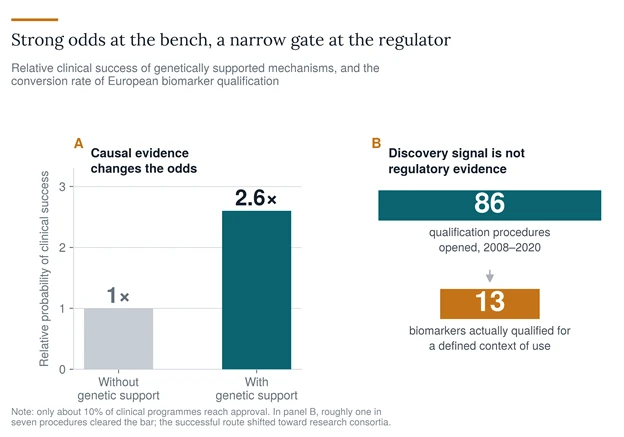
Figure 1. Relative clinical success of genetically supported mechanisms, and the European qualification conversion rate
Delivering that convergence is a genuine statistical problem rather than a plumbing exercise. Each data type carries its own scale, noise structure and pattern of missingness, so naive concatenation of datasets degrades rather than improves inference. The field has accordingly moved toward purpose-built frameworks designed for heterogeneous, multi-layer biological data, combined with causal methods such as Mendelian randomisation and molecular quantitative trait locus colocalisation.
The payoff is measurable. One large analysis combining variant annotation, activity-by-contact mapping, Mendelian randomisation and colocalisation across more than 4,600 disease association studies found that genes prioritised through integrated multi-omics were enriched for targets that went on to succeed in clinical trials. At the other end of the pipeline, pan-cancer proteogenomic analysis spanning over a thousand tumour samples has identified thousands of candidate druggable proteins. Read commercially, integration is best understood as a portfolio triage instrument: its function is to kill weak hypotheses early and cheaply.
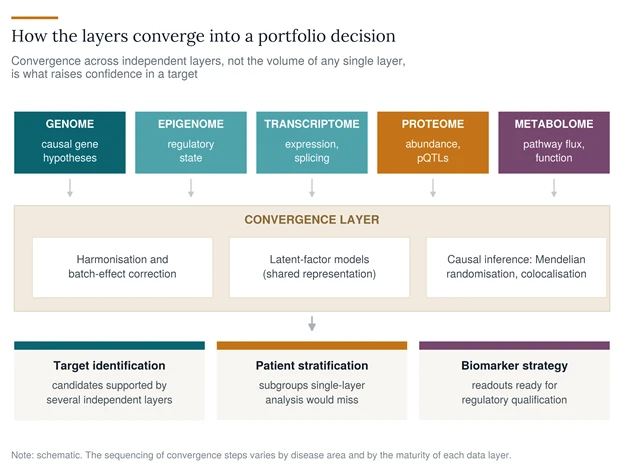
Figure 2. Schematic of the convergence architecture, from measurement layers to portfolio decisions.
Europe's Advantage Is Structural, Not Algorithmic
Integration methods are published, benchmarked and increasingly commoditised; any competent computational group can implement them within a quarter. Deeply phenotyped population cohorts cannot be replicated on that timescale at any price, and this is where the European position is genuinely distinctive.
The scale is already substantial. A precompetitive consortium of biopharmaceutical companies funded plasma proteomic profiling across a major European population cohort, and the pilot phase alone measured close to 3,000 circulating proteins in more than 54,000 participants. Comprehensive protein quantitative trait locus mapping across 2,923 proteins yielded 14,287 primary genetic associations, of which roughly 85 per cent had not previously been described, alongside ancestry-specific mapping in non-European participants. The programme is now expanding toward more than 5,400 proteins across as many as 600,000 samples, with staggered data releases beginning in 2026 and the full resource expected the following year.
The governance detail is as strategically important as the science. Consortium members receive a defined window of exclusive access before the data reach the wider research community. That window is a priceable asset, and the precompetitive consortium is the mechanism through which mid-sized companies obtain cohort-scale evidence they could never generate alone.
Around this sits a regulatory scaffold arriving on a published schedule. The European Health Data Space regulation entered into force in March 2025 and began applying, in stages, from March 2026, establishing a lawful route for secondary use of health data across member states. In parallel, European regulators adopted a real-world data quality chapter in March 2026, developed with the heads of national agencies and the initiative preparing the ground for the Health Data Space. For pharmaceutical planners, the practical consequence is that data access, historically the least predictable input in a precision-medicine programme, now has dates attached to it.
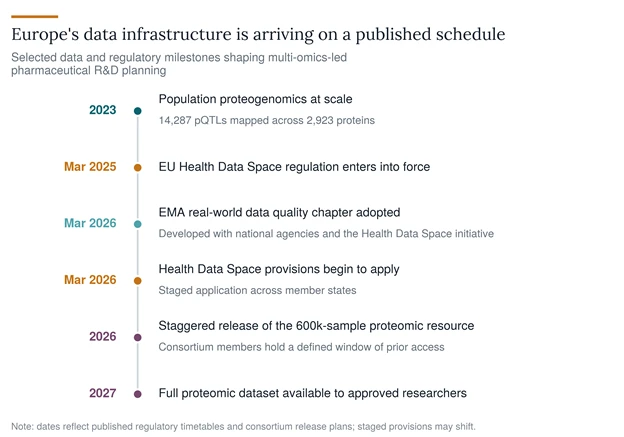
Figure 3. Selected European data and regulatory milestones shaping multi-omics R&D planning.
Case Study: Four Layers, Two Hundred Patients, One Useful Axis
A widely cited demonstration of what integration adds involves a cohort far smaller than any population biobank. An unsupervised latent-factor framework was applied to roughly 200 patient samples in chronic lymphocytic leukaemia, spanning four distinct data modalities. The model recovered latent factors that included a clinically meaningful patient-subgroup axis, and that axis outperformed single-layer analysis at predicting time to treatment.
Two hundred patients. Four layers. A stratification variable of direct clinical consequence. The gain did not come from sample count, sequencing depth or computational scale; it came from a statistical framework capable of finding structure shared across modalities that no individual modality expressed clearly.
For R&D leadership the implication is a budget conversation rather than a scientific one. Organisations routinely fund additional assay volume while under-funding harmonisation, method development and the statistical expertise that turns heterogeneous measurements into a defensible latent structure. The case also shows where integration pays inside the clinic rather than before it: the same framework that finds a subgroup retrospectively is what allows a sponsor to enter a trial with a pre-specified stratification hypothesis instead of retrofitting one after a disappointing primary readout.
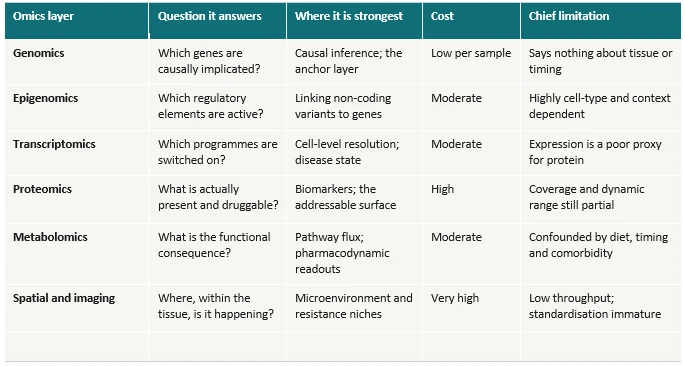
Table 1. What each layer contributes, and what it cannot be asked to do
Where the Budget Leaks: Batch Effects, Sparsity and Unfalsifiable Models
Three failure modes account for most of the money wasted in integrated omics programmes, and none of them is exotic. The first is technical variation unrelated to the biological question. Batch effects remain a documented and only partially solved problem across large multi-omics consortia, and they are perfectly capable of generating a latent factor that looks like biology and is in fact a record of which week a sample was processed.
The second is sparsity. Real cohorts are missing layers for many participants, and missingness is rarely random; it tracks recruitment site, sample quality and clinical severity. Models that quietly impute their way past this inherit a bias they cannot report.
The third is interpretability. Deep architectures that map modality-specific encoders into a shared latent bottleneck are powerful precisely because they are unconstrained, which also makes their outputs difficult to interrogate. A model can nominate a beautifully supported protein that is undruggable by any known chemistry, or a target whose modulation is clinically unacceptable. Assessing the chemical and clinical feasibility of predicted targets is not a downstream formality; it belongs in the evaluation framework from the outset. The governance answer is unglamorous and effective: specify the evaluation criteria before the analysis, and require every prioritised target to carry a falsification experiment that could plausibly kill it.
The Distance Between a Discovery Signal and Regulatory Evidence
Organisations consistently underestimate how far a molecular signal sits from an accepted regulatory instrument. The European qualification route for novel methodologies offers a sobering calibration: of 86 biomarker qualification procedures opened between 2008 and 2020, 13 resulted in a qualified biomarker. Roughly one in seven cleared the bar.
The pattern within those procedures is instructive. Early submissions were typically tied to a single company and a single development programme; over time the successful route shifted toward consortium-led efforts. This mirrors the precompetitive logic seen in cohort generation, and for the same underlying reason. A biomarker qualified for a defined context of use is closer to shared infrastructure than to proprietary advantage, and the evidentiary burden is usually beyond what one sponsor will rationally fund alone.
The operational conclusion for a European portfolio is to separate two decisions that are often conflated. Using an integrated molecular signature internally, to triage targets or select a trial population, requires only internal conviction and can move at the speed of the science. Using it as a regulatory instrument requires a defined context of use, early engagement and, on the evidence, a consortium. Programmes that discover this distinction late tend to discover it during a scientific advice meeting, which is the most expensive possible moment.
Conclusion: The Constraint Has Moved from Measurement to Judgement
For two decades the limiting factor in molecular medicine was the ability to measure. That constraint has effectively lifted. Genomes, proteomes, transcriptomes and metabolomes can now be generated at a scale and cost that would have seemed implausible a decade ago, and the algorithms for fusing them are converging on a shared public toolkit.
What has not been commoditised is judgement: knowing which layers to combine for a given disease, which convergent signals are causal rather than correlated, when a latent factor is biology and when it is a batch record, and when an internally persuasive signature is nowhere near ready to carry regulatory weight. Those are organisational capabilities built over years, not procured in a single financial cycle.
Europe enters this period with an unusual combination of deeply phenotyped cohorts, a precompetitive collaboration culture and a legal framework for secondary data use that is arriving on a known timetable. The pharmaceutical companies that convert that position into approvals will not be the ones that generated the most data. They will be the ones that decided earliest which questions were worth asking of it.

Lakshmi is a science writer with a foundation in the laboratory. She earned her master's in biotechnology and trained through research internships at ICGEB (JNU) and DIPAS, DRDO, with her work appearing in the Egyptian Journal of Veterinary Sciences. Now APCRM-certified and part of the editorial team at Pharma Focus America and Pharma Focus Europe, she reports on pharmaceutical technology, research, and innovation — giving complex science a clear and confident voice for industry leaders.