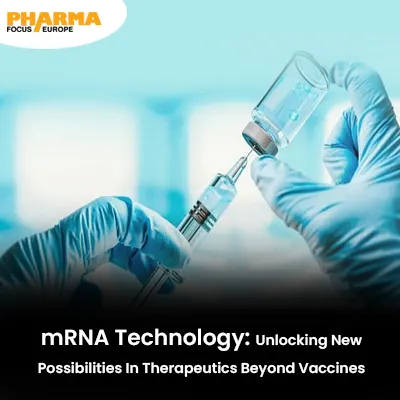
mRNA Technology: Unlocking New Possibilities In Therapeutics Beyond Vaccines
Kate Williamson, Editorial Team, Pharma Focus Europe
mRNA technology changes mankind in vaccine development and expands to cancer, genetic disorders, rare diseases, regenerative medicine. Its possibilities are in cardiology, autoimmunity, and individualized treatment. Issues such as delivery and stability are being addressed, making it possible for a revolution in health care that will address various health problems through invention of specific therapies.
Introduction:
In the last few years, the mRNA has emerged as a discovery of the century in what concerns biotechnology and medicine. Although it has emerged on the global level during the search for COVID-19 vaccines, it is used in many other ways. Scientists and big pharmacy companies are now investigating virtually all possible uses of mRNA, from highly targeted treatments to diseases that had no cure before. This article explores an mRNA revolution or how dynamics of mRNA technology is revolutionizing drug development.
What is mRNA Technology?
mRNA stands for messenger RNA which is a kind of RNA transported coded information from DNA molecules to a protein synthesis factory called the ribosome. This process allows cells to make proteins needed for multiple tasks in the body to occur. This is because through use of synthetic mRNA; the cells of the body are compelled to manufacture the required proteins, thereby making the human body its own pharmaceutical factory. mRNA science is thus the process of designing and delivering these genetic messages safely, effectively and selectively into the target site. There are so many medical problems that technology can effectively solve because of its versatility and adaptability.
The Role of mRNA in COVID-19 Vaccines
Pfizer-BioNTech together with Moderna develop some of the widely used mRNA COVID-19 vaccines that demonstrated the effectiveness of this approach as well as its capability to be scaled up. Unlike most of the vaccines that work by using inactivated virus or bacterial components, these vaccines use messenger RNA to inform the human body about the virus thereby creating an immune response to the live virus. This discovery has opened the possibility for further research of mRNA in non-emerging viral infections or infective ailment zones.
Cancer Treatment and mRNA Technology
One of the most thriving areas of using mRNA technology is in the fight against cancer.
Using serum, mRNA can build cancer vaccines, which can make the CG recognize the tumor cells and start to attack them. The vaccines are individual for every patient, as they inject antigens that correspond to a patient’s tumor type. For example, BioNTech and Modern, two developers, working on developing mRNA-based cancer vaccines for melanoma, colorectal, and non-small cell lung cancer. Small scale clinical trials, in fact, have revealed positive tendencies such as the number of tumors regressing and some patients entering into remission.
Addressing Genetic Disorders
Some diseases are caused by the lack of vital proteins in the body, or if the proteins do not function properly mRNA technology comes in with a solution, it directs the manufacture of these essential proteins. Mobile applications involve cystic fibrosis where mRNA can be utilized to synthesize functional CFTR proteins and hemophilia whereby mRNA helps synthesize clotting factors to prevent bleeding.
mRNA for Rare Diseases
Most rare diseases cannot be treated due to historical limitations on modifying genetic mutations that define these diseases; mRNA provides the opportunity to deliver new genetic code to replace/lessen disease-causing mutations. For example, CureRareDisease has been established to dedicate to the development of m RNA-based therapeutics for Duchenne muscular dystrophy patients. Research on mRNA is ongoing to evaluate it as a solution to diseases that include, but are not limited to sickle cell anemia as well as Tay-Sachs.
Applications in Cardiovascular Health
Cardiovascular diseases are still amongst the leading causes of death globally and mRNA technology is now being applied to the creation of tissues for heart repair. Its mRNA contains regenerative factors that scientists believe can enhance the healing of affected tissues and thus strengthen the function of the heart after a myocardial infarction. Some examples are AstraZeneca partnering with Moderna to produce mRNA therapies for ischemic heart disease.
Potential in Autoimmune Diseases
mRNA technology is also under consideration for the cure of autoimmune diseases. It now has broad potential application in multiple diseases, as mRNA therapies can alter immune responses to prevent the immune system from attacking healthy cells while reducing inflammation.
Regenerative Medicine and Tissue Repair
Since mRNA has the potential to tell cells what to produce, new options appear on the horizon of regenerative medicine. Applications are for speeding up the process of wound healing other than other complex treatment protocols for illnesses such as osteo arthritis and neurological conditions.
Challenges in mRNA Therapeutics
Conversely, mRNA technology has numerous limitations having a negative influence on its benefit despite the potential it has. Another major challenge has been the delivery of mRNA to target cells without degradation is also a challenging part. Similar to lipid nanoparticles (LNPs), promising results have been obtained, but more optimization is required. Furthermore, the tested mRNA molecules are intrinsically unstable and easily degradable, which necessitates enhanced knowledge of stabilizers. An undesirable immune response may cause inflammation or reduced effect, and the issue of producing large quantities of mRNA therapies and keeping the costs down is another problem at the moment.
The Future of mRNA Technology
The future of mRNA technology is very promising although there are very active researches that being undertaken to address these difficulties. There is also the gist that new delivery systems including exosome and polymer based nanoparticles will enhance the targeting and effectiveness of mRNA based drugs. Further, with the help of modern tools rooted in bioinformatics and AI, it is convenient to design specific mRNA sequences to focus on certain uses.
Conclusion:
mRNA technology that had previously revolutionized vaccine production is now ready to impact therapeutics in many fields. This new technology can be described as unique, quickly implemented, and customizable – making it an essential component in contemporary healthcare. While science remains busy solving known problems, the potential of mRNA technology is yet to be discovered; it could be a ray of light to millions of people all over the world. We can state that the development of mRNA technology is only starting and its role in the healthcare field will continue to grow, as the generation of new innovative therapies begins.
.webp)
Kate, Editorial Team at Pharma Focus Europe, leverages her extensive background in pharmaceutical communication to craft insightful and accessible content. With a passion for translating complex pharmaceutical concepts, Kate contributes to the team's mission of delivering up-to-date and impactful information to the global Pharmaceutical community.