Maximizing ROI: The Secret to Successful Pharma Magazine Advertising
Kate Williamson, Editorial Team, Pharma Focus Europe
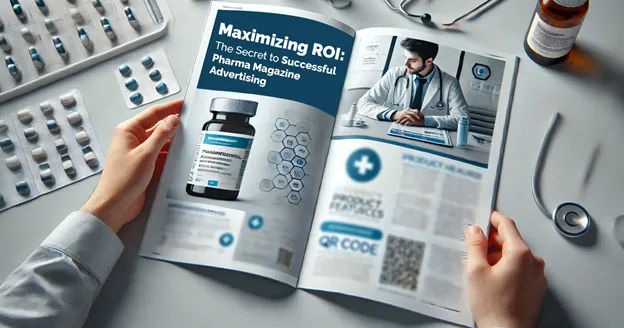
Print media particularly magazines continue to offer a valuable way of reaching a well-inspected, informed audience mostly within the pharma sector. Ultimately, through identifying the audience, telling great stories, applying effective visual design, linking campaign types of both print and online, and employing the big data approach, businesses can achieve the maximum of their return on investment (ROI). Strategic planning leads to excellent and complaint ad campaigns that are most effective and inventive.
Introduction:
Advertisement through pharma magazines has for a long time remained common in most marketing strategies for pharma industries. It’s been around and it provides the best chance to engage with pharma professional, other industry players and even a well-informed populace. However, more especially given that the modern world is a digital realm, there are always issues pertaining to the effectiveness of such advertising media. As with most traditional media ads does pharma magazine advertising still play a role? In what ways can organizations make sure that the investment made in this area reaches desired return on investment (ROI)? The answers reside in the underlying factors that characterize this platform and the constructive approaches to how such specific context may be employed most efficiently and optimally.
Pharma magazines are niche publications that specifically focus a particular segment or demography. Here again, specificity is a wonderful thing a researcher in this area can come across an article or a book written with such focus that he/she may have increased ease and scope of research, while at the same time, there will be much to cover and analyze. In one way, it guarantees that your advertising pounds, dollars, or euros go to those people who will actually want and need to know about what you have to say. But it requires the accurate communication and design and location of the adverting message to get the attention of the reader despite the numerous advertisements and articles around. The question that lingers in the minds of marketers is: that is a very good question if you may ask how do you maintain that delicate balance?
| Also Read: 10 Essential Factors for Selecting a Pharma Publisher in Europe |
Understanding Your Audience
For any kind of ad placements, some important consideration that need to be made are knowing your audience. Doctors and researchers, pharma managers and policymakers may be among the common readers of the Pharma magazine. They are smart, knowledgeable and have zero tolerance for cliché or fuzzy concepts. They require your advertisement to recognize their intelligence which should be accompanied by the provision of straightforward and persuasive information. Think of the moral of a working doctor reading a magazine at work and turning to the comic strip section to find meaning. What would make them pause? What would make them continue to read more of what was written? This understanding therefore, provides the foundation of how one gets to create advertisements that will be appreciated.
Crafting a Captivating Narrative
It is beneficial in creating the right message in pharma magazine advertising just like in most of the other forms of marketing. People tend to focus on the stories they perceive as representation of themselves, their struggles and dreams.
For example, a firm that sells a revolutionary drug may feature a patient with the product, and demonstrate the significant improvement that the product has brought in the patient’s life. At this age, people tend to focus on stories rather than specific products, it therefore makes the product more personal. An emotionally profiled story is so rare in a market filled with technicality and clinical trends in advertising that it is sure to get readers’ attention to your ad.
The Role of Design and Visual Appeal
Layout is one of the major decision that influences the effectiveness of your pharma magazine advertisement. It takes approximately 30 seconds to have the audience register and potentially memorize everything that was presented to them visually, had a choice of images, colors, layout and font. There is always the added advantage of including high-quality relevant visuals which supplements the message being passed more. Do not overcrowd your layout so that you produce work which is hard for the reader to sort through. Do not use cluttered layouts that are unprofessional and draw the viewer’s eye all around the advertisement without focus on its individual components.
Besides visuals, typography matters. Always settle for typefaces that appear professional and still allows people to read and comprehend a text. Use levels of fonts to highlight sections which relate crucial information on the subject by making the text more prominent. The aim should therefore be to have a perfect blend in which all the chosen designs do not dwarf the message being passed. It is also very easy to design a bad ad that turns readers off while even the best story will not work if the ad design pushes readers away.
Data-Driven Decisions
Measurement and deployment of ROI in pharma magazine advertising involve the use of data more than anything else. Find out the specific types of publications that give you better outcome, and redirect your submission. Think about the readership targets, and number of outlets, and the amount and frequency of readers’ interactions. Always seek to engage with audiences directly so as to justify the relationship between your target audience and their publishers.
Also, incorporate other tracking techniques including a specific link, a code, or a specific telephone number in your advertisement. These tools enable the determination of direct responses from the campaign, and is therefore more efficient in assessing the campaign’s effectiveness. With time, these concepts help you optimize your strategies: you invest into the approaches and issues that bring the most people to your publications.
Integrating Print and Digital Campaigns
The modern globalized environment does not allow for a situation where the ad can be implemented in isolation from the rest of the process. In the best-run campaigns, there is blurring of techniques used in both print and electronic media giving the target audience consistent message. Print media magazine advertisement can serve as a portal, where readers are directed to other interconnective media devices where they can have more intimate interaction with your pharmaceutical brand. For example, an ad can lead consumers to another page of the website crowning more information, client’s experiences, or information about the product. Not only does this increase the overall interaction level but you also obtain analytics that will allow you to determine the ROI.
Timing and Placement
Another area that can be booked marked for high ROI is timing. More often, focusing on the advertisements linked to the industry events or representing a potential threat during certain seasons, or with newly launched products, can lead to even higher engagement. For example, an advert promoting flu vaccine that is aired during this season, which is the flu season will attract a lot of response than at any other time of the year.
In the same way, the placement of the ads puts the final cap on how effective they are with the chosen magazine being a good example. Tags like inside front cover, back cover or near to selected top circulated editorial articles will cost more but gain better circulation. Reflect on the possibility to get a higher ROI, and then decide whether the higher cost of an experimental strategy is justified or not.
Balancing Costs and Returns
There is no doubt that magazine advertising is a substantial cost category in pharma, and maximizing the cost’s value is a crucial strategic decision. Decision elements may include considering places that are less conspicuous or running fewer insertions; these are often counterproductive because they reduce the impact of the advert. If your advertising is going to the masses, your message is going to get lost in the mix, so the goal instead is to make sure your ads or articles are placed in superior publications and that they are produced as well as they can be. The exposure and the effect of ads show that it is far more effective to be in front of fewer people more often than many people every now and then.
Moreover, consider the lifetime value of a single engagement. Thus pharmaceuticals can benefit enormously, not only from the immediate response initiated by one successful ad but from extended cooperation with pharma providers or pharma institutions in the future. When assessing the cost effectiveness of the measures do not only look at the tangible savings, but also focus on the impact of a particular measure on brand awareness, credibility and consumer loyalty.
Staying Compliant
The legal requirements within the production and sales of medicine are strict and any deviation can lead to penalties, market reputations and ultimately consumer reliability would be at risk. Have special reference to some rules and regulation in your adverts, such as the representation of the benefits and risks of the commodities you are advertising. Creative editing to either exaggerate or reduce returns, or omitting important information, can not only hurt your ROI but also the law. Consult the legal and regulatory departments before releasing your ads in order to guarantee their obscures, accuracy and compliance.
Leveraging Feedback and Adjusting Strategies
Pharma magazine advertising should never be an activity of constantly sticking to the same tactic. Collect data on the readers and the publishers to help you evaluate your campaigns as well as speak to your sales team periodically. Do your ad messages target the audience reading your content? Is it to drive inquiries or conversions? You can then decide on what adjustments need to be made in terms of message delivery, images or choice of publication.
Also continue to listen to what is new and trendy in the industry. The pharmaceutical industry is dynamic and understanding these changes early enhances the advertising front of the business. For instance, with the advancement of augmented reality (AR) and virtual reality (VR) grasp incorporating some of the aspects can make your adverts more creative and engaging.
The Future of Pharma Magazine Advertising
This research identifies that as the media environment grows, the nature of pharma magazine advertising may differ. But its strength that makes it different from other media – reaching a specific, informed group of customers – will remain. When flexibility, evidence, and the target audience are applied, the pharmaceutical industry can keep receiving high ROI through this reliable channel.
Overall, it is important for pharma magazines to understand that managing the ROI in magazine advertising is fine art of marketing executed by the creative minds that involves strategic planning and analysis of marketing factors.
It is about knowing your audience, telling good stories, using numbers, and coordinating your print and digital media. If executed correctly, pharma magazine advertising can not only secure tangible production values but also broaden your company’s image in spite of the competition. The issue is not about the fact that this medium is still viable, the issue is about the fact that are you getting the most out this particular means of communication.
.webp)
Kate, Editorial Team at Pharma Focus Europe, leverages her extensive background in pharmaceutical communication to craft insightful and accessible content. With a passion for translating complex pharmaceutical concepts, Kate contributes to the team's mission of delivering up-to-date and impactful information to the global Pharmaceutical community.