How Quantum Computing Is Transforming Drug Discovery
Kate Williamson, Editorial Team, Pharma Focus Europe
The development of pharmaceuticals gets revolutionized through quantum computing because it permits expedited molecule simulations and exact drug development. Research teams using new quantum algorithm tools in drug discovery activities can now perform rapid preclinical work as they enhance quantum computation capabilities for protein structures plus decrease overall drug development time. This article details how quantum technology affects research and development in the biopharmaceutical industry

Introduction:
The current medical setting sees technology lead drug development towards faster speeds. Quantum computing in drug discovery belongs to an exclusive group of technological advances that drives revolutionary change in science. The advanced computational model called quantum computing drives innovation in drug discovery as well as drug testing and pharmaceutical market release. Scientists and experts need to understand how this quantum computing method impacts pharmaceuticals through drug discovery processes.
The Role of Quantum Computing in Drug Discovery
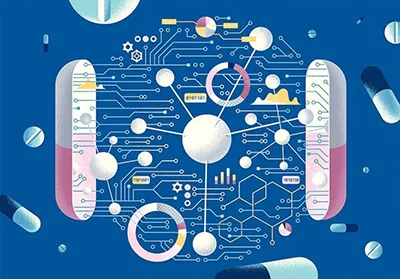
Traditional approaches to drug discovery depend intensely on classical computing since the technology has demonstrated insufficient ability to replicate intricate molecular interactions. Collaborative modeling and quantum analysis of molecules demands an extraordinary quantity of computational power, due to which this process remains difficult both in terms of time and financial costs. Quantum computing for pharmaceuticals serves as the necessary technology at this point. Quantum mechanics principles enable quantum algorithms in drug discovery to analyze enormous datasets quickly, thus cutting down research periods significantly.
Quantum Chemistry for Pharmaceuticals
Quantum computing offers its most significant pharmaceutical opportunity through its implementation in quantum chemical modeling for therapeutic development. Traditional chemical modeling methods show limited capability to determine molecular interactions because quantum states remain extremely complex. Quantum algorithms functioning within drug discovery help scientists make better predictions of molecular interactions that consequently speed up potential drug candidate identifications.
| Classical Computing | Quantum Computing |
| Limited processing power for molecular simulations | Performs highly accurate molecular simulations |
| It takes years to identify viable drug candidates | Accelerates drug discovery timelines |
| Approximate solutions for protein folding | Quantum computing for protein folding provides precise folding structures |
Applications of Quantum Computing in Medicine
Quantum computing applications in medicine include many functions that go beyond drug discovery. The pharmaceutical research sector, together with personalized medicine optimization, relies on quantum enhancements for molecular modeling and quantum computing operations.
Scientists apply quantum computing technology to pharmaceutical drug development by processing enormous genetic and protein databases, which leads to finding precise disease treatment markers.
The Future of Drug Development with Quantum Computing
The deepest benefits of drug development through quantum computing belong to its ability to transform every stage of pharmaceutical creation. Drug development spans more than ten years because billions of dollars need spending on multiple research phases and trials.
The development of quantum computing technologies creates dramatic changes to drug development schedules through advanced molecular experiment capabilities, shortened preclinical examination periods, and better medication effectiveness tests.
Quantum Computing for Protein Folding
Protein misfolding serves as a fundamental factor that causes the onset of Alzheimer's disease along with Parkinson’s disease. Protein folding science requires understanding for designing successful therapeutic medications. Through quantum computing, research provides precise patterns for protein folding, which helps scientists create treatment strategies that prevent protein folding disorders.
The Benefits of Quantum Computing in Pharmaceutical Innovation
The pharmaceutical and biotech sectors will not function without quantum computing technologies. Below are some key benefits:
- Accelerated Drug Discovery: By using quantum computing in preclinical drug checks, scientists can detect promising drugs at a speed much quicker than conventional approaches.
- Cost Reduction: The employment of quantum computing allows scientists to minimize their research spending by cutting down on trial-and-error processes in molecular modeling experiments.
- Enhanced Accuracy: Molecular modeling performed by quantum enhancement technologies provides pharmaceutical researchers with precise drug interaction predictions within their research.
- Personalized Medicine There are two parts when tailoring individual treatments. First, quantum-powered algorithms help analyze protein structures and genetic information of patients.
The Role of Quantum Computing in Pharmaceutical Research
The pharmaceutical industry demonstrates a rapid pace of growth for the implementation of quantum computing technology. Pharma companies unite with quantum technology firms for the development of customized quantum computing applications intended for pharmaceutical drug discovery processes. The expected outcomes from collaborations will transform the development process by diminishing lab practice expenses through enhanced in-silico assessment methods.
Challenges and Future Prospects
The attractive potential of quantum computing for pharmaceutical molecular modeling work continues to face many obstacles. Quantum computers remain new technology because they possess restricted qubits and ongoing error correction problems.
The quick innovations in drug discovery hardware alongside quantum algorithms lead to the development of widespread and commercialized solutions.
Real-World Impact: Quantum Computing in Action
The pharmaceutical industry sees major investment from IBM and Google as well as Rigetti Computing for their quantum computing efforts. Roche Pharmaceutical, led by its exploration of quantum computing in drug discovery, has aimed to optimize their research development with ProteinQure, a startup that uses quantum computing for protein folding research to discover new generation drugs.
The advances in drug development because of quantum computing create important breakthroughs that transform medical research. The future of healthcare development depends heavily on the advancements of quantum computing for pharmaceuticals due to its exceptional computational capabilities. The world anticipates future breakthroughs from quantum technology because this technology has only just started its development.
FAQs
What is Quantum Computing in Drug Discovery?
The application of quantum mechanics computational power for solving difficult drug design and molecular simulation problems and biomedical research tasks constitutes quantum computing in drug discovery. The technology produces exact drug interaction forecasts that lead to quicker and cheaper medical drug development processes.
Will Quantum Computing Transform Biopharma R&D?
Absolutely! Quantum computing technology will transform pharmaceutical drug discovery processes by improving its capabilities in this field. Novel discoveries in medicine can be done more efficiently through quantum computing along with preclinical drug study acceleration which offers transformative changes to medical research identification and drug development methods.
Why is Quantum Computing Important for Drug Discovery?
Medical drug development relies on quantum computation to execute accurate molecular simulations because old-fashioned computers struggle to complete these operations successfully. The efficiency of pharmaceutical research molecular modeling receives substantial improvement through quantum-enhanced approaches, because of which drug development timelines shorten while simultaneous accuracy in drug candidate selection becomes more precise.
How long until Quantum Computing is Fully Integrated into Pharmaceuticals?
The technological integration itself lies several years ahead, but substantial advancements already occur. The advancement of quantum computing applications for pharmaceutical drug discovery shows promise because companies and researchers remain engaged in this field, which will result in real-world implementation during the following decade.
.webp)
Kate, Editorial Team at Pharma Focus Europe, leverages her extensive background in pharmaceutical communication to craft insightful and accessible content. With a passion for translating complex pharmaceutical concepts, Kate contributes to the team's mission of delivering up-to-date and impactful information to the global Pharmaceutical community.