

Future-Proofing Pharmaceutical R&D Through Digital Innovation
Lakshmi, Editorial Team, Pharma Focus Europe
Europe is investing more in pharmaceutical R&D than ever before, yet its share of global clinical trials and new medicines continues to shrink. This article argues that digital innovation has become a board-level strategic lever rather than an IT upgrade. It examines where digital tools reduce attrition and cycle times, how new EU rules on health data and artificial intelligence reshape the field, and what a landmark data-enabled trial teaches executives about building R&D that endures.
Every pharmaceutical leader in Europe knows the arithmetic of discovery: more than a decade of work, billions in capital and a probability of success that would deter investors in almost any other industry. What has changed is the competitive context. Scientific capability is no longer concentrated in a handful of established hubs, capital is moving faster, and the cost of standing still has never been higher.
Against this backdrop, digital innovation is often discussed in terms of tools: a new analytics platform, an AI pilot, an electronic data capture upgrade. That framing undersells the opportunity and misdiagnoses the risk. The organisations that will lead the next decade are not those that buy the most software, but those that redesign how evidence is generated, connected and reused across the entire R&D lifecycle.
For European C-suite executives, the question is therefore not whether to digitise pharmaceutical R&D, but how to do so in a way that compounds value year after year, survives regulatory change and turns Europe's distinctive strengths, including its public health systems, research institutions and emerging data infrastructure, into a durable competitive advantage.
The €60 Billion Paradox: Record Pharmaceutical R&D Spend, Shrinking Global Influence
On the surface, European pharmaceutical R&D has never looked healthier. Industry figures show annual R&D expenditure in Europe rising from about €17.8 billion in 2000 to €56.3 billion in 2024, with an estimated €60 billion invested in 2025. Few sectors on the continent can match that commitment.
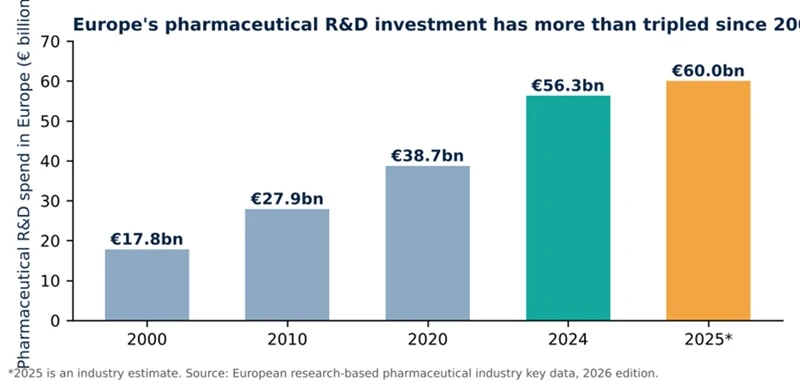
Figure 1: Pharmaceutical R&D expenditure in Europe, 2000–2025
Yet the output picture tells a more uncomfortable story. Of the 104 new active substances launched worldwide in 2025, only 16 originated from European-headquartered companies, compared with 28 from the United States and 46 from China and Hong Kong. At the same time, Europe's share of global commercial clinical trials fell from 22% in 2013 to 12% in 2023.
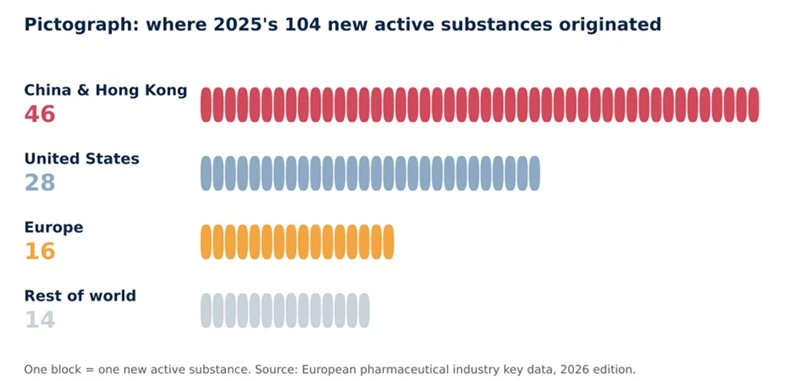
Figure 2: Origin of new active substances launched worldwide in 2025
The lesson for boards is clear. Money alone is not buying leadership. Competitors are winning on speed, scale of patient access and the efficiency with which they convert data into decisions. These are precisely the dimensions where digital capability makes the decisive difference.
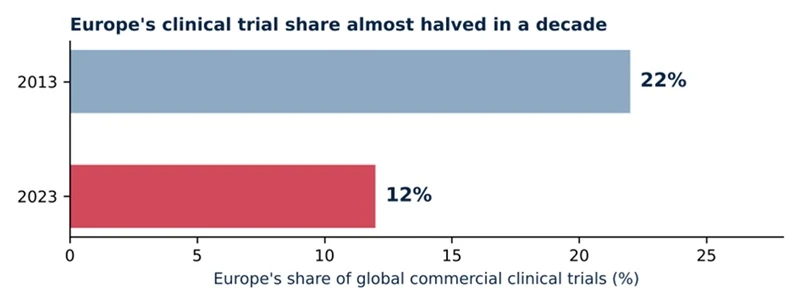
Figure 3: Europe's share of global commercial clinical trials, 2013 vs 2023
Bending the Attrition Curve: Where Digital R&D Delivers Measurable Value
The single largest drain on pharmaceutical R&D productivity is late failure. A decade-long analysis of 9,704 clinical development programmes found that only 7.9% of candidates entering Phase I between 2011 and 2020 went on to approval. Phase II remained the steepest hurdle, with just 28.9% of candidates progressing, and the average journey from Phase I to approval took 10.5 years.
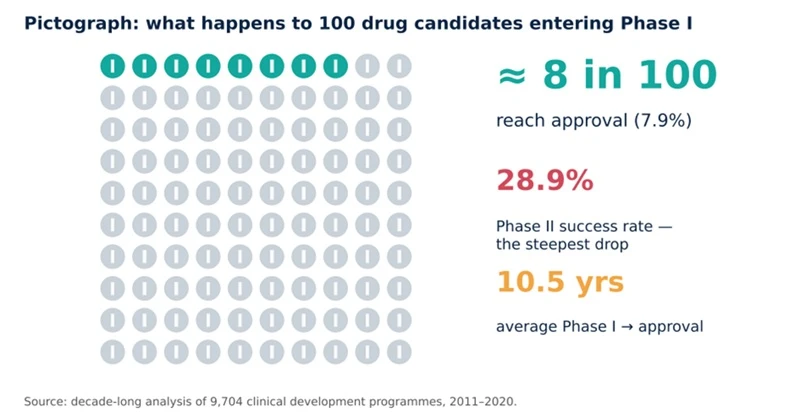
Figure 4: Pictograph of clinical attrition from Phase I to approval
The same analysis contains a signal every executive should note: programmes that used biomarkers to preselect patients achieved a likelihood of approval of 15.9%, roughly double the average. Better patient selection is, at its core, a data problem. It depends on integrating genomic, clinical and real-world information, and on analytical models capable of finding the patients most likely to respond.
This is where digital R&D earns its place on the board agenda. Computational screening and machine learning can prioritise targets with stronger human genetic validation before significant capital is committed. Predictive toxicology models can flag liabilities earlier. Digital biomarkers captured through connected devices can provide more sensitive, continuous endpoints than periodic clinic visits. Each of these capabilities attacks attrition at its source rather than accepting it as an unavoidable cost of doing business.
From Data Exhaust to Strategic Asset: Building the Digital Spine of Pharmaceutical R&D
Most pharmaceutical organisations already generate vast quantities of data. The problem is that much of it is treated as exhaust: captured for a single study, stored in a format tied to one system and rarely reused. Future-proofing requires a fundamentally different architecture, one in which data flows along a single governed spine from target identification through to post-approval evidence.
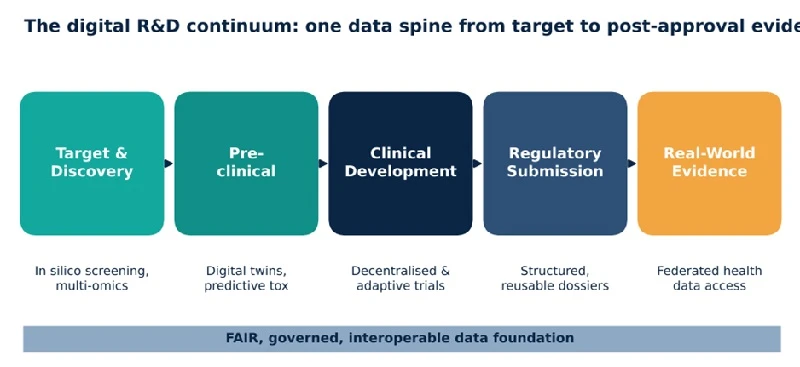
Figure 5: The digital R&D continuum built on a shared data foundation
Practically, this means adopting the FAIR principles, making data findable, accessible, interoperable and reusable, as an enterprise standard rather than a research aspiration. It means common data models that allow a preclinical finding to inform trial design and a trial dataset to support later real-world analyses. It also means treating metadata, provenance and consent as first-class assets, because the value of any dataset in the coming decade will depend as much on its traceability as on its volume.
Executives should recognise that this foundation is unglamorous and slow to show returns. Its value is cumulative. Every programme built on a shared digital spine makes the next one faster and cheaper, which is the essence of future-proofing.
Regulation as Accelerator: Europe's New Digital Rulebook for Pharmaceutical Innovation
European regulation is frequently cited as a brake on innovation. In the digital domain, the opposite may prove true for organisations that prepare early. Three frameworks now define the field.
First, the EU Clinical Trials Regulation reached full application at the end of January 2025, when all ongoing trials were required to move onto a single EU-wide submission and assessment system. This creates a harmonised, digital-by-default pathway for multinational studies.
Second, the European Health Data Space Regulation entered into force on 26 March 2025. It establishes a common framework for the use of electronic health data across Member States, including a legal basis for secondary use in research and innovation, with implementing acts due by March 2027 and staged application from 2029. For pharmaceutical R&D, this promises governed access to health data at a scale that few regions in the world can match.
Third, the EU Artificial Intelligence Act, in force since 1 August 2024, introduces a risk-based framework for AI systems. Companies that embed transparency, documentation and human oversight into their R&D models now will avoid costly retrofitting later and will find it easier to defend AI-derived evidence before regulators.
Taken together, these rules reward organisations with disciplined data governance. Early movers will not merely comply; they will gain privileged access to Europe's emerging data ecosystem.
Case Study: How a Digitally Enabled Pharmaceutical Trial Delivered a Lifesaving Answer in Months
The most instructive example of digital R&D in recent European history did not come from a single company but from a national adaptive platform trial launched in the United Kingdom in March 2020 to evaluate potential COVID-19 treatments.
The Challenge
A large randomised trial would typically take many months to establish. Clinicians needed reliable answers within weeks, while hospitals were under extreme pressure and had little capacity for complex trial paperwork.
The Digital Approach
The trial was designed around simplicity and data linkage. It was set up in just nine days and used a streamlined protocol with minimal site burden. Instead of relying solely on manual case report forms, the study linked consenting participants to routinely collected national health records to track outcomes such as survival and length of hospital stay. Its adaptive platform design allowed multiple treatments to be tested against usual care within a single master protocol.
The Results
The trial recruited more than 10,000 patients within two months. By mid-June 2020, over 11,500 patients had been enrolled across more than 175 hospitals. In the comparison of low-dose dexamethasone, 2,104 patients received the drug and 4,321 received usual care alone. The steroid reduced deaths by one-third among ventilated patients and by one-fifth among patients receiving oxygen only, meaning one death could be prevented for roughly every eight ventilated patients treated. By October 2023, the platform had enrolled more than 48,000 participants at 190 hospital sites.
Lessons for the Boardroom
The case demonstrates that digital advantage often comes from design choices rather than technology spend: a lean protocol, outcome data captured through existing health infrastructure and a platform that keeps producing answers long after launch. As the European Health Data Space matures, pharmaceutical sponsors will be able to apply the same principles to commercial programmes, reducing site burden, accelerating recruitment and generating evidence that is both faster and more representative.
Leading a Digital-First Pharmaceutical R&D Culture: The Human Side of Transformation
Technology rarely fails on its own; transformations fail when organisations bolt digital tools onto unchanged processes and incentives. Digital pharmaceutical R&D demands hybrid talent: scientists fluent in data, data scientists who understand biology and regulatory professionals comfortable assessing algorithmic evidence. Europe's universities produce these profiles, but competition for them is global.
Leaders must also rethink governance. Decisions to stop programmes should be informed by models that are explainable and trusted by scientific teams. Success metrics should reward reuse of data and shared platforms, not only individual programme milestones. Above all, the chief executive and the board must signal that digital capability is a core scientific competence rather than a support function delegated to IT.
Investing for Endurance: How Boards Should Fund Digital Pharmaceutical R&D
Future-proofing requires a portfolio mindset. The most resilient organisations balance near-term efficiency gains, such as automated data management and decentralised trial elements, with longer-horizon bets on capabilities like digital twins of patients and AI-assisted molecular design. They fund the shared data foundation centrally, because no single programme can justify it alone, and they measure returns over a multi-year horizon.
Partnerships will be essential. Collaboration with academic centres, health systems and technology providers can give access to data and skills that no single sponsor can build internally. The key is to structure these partnerships around interoperable standards, so that today's collaboration strengthens rather than fragments tomorrow's data estate.
Conclusion
Europe's pharmaceutical industry is not short of ambition or investment. What it needs is a sharper conversion of scientific spending into speed, patient access and decision quality. The evidence is compelling: attrition remains severe, global competition is intensifying and Europe's share of trials and new medicines has fallen even as its spending has risen.
Digital innovation offers a credible path to reversing that trend, but only when treated as a strategic redesign of how evidence is produced and reused. The regulatory frameworks now taking shape across the EU, from the Clinical Trials Regulation to the European Health Data Space and the AI Act, give well-prepared organisations a structural advantage.
For C-suite leaders, the mandate is clear: build the data spine now, invest in hybrid talent, embed trustworthy AI and design every programme to make the next one better. Those who act decisively will not simply keep pace with change. They will define the next era of European pharmaceutical R&D.

Lakshmi is a science writer with a foundation in the laboratory. She earned her master's in biotechnology and trained through research internships at ICGEB (JNU) and DIPAS, DRDO, with her work appearing in the Egyptian Journal of Veterinary Sciences. Now APCRM-certified and part of the editorial team at Pharma Focus America and Pharma Focus Europe, she reports on pharmaceutical technology, research, and innovation — giving complex science a clear and confident voice for industry leaders.