Digital Biomarkers and Wearables: Transforming Clinical Trial Data Collection
Lakshmi, Editorial Team, Pharma Focus Europe
Clinical development still measures patients in short, scheduled bursts while disease unfolds continuously. Sensor-derived digital biomarkers close that gap, converting everyday movement, sleep and physiology into regulatory-grade evidence. This article examines how European sponsors are validating wearable endpoints, what the first qualified digital endpoint reveals about the evidentiary bar, and how pharmaceutical leadership should build the data, regulatory and operational capability that continuous measurement demands.
The Patient Who Is Measured for Six Hours a Year
A participant enrolled in a 48-week pharmaceutical trial may spend fewer than six hours inside a clinical site. The remaining 8,000-odd hours of that year — the stairs, the fatigue, the broken nights, the good days and the collapsed ones — pass unrecorded. Clinical development has quietly accepted this trade for decades, building enormous capital decisions on a handful of supervised snapshots taken under artificial conditions, on dates chosen by the protocol rather than by the disease.
Digital biomarkers change that arithmetic. A sensor worn at the wrist, ankle or chest does not ask a patient to perform on cue; it observes what the patient actually does, continuously, in the environment where the therapy will ultimately be judged. For European pharmaceutical leadership, this has moved well past pilot-stage curiosity. A wearable-derived measure has already been qualified by the European regulator as a primary efficacy endpoint. The revised good clinical practice framework explicitly anticipates technology-enabled data capture. The European health data architecture now under construction will determine how far such evidence can travel across borders.
The strategic question is no longer whether sensors belong in clinical trials. It is whether an organisation can convert their output into evidence a regulator will accept — and do so before its competitors industrialise the same capability.
The Blind Spots Between Visits: What Episodic Measurement Costs Pharma
The conventional clinical outcome assessment is a peak-performance test. A patient is asked to walk, climb or grip as fast or as hard as they can, once, in an unfamiliar room, after a journey that may itself have been exhausting. The resulting number carries the disease signal — and also the noise of motivation, mood, time of day, medication timing, coaching effects and travel fatigue. In rare disease, where families may cross a country to reach a specialist centre, that noise can rival the treatment effect the trial was designed to detect.
Continuous sensing attacks the problem at its source. Instead of one supervised repetition, an ankle- or wrist-worn device may capture millions of real-world repetitions across the same study window, from which robust summary measures can be derived. The endpoint stops being a single observation and becomes a distribution.
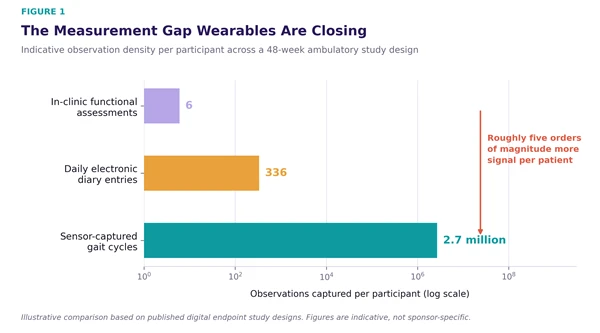
Figure 1: Continuous sensing multiplies the evidence base captured from every participant.
The second cost of episodic measurement is human. Site visits impose travel, time off work and school absence, and in progressive conditions they can be physically distressing. Reducing visit frequency while increasing measurement frequency is one of the few genuine win-win moves available in clinical trial data collection: better statistics for the sponsor, less disruption for the patient.
“The endpoint stops being a single supervised observation and becomes a distribution built from a patient’s ordinary life.”
From Raw Signal to Regulatory Evidence: How a Digital Biomarker Earns Its Place
A wearable does not produce an endpoint. It produces raw accelerometry, angular velocity and barometric signal, from which an algorithm derives a measure, which must then be shown to mean something clinically. Sponsors that skip these layers discover late — usually at a scientific advice meeting — that they have accumulated data rather than evidence.
Three tests sit between signal and endpoint. Verification asks whether the device measures what it claims under controlled conditions. Analytical validation asks whether the algorithm performs accurately in the intended population, which for a paediatric neuromuscular cohort is a very different question than for healthy adults. Clinical validation asks whether the resulting measure tracks a concept patients and clinicians actually care about, and whether a given change is meaningful rather than merely detectable.
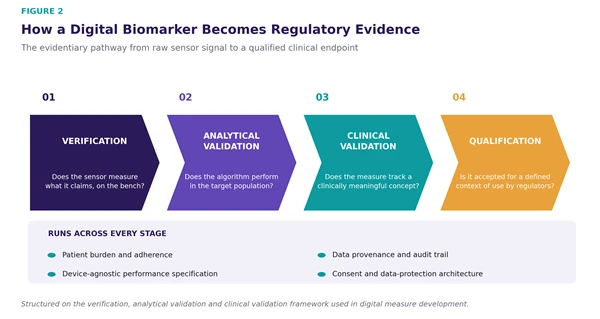
Figure 2: Each layer must be evidenced separately; regulators assess the chain, not the device.
Two design decisions repeatedly separate successful programmes from stalled ones. The first is defining a precise context of use — the population, the disease stage, the wear location, the recording duration and the role of the endpoint — before data collection begins. The second is specifying performance requirements rather than a product, so that the endpoint remains device-agnostic and survives the inevitable hardware refresh over a multi-year development programme.
The Statistical Prize: Smaller Cohorts, Shorter Pharmaceutical Trials
The commercial case for digital biomarkers rests on a simple statistical fact: required sample size scales with the square of measurement variability. Halving the noise in an endpoint does not shave a few patients from a study — it can quarter the cohort. In rare and paediatric indications, that is often the difference between a feasible trial and an infeasible one.
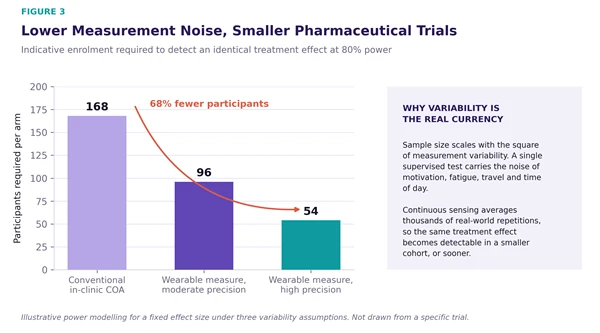
Figure 3: Precision, not novelty, is what converts wearable data into development economics.
The same precision buys time. A measure sensitive enough to detect functional decline over three or six months, rather than twelve, allows futility to be recognised earlier and capital redeployed sooner. For portfolio leadership, digital endpoints are best understood as an instrument for reducing the cost of being wrong.
Europe’s Regulatory and Data Architecture for Wearable Evidence
Europe offers a formal, voluntary qualification pathway for novel methodologies, through which a sponsor or consortium can secure a regulator’s opinion on a digital measure before committing it to a pivotal protocol. Early engagement is decisive: qualification opinions are shaped by the evidence submitted, and the questions asked in that process are far cheaper to answer prospectively than retrospectively.
Around that pathway sits a broader architecture. The revised international good clinical practice framework, now in force, is deliberately technology-agnostic and risk-proportionate, which accommodates continuous data capture but places the burden of justification on the sponsor’s data governance. Data protection law governs sensor streams that are richly identifying by nature — gait signatures and continuous location-adjacent data are not easily anonymised. Devices used for measurement may attract their own regulatory classification. And the European health data legislation now being implemented will progressively open cross-border access to health and, later, clinical trial datasets under supervised conditions.
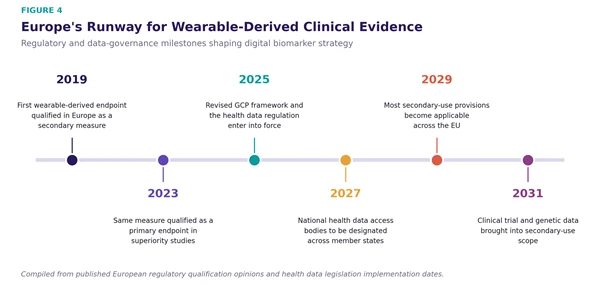
Figure 4: The compliance and opportunity landscape sponsors must design against this decade.
Where Digital Biomarker Programmes Quietly Fail
Most failures are operational rather than scientific. Adherence decays: devices that are uncomfortable, conspicuous or demand frequent charging are worn enthusiastically for three weeks and sporadically thereafter, and missing data in a continuous stream is far harder to handle than a missed visit. Algorithms drift: a firmware update or a model revision mid-study can silently change what the endpoint measures unless change control is treated with the rigour applied to an assay.
Data volume defeats unprepared organisations. Raw sensor streams arrive at a scale that conventional clinical data management environments were never built for, and the pipeline from device to analysis-ready dataset must be validated end to end, with provenance preserved for inspection. Devices also age faster than trials complete, which is why performance-based specifications matter more than procurement preferences.
The most expensive failure, though, is strategic: collecting sensor data across a programme without deciding in advance what will be claimed from it. Exploratory data gathered without a defined context of use rarely becomes an endpoint later. It becomes an appendix.
Building the Operating Model: What Pharmaceutical Leadership Must Own
Digital measurement cannot be governed study by study. The organisations moving fastest have established a small central function that owns the digital endpoint portfolio, sets validation standards, and carries the regulatory relationship across programmes. That function decides which measures are worth the multi-year evidentiary investment and which are simply nice-to-have telemetry.
Three commitments follow. Contract for endpoint ownership and data portability rather than for a device, so that the evidence asset outlives any single supplier. Invest in natural history and reference datasets early, because clinical meaningfulness cannot be demonstrated without a comparator baseline. And co-design wear protocols with patients and caregivers, since adherence is the single largest determinant of whether a beautifully validated measure produces usable data.
Conclusion: The Endpoint Is Moving Out of the Clinic
The clinic will remain essential for safety oversight, dosing and complex assessment. But the centre of gravity of clinical trial data collection is shifting towards the patient’s own environment, where treatment effect is expressed in ordinary movement rather than supervised effort. The first regulatory qualification of a wearable-derived primary endpoint has already established that this evidence can meet the standard; what remains is industrial execution.
For European pharmaceutical and biotechnology leadership, the implication is concrete. Digital biomarkers are not a digital-health initiative to be delegated; they are a measurement capability that shapes trial size, trial duration and the strength of a future label. Companies that build the validation, data and regulatory muscle now will spend the next decade running smaller, faster and more sensitive trials. Those that wait will find the endpoints already defined — by someone else.

Lakshmi is a science writer with a foundation in the laboratory. She earned her master's in biotechnology and trained through research internships at ICGEB (JNU) and DIPAS, DRDO, with her work appearing in the Egyptian Journal of Veterinary Sciences. Now APCRM-certified and part of the editorial team at Pharma Focus America and Pharma Focus Europe, she reports on pharmaceutical technology, research, and innovation — giving complex science a clear and confident voice for industry leaders.