How Cloud Computing and AI Revolutionize Pharmaceutical Supply Chain Management
Kate Williamson, Editorial Team, Pharma Focus Europe
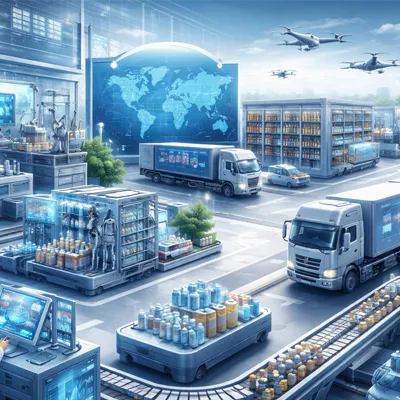
One thing that the pharmaceutical supply chain management is going through is the implementation of cloud computing and artificial intelligence as a way of transforming the process. These technologies create a high degree of visibility and prediction, automation, and more effective collaboration, and allow pharma companies to increase efficiency, comply with the regulations, increase cold chain integrity, and deliver medicines to patients more quickly and reliably.
Introduction to Pharma Supply Chain Management and the Need for Digital Transformation
The pharma supply chain management has been considered as one of the most complicated spheres of operations in any industry. As opposed to the traditional supply chain, pharmaceutical supply chains have to juggle patient safety, regulatory compliance, cold chain integrity, global sourcing, and unpredictable demand and cost pressures simultaneously. The COVID-19 pandemic revealed the weakness of the legacy systems, emphasizing how the inability to unite data, manual planning, and a lack of visibility can bring down even the most robust pharmaceutical networks.
The time has come to abandon conventional methods of optimizing pharmaceutical supply chains because biologics and personalized medicine are becoming increasingly important, and global vaccine distribution has become a significant component of the industry. Digital transformation is not an option anymore, but it is on its basis. The application of AI in pharma supply chain, cloud computing in the pharmaceutical industry, and pharmaceutical supply chain automation are also redefining the process of the flow of medicines between the sourcing of raw materials and the patients in the hands of the latter.
This transformation is fundamentally resilient, agile, and intelligent. The question is no longer whether to modernize or not, but at what pace pharmaceutical organizations can implement cloud- and AI-driven supply chain models without losing compliance or quality.
Role of Cloud Computing in Pharmaceutical Supply Chain Optimization
Pharmaceutical industry, Cloud computing has become the foundation of the current supply chain ecosystem. In the past, pharma supply chains used siloed enterprise systems -ERP and MES, and WMS- which were usually on-premise and not connected between geographies. This disintegration curtailed real-time decision-making and hindered reaction to the disruption.
This equation is transformed by cloud platforms. Cloud-based pharma supply chain collaboration platforms allow creating a single source of truth through their ability to access data centrally, use scalable computing power, and integrate across partners. Consistent and real-time data with no latency or manual reconciliation is available to manufacturers, contract manufacturing organizations (CMOs), logistics providers, distributors, and regulators.
Elasticity is one of the biggest advantages of cloud computing in pharma supply chain management. The high demand (like at the time of vaccine rollouts) can be met without bottlenecks in the infrastructure. Cloud systems facilitate the fast addition of new suppliers, real-time monitoring of inventory, and worldwide coordination of production and distribution centres.
Analytics enablement is also important. Pharma supply chain analytics cloud platforms enable organizations to operate the processing of large datasets of batch records, temperature logs, shipment data, and market signals at scale. This analytic power forms a foundation for AI-based optimization so that pharmaceutical businesses cease reactive planning and begin predictive and prescriptive decisions.
AI in Pharma Supply Chain Management: Predictive Analytics and Automation
When pharma supply chain operations are combined with cloud infrastructure and AI, the actual change will take place. Artificial intelligence transforms information into insights, so that the supply chain lifecycle makes decisions that are smarter, quicker, and more precise.
Pharma supply chain applications based on predictive analytics are transforming the process of demand planning, inventory optimization, and production scheduling. The conventional forecasting models are based on past averages that have not been able to capture market volatility, epidemiological tendencies, or geopolitical threats. On the contrary, AI-led supply chain forecasting systems absorb real-time prescription, hospital demand, seasonal forecasting, and external information to produce dynamic forecasts that are updated continuously.
This intelligence directly responds to this key question posed by leaders, many times: How can AI be used to reduce stockouts in pharma supply chains? AI minimizes the shortages and excess inventory by forecasting changes in demand and optimizing the levels of safety stock at the various points of distribution. This is particularly important in biologics and temperature-sensitive treatments that have a high value.
These gains are further increased due to automation. AI-based automation of the pharmaceutical supply chain improves procurement decision-making, batch release planning, and logistics routing. Using AI to automate the management of pharmaceutical inventory helps decrease the number of people involved, reduce the number of human mistakes, and speed up the reaction in case of disruptions.
In the manufacturing setup, AI-based predictive maintenance in pharmaceutical manufacturing helps to avoid unplanned downtimes. Through the analysis of equipment performance data, AI models find faulty indications early enough that the maintenance teams can intervene before the production becomes compromised. This has a direct effect of supporting continuity in supply and GMP compliance.
Integrating AI, Cloud, and IoT for Enhanced Pharma Supply Chain Transparency and Cold Chain Monitoring
The combination of AI and cloud computing, and the IoT in the sphere of pharmaceutical manufacturing results in the creation of an intelligent, interconnected supply chain with unparalleled transparency. The sensors installed through the manufacturing lines, warehouses, and vehicles that are used in transportation give real-time signals on temperature, humidity, vibration, and location.
Pharma cold chain monitoring is one of the areas that has undergone a significant transformation through this integration. The environmental factors are sensitive to vaccines, biologics, and cell and gene therapies. IoT sensors are constantly tracking the changes in temperature, and cloud solutions are collecting the information on the network level. Patterns are then identified using AI algorithms to identify anomalies, anticipate risks, and initiate corrective measures before the products of a company are of poor quality.
This supply chain visibility provides a much-needed supply chain transparency that pharma leaders are now requiring. Stakeholders can have real real-time understanding of product movement, condition, and custody, without periodic reports or manual audit. This openness not only enhances the efficiency of operations but also enhances confidence among regulators, health care providers, and patients.
On the question of what the benefits of the IoT are in the pharmaceutical manufacturing, one can answer traceability, quality assurance, and risk mitigation. When IoT data becomes inputs into AI frameworks deployed on cloud systems, the supply chain transforms into self-observing and self-adjusting, which is a crucial feature of a high-stakes sector.
Benefits of Cloud and AI for Regulatory Compliance and Risk Management in Pharma Supply Chains
One of the most significant and the most difficult aspects in pharma supply chain management is regulatory compliance. Regarding the FDA and EMA requirements, as well as serialization or data integrity requirements, compliance failures can even put operations on hold during the night.
Pharmaceutical supply chain risk management technologies are enhanced by cloud and AI technologies to a great extent. Cloud environments offer secure and proven environments that have audit-ready documentation, version control, and access management. Automated logging, traceability, and encryption help in improving data integrity.
Compliance is also facilitated by AI, which detects deviations, discrepancies, or possible violations in their early stages. As an example, AI systems have the ability to detect abnormal delays at batch release, excursions of temperature, or abnormal supplier performance, proactively. This feature is particularly helpful in international supply chains where it is not feasible to control the process with the help of manual tools.
Strategically, AI-based risk models evaluate the reliability of suppliers, geopolitical risk, and logistical risks. These learnings enable the pharma companies to diversify their sourcing, modify inventory buffers, and restructure their distribution plans in advance of the disruption. Resilience is equal to efficiency in a period of unpredictable supply shocks.
Case Studies and Industry Examples of Cloud and AI Adoption in Pharma Supply Chains
Some of the largest pharmaceutical firms across the industry have already shown how AI can be used to enhance the efficiency of pharmaceutical supply chains. Cloud-based control towers have been embraced by global vaccine manufacturers, which combine demand signals, production capacity, and logistics constraints in real time. These platforms ensured rapid scaling in response to the pandemic, as well as ensuring the integrity of the cold chain.
Mid-sized pharma firms are using cloud computing to partner with pharma supply chains to connect CMOs, packaging partners, and logistics partners. Through the exchange of real-time data, such organizations had cut back lead times, increased forecast accuracy, and service levels without huge capital investments.
In biologics production, pharma manufacturing companies that have incorporated AI and IoT integration in their production have realized a quantifiable decrease in batch failures and outages. Predictive maintenance and the real-time monitoring of the processes enhanced the consistency of the yield and assisted in maintaining compliance with the regulations.
These demonstrations are indicative of a larger industry trend; cloud and AI are no longer experimental technology, but a functional requirement of a competitive pharma supply chain.
How to Choose the Right Cloud and AI Solutions for Your Pharma Supply Chain
When choosing the appropriate technology stack, it is not only the vendor that one needs to do the evaluation, but also, when it comes to strategic alignment. Leaders are to evaluate the support of solutions to validated environments, regulatory, and scalability. It should have the ability to integrate with current ERP, MES, and quality systems.
Data strategy is equally important. AI performance is hinged on the quality of data, governance, and integration. The cloud computing in the pharmaceutical industry efforts made by organizations need to focus on harmonizing data among silos. Talent preparedness is also of relevance-the successful implementation will involve the cooperation of IT, supply chain, quality, and regulatory teams.
In assessing the platforms, the decision-makers ought to use real-world applications, including AI-based supply chain predictiveness, pharma cold chain, and AI-based automation of pharmaceutical inventory management, instead of theoretical functionality. The generic AI claims should not be greater than proven industry experience and compliance expertise.
Conclusion: The Future of Pharma Supply Chain Management with Cloud and AI
The intelligent, connected, and resilient pharma supply chain management of the future. Given the increased complexity of therapies and patient expectations, supply chains should change to become cost-oriented logistics networks into a strategic healthcare outcomes enabling body.
The pharmaceutical industry relies on cloud computing to offer a framework of scale, cooperation, and analytics. Artificial intelligence in pharma logistics operations provides the foresight and automation, along with continuous optimization. These technologies combined open a circle of new opportunities in the pharmaceutical supply chain optimization process, where disruptions are bound to occur, quality is ensured, and patients get life-saving medicines on time.
To pharmaceutical leaders who pose the question of how to make AI and cloud enhance vaccine distribution, it can be summed up by accepting this convergence nowadays. The first in investing in cloud and artificial intelligence-led supply chain transformation will not only acquire business benefits but also create the resilience needed to navigate a global healthcare environment that is uncertain and more variable.
.webp)
Kate, Editorial Team at Pharma Focus Europe, leverages her extensive background in pharmaceutical communication to craft insightful and accessible content. With a passion for translating complex pharmaceutical concepts, Kate contributes to the team's mission of delivering up-to-date and impactful information to the global Pharmaceutical community.