Building Resilient Pharma Supply Chains to Strengthen Patient Care
Lesley Barton, National Clinical and Training Manager, Bunzl & AMHC
In the complex, global ecosystem of pharmaceutical manufacturing and distribution, the supply chain is no longer merely a logistical function but a direct extension of clinical efficacy. For C-level executives, supply-chain leaders, and operational heads, the mandate is clear: strategic investment in supply chain resilience is paramount to upholding patient safety, ensuring equitable access, and maintaining the vital continuity of care. This responsibility extends beyond products alone. It directly influences the well-being of individuals, including people living with disability or chronic health challenges who rely on consistent access to healthcare supplies to live independently.
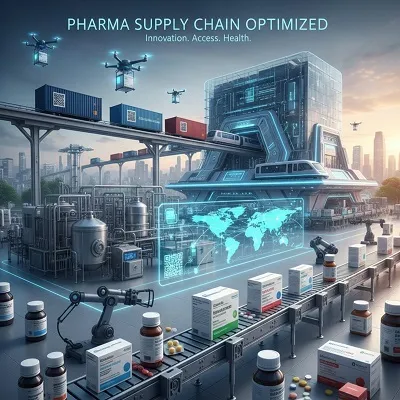
The failure to deliver a temperature-sensitive biologic or a critical maintenance drug on time is becoming a patient outcome crisis, not just an operational inefficiency. By fortifying our global logistics networks, we proactively safeguard the availability of life-saving therapies and essential healthcare supplies, securing the healthcare industry’s central promise to global health. This strategic imperative necessitates a shift from optimising purely for cost efficiency to balancing cost with redundancy, visibility and agility across the entire value chain.
The Imperative: Supply Chain Stability and Patient Welfare
The inherent instability of a weak supply chain presents a profound clinical risk. A robust and predictable logistics network is the ultimate guarantee of timely medication delivery, which directly impacts patient adherence and therapeutic effectiveness. When supply chains falter, stock-outs and shortages become inevitable, forcing clinicians to seek costly, less-effective alternatives or, worse, resulting in therapy interruptions.
For patients managing chronic conditions or undergoing acute treatments, these interruptions can lead to disease progression, adverse events, and a critical breakdown of trust in the healthcare system. Resilient logistics, characterised by their capacity to absorb shocks and adapt swiftly, ensure that the right dosage reaches the right patient at the right time, minimising clinical risk and maximising the intended patient outcome. This stability transforms logistics from a support function into a strategic pillar of patient welfare.
Critical Fault Lines: Key Vulnerabilities in Modern Pharma Logistics
Recent global events have exposed the fragility inherent in just-in-time (JIT) and single-source procurement models, demonstrating that a hyper-optimised, lean supply chain is often brittle under pressure. The COVID-19 pandemic served as a pivotal lesson, revealing acute dependencies on concentrated manufacturing hubs, particularly for Active Pharmaceutical Ingredients (APIs). Geopolitical disruptions, trade restrictions, and extreme weather events now represent endemic, non-negotiable risks. Furthermore, complex regulatory environments and the increasing sophistication of counterfeiters place immense stress on secure distribution channels. Today’s supply chain vulnerabilities are primarily rooted in:
- Geographic Concentration: Over-reliance on a few specialised regions for APIs and excipients creates systemic single points of failure.
- Visibility Gaps: Lack of real-time, end-to-end data on product location and environmental conditions prevents proactive intervention during disruptions.
- Cold Chain Integrity: The growing portfolio of complex biologics requires highly specialised, unforgiving cold chain infrastructure, making temperature excursions a persistent risk.
Addressing these vulnerabilities requires moving beyond reactive management to establishing a comprehensive, predictive risk mitigation strategy.
Strategic Pathways to Fortify Supply Chain Resilience
Building true supply chain resilience requires a coordinated, multi-faceted investment across organisational, technological and geographical domains. The following strategies represent crucial steps toward a robust and patient-centric logistics model.
Strategy 1: Diversifying the Geopolitical Footprint
To neutralise the risk of dependency on concentrated regions, executive leadership must mandate the strategic establishment of multi-source procurement contracts and geographically diverse manufacturing and packaging sites. This goes beyond securing a second supplier; it involves mapping and validating alternative sourcing locations in different regulatory and geopolitical zones. While this may entail higher initial operational expenditure, it is an essential investment in geopolitical risk mitigation and non-negotiable supply continuity.
Strategy 2: End-to-End Visibility Through Digital Transformation
Leveraging advanced digital platforms is crucial to achieving real-time visibility across the entire supply network. This includes deploying IoT sensors for environmental monitoring (temperature, humidity, shock) and implementing blockchain-enabled track-and-trace systems. Such systems provide a single source of truth for the provenance and condition of inventory, allowing operations teams to anticipate bottlenecks, divert shipments around emerging disruptions and guarantee the integrity of high-value assets.
Strategy 3: Dynamic Inventory and Buffer Stock Optimisation
The rigid JIT model must be supplemented with a dynamic inventory strategy that includes carefully calculated buffer stocks of critical APIs and finished drug products. This approach requires advanced analytics to model projected demand volatility and estimate the appropriate safety stock levels needed to cover lead time variability during disruptive events. This is not arbitrary stockpiling, but a calculated, data-driven approach to de-risking therapy discontinuation.
Strategy 4: Strengthening the Last-Mile Cold Chain and Logistics Integrity
For temperature-sensitive pharmaceuticals, the cold chain is the ultimate measure of quality control. Strategic investments must focus on hardening last-mile logistics, the most frequent point of failure. This involves adopting next-generation thermal packaging solutions, standardising training for all logistics partners, and establishing clear protocols for handling deviations. Ensuring robust integrity in the final delivery leg protects product quality and clinical viability.
Strategy 5: Predictive Risk Modeling and Stress Testing
Resilience is a metric that can and must be measured. Organisations must leverage predictive analytics to model complex supply chain disruption scenarios from port closures to mass ingredient recalls. Regular, rigorous stress testing of the entire network allows leaders to identify weak links, refine Standard Operating Procedures (SOPs), and pre-program contingency actions, effectively transforming reactive responses into orchestrated operational pivots.
Conclusion
The pursuit of a highly resilient pharmaceutical supply chain is fundamentally a moral and commercial commitment. It extends far beyond the typical scope of operational efficiency metrics, transforming into an organisational commitment to patient safety, continuous access to necessary treatments, and the preservation of public trust in healthcare delivery.
For C-suite and operations leaders, the choice is no longer between efficiency and resilience; it is a recognition that resilience is the highest form of efficiency when measured against the cost of human health and market credibility. By proactively implementing these strategic fortifying measures, the pharmaceutical sector not only secures its bottom line but, more importantly, guarantees its mission: to ensure that the innovations developed in the lab reliably reach the patients who need them most.

Lesley Barton is the National Clinical and Training Manager at Bunzl & AMHC. She brings extensive healthcare expertise and strong leadership to the advancement of clinical education and best practice. Her work with Bunzl & AMHC, alongside her role with the Continence Foundation of Australia, reflects her deep commitment to improving patient care outcomes. Through the Clinical Care Connections (CCC) program, Lesley has strengthened national training initiatives across continence, wound care, and medical consumables. She continues to play a key role in shaping healthcare education and supporting clinical excellence across Australia.