Bispecific Antibodies: Transforming the Future of Oncology
Lakshmi, Editorial Team, Pharma Focus Europe
Bispecific antibodies have moved from concept to commercial reality, with a growing set of approvals and multi-billion-euro sales concentrated in haematology. The strategic contest now shifts to solid tumours, where toxicity, antigen heterogeneity and manufacturing complexity remain unresolved. This article examines the engineering response, the European access environment created by joint clinical assessment, and the operating decisions facing pharmaceutical executives building oncology portfolios around this class.
The Class That Stopped Being Experimental
For two decades, bispecific antibodies occupied an awkward position in pharmaceutical oncology strategy: scientifically compelling, commercially unproven, and persistently difficult to manufacture. That characterisation no longer holds. Nineteen bispecific antibodies have been approved globally, and combined sales of the class passed twelve billion dollars in 2024, with several products now anchoring major franchises.
What changed was not one breakthrough but the accumulation of engineering solutions to problems that had defeated earlier generations — chain mispairing, short half-life, uncontrolled cytokine release. The result is a modality that European pharmaceutical companies can now build a portfolio around rather than hedge with.
The uncomfortable detail beneath the headline numbers is where that value is concentrated. Haematologic malignancies accounted for roughly fifty-eight percent of the bispecific T-cell engager market in 2025. The class has been validated in a setting where the target antigen is uniform, accessible in circulation, and expressed on a lineage the patient can survive losing. Solid tumours offer none of those advantages — and they represent the overwhelming majority of cancer incidence across Europe.
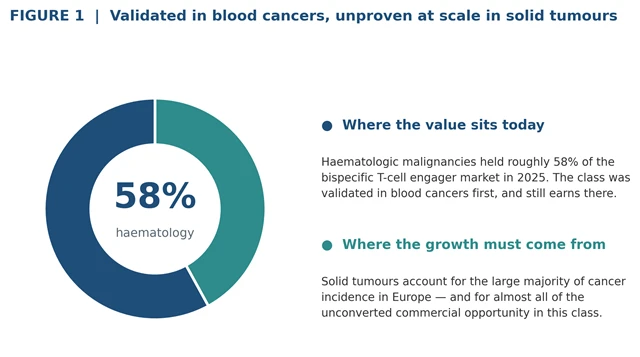
Figure 1: The commercial base and the commercial frontier are not the same disease setting.
Why Solid Tumours Broke the First Generation
Three obstacles have consistently defeated bispecific T-cell engagers outside haematology. The first is on-target, off-tumour toxicity: most solid tumour antigens are not truly tumour-specific, and a molecule potent enough to kill malignant cells will damage healthy tissue expressing the same target. The second is antigen heterogeneity, which allows subclones to escape a single-target construct. The third is the tumour microenvironment itself, which suppresses and exhausts the very T cells the therapy recruits.
Cytokine release syndrome compounds all three. It is manageable with step-up dosing and prophylaxis, but management has an infrastructure cost, and that cost shapes where a therapy can realistically be administered. In fragmented European health systems, a product that requires inpatient monitoring during initiation is a product confined to a limited number of academic centres in each member state — which is an access ceiling long before it is a clinical one.
A therapy that requires inpatient monitoring at initiation faces an access ceiling long before it faces a clinical one.
The Engineering Answer: Four Generations in a Decade
The response has been a rapid succession of format innovations, each solving a specific failure of the one before. Avidity-tuned constructs binding the tumour antigen twice and CD3 once are designed to widen the therapeutic window by favouring cells with high antigen density. Masked and conditionally activated molecules are engineered to remain inert until cleaved by tumour-associated proteases, an approach now entering the clinic across targets including claudin family antigens and prostate-associated targets. Trispecific and multi-specific formats add costimulation or a second tumour target to counter escape and exhaustion.
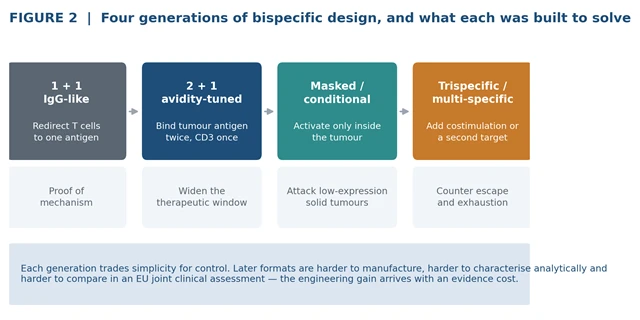
Figure 2: Format evolution is a response to specific clinical failures, not a technology showcase.
For pharmaceutical executives, the important read is not that the science is advancing. It is that each generation raises the analytical, regulatory and manufacturing burden. A conditionally activated trispecific is not a slightly more complex monoclonal antibody. It carries a comparability package, a stability profile and a cost of goods that will influence pricing strategy long before a Phase 3 read-out.
A Crowded Field and a Buyer's Market for Science
The competitive landscape has expanded faster than most portfolio reviews assume. Recent industry analyses track well over one hundred and eighty companies and more than two hundred and fifty candidates across the bispecific antibody space, and multi-specific T-cell engager discovery collaborations aimed explicitly at gastrointestinal and other solid tumours were being signed through 2026.
Two implications follow for European pharmaceutical leadership. The first is that novelty of target is no longer a durable advantage; several developers are typically working the same antigen with different architectures, and the differentiator is format execution. The second is that in-licensing economics have shifted. With a wide field of clinical-stage assets, acquirers are increasingly able to buy validated formats rather than fund format discovery internally — a genuine strategic option for mid-cap companies that lack the antibody engineering depth to compete generation by generation.
The European Variable: One Assessment, Twenty-Seven Decisions
European pharmaceutical leadership faces a market access dynamic that does not exist in the same form elsewhere. The EU Health Technology Assessment Regulation became applicable in January 2025, and it began with oncology: new active substances in cancer and advanced therapy medicinal products were the first products in scope, with orphan medicines following in 2028 and all new medicinal products by 2030.
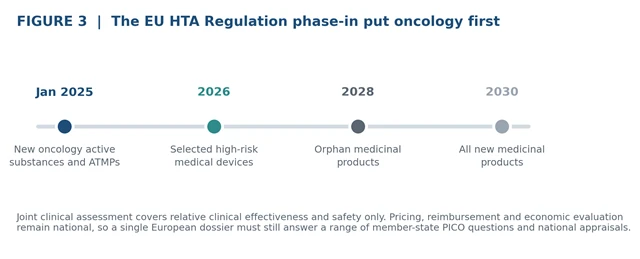
Figure 3: Oncology developers are the first cohort operating under the new European assessment framework.
Joint clinical assessment produces a single European evaluation of relative clinical effectiveness and safety. It does not produce a price, a reimbursement decision or an economic evaluation, all of which remain national. The practical consequence for a bispecific developer is a single dossier that must simultaneously answer the population, intervention, comparator and outcome questions posed by multiple member states, frequently requiring indirect comparisons against comparators the trial never included.
This is the point at which bispecific development becomes structurally harder than conventional oncology development. A novel format in a novel setting rarely has a clean comparator. Where the standard of care differs materially between Northern, Southern and Central Europe, a single pivotal trial can generate a favourable clinical assessment and still leave national appraisal committees unpersuaded. Early joint scientific consultation is not a compliance exercise for this class; it is the mechanism by which a company discovers which comparator questions it must design its Phase 3 to answer.
Case Study: How a European Mid-Cap Rescued a Solid Tumour Bispecific
The following composite case study is drawn from patterns observed across several European oncology developers. Details have been anonymised and no individual organisation is described.
The situation: A European mid-cap developer held a first-generation CD3-engaging bispecific against a solid tumour antigen. Phase 1 produced genuine responses, but dose escalation stalled: the dose required for consistent activity produced unacceptable on-target toxicity in healthy tissue expressing the same antigen. Two competitors had already discontinued programmes against the same target. The internal recommendation was to terminate.
The reframe: Rather than abandon the target, leadership treated the problem as an engineering constraint rather than a biological one. The programme was re-entered with a masked construct designed to activate only after cleavage in the tumour microenvironment, and an avidity-tuned architecture that reduced killing of cells with low antigen density. The decision cost roughly two and a half years and required a partnership for the masking technology, which the company had assessed and rejected eighteen months earlier.
The access work that ran in parallel: The commercial and medical organisations did something the first programme had not. They requested joint scientific consultation early, and used the resulting comparator feedback to add a treatment arm that no internal clinical rationale had called for, but that three national assessment bodies had signalled they would require. The medical affairs team simultaneously built a hospital-readiness programme with treating centres in five countries, on the assumption that cytokine release management capacity, not efficacy, would gate uptake.
The outcome: The reformatted candidate entered a registrational study with a materially wider therapeutic window and an evidence package built around the questions European payers had already articulated. Two lessons transfer beyond this programme. First, a failed bispecific is often a format failure rather than a target failure, and the distinction is worth several years of pipeline value. Second, the access constraint and the toxicity constraint were solved by the same decision — which is an argument for making format choices in the room where market access sits, not downstream of it.
The Obstacle Map for Pharmaceutical Leadership
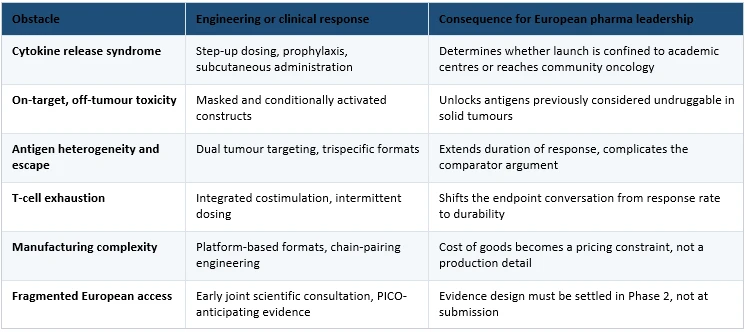
Four Decisions European Executives Cannot Defer
Choose a format platform, not a molecule: Companies that industrialise one engineering architecture across several targets acquire a manufacturing and analytical learning curve that single-asset developers never build. Format proliferation inside a portfolio is a hidden cost of goods problem.
Design the subcutaneous route from the start: Conversion from intravenous to subcutaneous administration changes site of care, monitoring burden and the number of European centres able to treat. Retrofitting it after a pivotal trial forfeits the launch advantage entirely.
Treat joint scientific consultation as evidence design: The comparator questions surfaced through European consultation should shape the pivotal protocol. Discovering them at submission converts a strong clinical dataset into a weak reimbursement argument.
Fund hospital readiness as a commercial function: For a class where toxicity management gates uptake, the constraint on European sales is centre capability. That is medical affairs and health system partnership work, and it needs to begin two years before approval.
Conclusion:
The Second Act Decides the Class
Bispecific antibodies have already transformed the treatment of several haematologic malignancies, and the commercial case for the modality no longer needs defending. The open question is whether the class becomes a durable pillar of oncology practice or remains a powerful tool confined to a subset of blood cancers. That question will be settled in solid tumours, and it will be settled by engineering discipline rather than by target selection.
For European pharmaceutical organisations, the competitive terrain has a second dimension that is easy to underweight. A therapy that works is not yet a therapy that reaches patients across twenty-seven health systems with different comparators, different infrastructure and different appetites for uncertainty. The companies that succeed in this class will be the ones that treated the European access architecture as a design input to their molecules — not as a hurdle to be cleared once the science was finished.

Lakshmi is a science writer with a foundation in the laboratory. She earned her master's in biotechnology and trained through research internships at ICGEB (JNU) and DIPAS, DRDO, with her work appearing in the Egyptian Journal of Veterinary Sciences. Now APCRM-certified and part of the editorial team at Pharma Focus America and Pharma Focus Europe, she reports on pharmaceutical technology, research, and innovation — giving complex science a clear and confident voice for industry leaders.